
Forgotten Dairies
What Nigeria’s Security Debate Overlooks: The People Who Grow Its Food -By Emeka Nwachinemere
Nigeria needs to redefine what national security means. Protecting farming communities should become as strategically important as protecting oil pipelines or military installations. Agricultural corridors should receive dedicated security during planting and harvest seasons. Investment in irrigation, storage, mechanisation and rural logistics should be recognised as investments in national stability. Affordable agricultural finance should become a security priority. Digital farmer registries should ensure support reaches genuine farmers quickly and transparently.

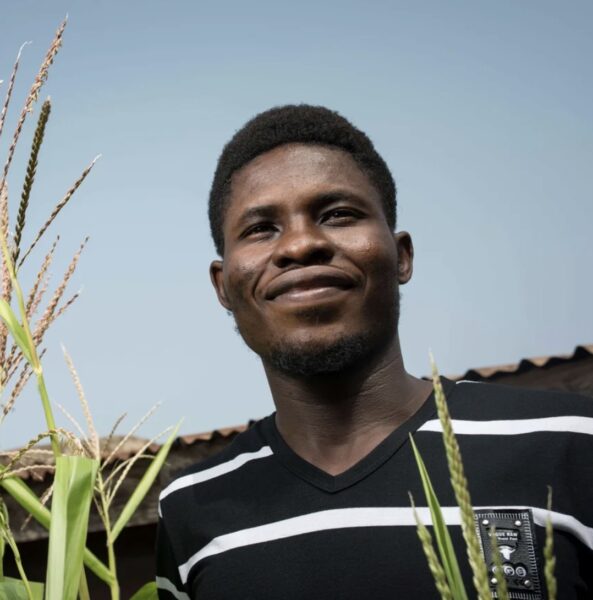
As attacks on farming communities intensify, Nigeria continues to treat insecurity as a military problem. But lasting peace will not be won by force alone. It will be won by making farming safe, profitable and worth returning to.
While Nigeria debates security, another battle is being lost. Across Benue, Plateau, Niger, Zamfara, Katsina and parts of Kaduna, thousands of Nigerian farmers are making what may become one of the most consequential decisions for the country’s future: they are choosing not to farm. Not because they lack seeds. Not because rainfall has failed. Not because they have abandoned agriculture. They are staying away because they are afraid.
Throughout this year’s farming season, attacks on farming communities have continued with disturbing regularity. Farmers have been killed while cultivating their fields. Others have been kidnapped on rural roads. Entire communities have fled fertile land that has become too dangerous to cultivate. The immediate consequence is obvious. Nigeria produces less food. The more dangerous consequence is not.
Every farmer who abandons a field leaves behind more than uncultivated land. They leave behind fewer bags of maize, higher food prices, weaker rural economies, and another young Nigerian who may conclude that carrying an assault rifle offers a better future than operating a sprayer. Nigeria calls this a security crisis. It is. But it is also an agricultural crisis. Until we recognise that, we will continue fighting yesterday’s war.
Security Begins Long Before Soldiers Arrive
For years, Nigeria has approached insecurity primarily through the lens of defence spending, military deployments and tactical operations. Those interventions are necessary, but they are not sufficient. Food inflation remains among the highest contributors to the rising cost of living. Perhaps we have become exceptionally good at responding to insecurity while paying far less attention to preventing it.
We often think of armed groups purely as security threats. They are. But they are also economic systems. Like any organisation, they recruit people. The uncomfortable question is this: Why do they continue finding recruits? Certainly not everyone joins because of ideology. Many join because legitimate economic opportunities have disappeared.
When farming no longer provides dependable income…
when rural markets collapse…
when harvests cannot reach buyers…
when villages become isolated…
criminal economies become employers of last resort. This is why agriculture matters far beyond food.
The World Bank has consistently found that growth originating in agriculture is significantly more effective at reducing poverty than growth in most other sectors, particularly in low-income countries where the poorest depend on farming for their livelihoods. Poverty alone does not create violence. But persistent economic hopelessness creates fertile ground for violent organisations to recruit. Every profitable farmer is one less potential recruit.
Farmers Are National Security Assets
Nigeria often speaks about farmers as beneficiaries of government programmes. That is far too narrow. Farmers are national security assets. Every successful planting season creates employment. Every thriving rural market strengthens local commerce. Every profitable harvest supports transporters, processors, traders and small businesses. Every resilient farming community gives young people a reason to remain inside the formal economy.
The reverse is equally true. Every failed harvest expands the geography of desperation. Every abandoned village creates space for criminal networks. Every farmer forced off the land weakens Nigeria’s long-term security. Perhaps we have underestimated agriculture because we continue measuring it in tonnes harvested rather than communities stabilised.
The Ministry of Agriculture Is Quietly a Security Institution
Imagine if Nigeria measured agricultural investment not only by tonnes of rice produced. But by kidnappings prevented. By criminal recruitment disrupted. By unemployed youth absorbed into productive work. By communities that never descended into violence.
Suddenly irrigation becomes security infrastructure. Warehouses become peace infrastructure. Rural roads become counter-insurgency infrastructure. Agricultural finance becomes violence prevention. Mechanisation becomes a youth employment policy. Farmer databases become strategic national assets. Every investment that makes farming safer and more profitable reduces the conditions that criminal organisations depend upon. Security agencies respond after instability appears. Agriculture prevents instability from emerging. That is not a competing security strategy. It is a complementary one.
The Evidence Already Exists
Countries emerging from conflict have repeatedly demonstrated that rebuilding rural livelihoods is essential to rebuilding peace.
Vietnam transformed agriculture into one of the engines of its economic rise, dramatically reducing rural poverty while strengthening national stability.
Rwanda placed agricultural transformation at the centre of post-genocide reconstruction, helping restore livelihoods alongside public institutions.
In Colombia, sustained investment in agricultural value chains and rural development has helped reduce the influence of armed groups in several regions when combined with effective security reforms.
None of these countries relied on agriculture alone. Neither did they rely on military force alone. They recognised that lasting peace depends as much on functioning rural economies as it does on functioning security institutions.
To be sure, agriculture alone will not defeat terrorism. It cannot eliminate extremist ideology. It cannot secure Nigeria’s borders. It cannot replace intelligence gathering, policing, or military operations. Those institutions remain indispensable. But history offers a consistent lesson. No nation has built enduring peace while allowing its rural economy to collapse. Ignoring agriculture as a pillar of national security merely ensures that security agencies will continue fighting the same battles indefinitely.
A Different Security Strategy
Nigeria needs to redefine what national security means. Protecting farming communities should become as strategically important as protecting oil pipelines or military installations. Agricultural corridors should receive dedicated security during planting and harvest seasons. Investment in irrigation, storage, mechanisation and rural logistics should be recognised as investments in national stability. Affordable agricultural finance should become a security priority. Digital farmer registries should ensure support reaches genuine farmers quickly and transparently.
Most importantly, farming must once again become profitable enough that millions of young Nigerians see agriculture not as punishment, but as opportunity. This is not simply agricultural policy. It is a security policy.
Emeka Nwachinemere is a Nigerian agritech entrepreneur and systems builder focused on transforming Africa’s food system through climate-smart infrastructure, digital innovation, and data infrastructure. He is the founder of Kitovu Technology Company, which builds agricultural data platforms and post-harvest systems supporting smallholder farmers across Africa. His work sits at the intersection of food security, technology, and poverty reduction. He is also a Public Voices Fellow Tackling Poverty, a partnership of Acumen and The OpEd Project.


















You must be logged in to post a comment Login