
Education
Reporter’s Diary: My First Day At Pan-Atlantic University -By Muhammad Auwal Ibrahim
From the discipline observed in spotless walkways to the professionalism embedded in classroom culture, beautiful encounters with like minds, conversations among some of Nigeria’s finest media enthusiasts, every moment pointed towards the same idea: great journalism does not happen by accident. It is nurtured through discipline, collaboration, curiosity, and a commitment to life-long learning.

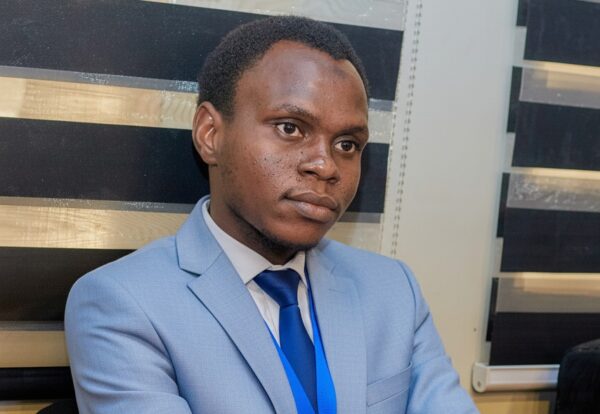
Lagos welcomed me to Pan-Atlantic University the way it knows best, with rain. If this state has a signature, then it is rain.
The rain fell steadily as we prepared for school. Something that we had not witnessed in recent times. Yet, the city did not bother.
It was my first time in this part of Lagos. Through the rain-soaked window, I saw Ibeju-Lekki wake itself. Everyone was heading to his distinct destination. Every action carried a sign of rush. Buses competed for available spaces on the road. Tricycles weaved between impatient cyclists. Cyclists also maneuvered through narrow spaces. While pedestrians hurried along the pedestrian path with their umbrellas.
By 8 AM., our bus rolled out of the estate, conveying 25 media professionals bound for the 20-year-old Pan-Atlantic University, the school that would be our host for the MTN Media Innovation Programme 2026.
In less than an hour, we arrived at the varsity’s gate. The first thing that caught my eyes was not the beautiful buildings but the greenery. Trees lined the roads leading into the main campus. Students gently marched to campus with their bags and umbrellas. Security officials welcomed people with professionalism.
Our bus eventually came to a stop in front of the TY Danjuma Academic Building.
As we disembarked, one after another, something unexpected happened. A young man dressed in native attire stopped mid-stride looking at me. As if we have met before. Instead of passing, he turned, smiled warmly, and greeted me: “Peace be upon you.” I replied thus: “Same unto you.”
The handsome guy introduced himself as a science student. What started as a mere greeting suddenly turned into a serious conversation. His curiosity, respect, and seriousness left a good impression on me. The moment barely lasted for five minutes, but it dissolved the unfamiliarity of arriving at a new place. Hundreds of miles away from home, I was still feeling at home.
That encounter has shown me that institutions are not only defined by knowledge but also people who keep them alive.
After our exchange, he excused himself for a class, while we joined our guide towards the School of Media and Communication, the academic home that would shape the coming months of our programme.
For many of us, it was our first day in a classroom after spending years in the newsroom chasing deadlines. Excitement was evidently clear onboard. The kind that comes at the beginning of every new chapter. We travelled from different angles of Nigeria, bringing our unique experiences but one shared purpose: to learn, unlearn, and relearn.
Prior to the beginning of our orientation sessions, we had our breakfast at the executive cafeteria. There, one thing continued to command my attention: cleanliness. Not the ceremonial cleanliness that comes and goes with the season. From the main gate to the classrooms, walkways, and car parks, the school appeared to be well maintained. Waste bins were strategically positioned and cleaners worked tirelessly to preserve the environment. The members of the community had a great hygienic culture.
For a school shaping the leaders of tomorrow, the message was obviously clear: excellence.
Back to the classroom, there was a modern projection system. Comfortable seats. Good lighting system. Efficient air-conditioning. Public address system. The hall has everything expected of a 21st century learning environment. Everything about the institution was top-notch. It showed that learning was not accidental, but deliberate. Before the sessions even started, I felt that it would be a first-class learning experience.
One after another, we met the faces behind the Media Innovation Programme. We met the Dean of the School of Media and Communication, Dr. Ikechukwu Obiaya, alongside the Director of the Media Innovation Programme, Dr. Chike Mgbeadichie, and the programme coordinators, Dr. Isaac-Ogugua Ezechukwu and Mr. Samsideen Akano. MTN representatives from the corporate communications department welcomed us with an equal warmth.
Listening to them speak about the programme’s objectives, structure, and expectations, I could sense the level of planning and investment that had gone into the programme.
As more speakers came onboard, it became obvious that this was far more than a programme but an investment in Nigeria’s media space.
After observing the classroom, I realised I was surrounded by some of Nigeria’s finest media professionals, newsroom leaders, veteran editors, broadcasters, media founders and reporters. Each candidate had his unique trait, yet we had returned to the classroom to learn.
One session particularly stayed with me. The university’s dress code. At a time when many institutions are becoming more relaxed, PAU has chosen the path of professional dressing. Corporate dressing is not an option but a standard. T-shirts, revealing outfits, and incomplete traditional attire are not allowed in class. Professionalism is not only seen in knowledge application but in appearance and attitude.
After the introductory sessions, we embarked on a tour of the university. Guided by a staff, we explored lecture rooms, cafeterias, student spaces, libraries, engineering workshop, radio studio, and the museum. Every stop portrayed the institution’s academic culture.
At the museum, I was carried away by the works of famous Nigerian artists. As someone who studied creative arts at high school, I appreciated the importance of preserving history through art and storytelling. I stayed closer to the gallery educator than others, listening, and absorbing each piece with admiration. Creativity remains one of the strongest ways societies document themselves.
Outside the museum, stood another shaded space built from plastic waste. Beyond providing shelter from the sun, the school conveyed a message of the need to transform discarded materials into something useful and environmentally-friendly.
Then came another revelation, after the campus tour. We were taken behind the curtain of the Media Innovation Programme’s selection process.
For weeks, PAU staff and the MTN team had reviewed over six thousand applications, assessed essays, conducted interviews, and selected candidates. Merit, not connection, determined the scholarship recipients. The diversity of the class attested to the integrity of the process. Out of over six thousand applicants, only 25 scholars were chosen.
This year’s cohort was also the largest in history. Previous editions admitted only 20 participants, but in celebration of MTN’s 25th anniversary, the number was expanded to 25, making ours the largest class.
During lunch, conversations flowed as freely as water. Across one table, a young reporter sat with an editor. At another, a media executive met a content creator. SMC created a room where experience met curiosity, where professionals returned to class, and where strangers from different newsrooms began building a community.
For me, that captured the true spirit of the MTN Media Innovation Programme. Beyond lectures and tour, it is a platform where professionals from different background came together to learn, challenge one another and rethink the future of the Nigerian media.
At the end of the day, I realised my first day at Pan-Atlantic University had offered something more than an orientation. It was a lesson in excellence, and professionalism.
From the discipline observed in spotless walkways to the professionalism embedded in classroom culture, beautiful encounters with like minds, conversations among some of Nigeria’s finest media enthusiasts, every moment pointed towards the same idea: great journalism does not happen by accident. It is nurtured through discipline, collaboration, curiosity, and a commitment to life-long learning.
It was clear that this journey would reshape not only my career, but the way I see journalism in general.
Muhammad Auwal Ibrahim is an award-winning investigative journalist at Halal Reporters and a 2026 MTN Media Innovation Programme Fellow. He writes from Pan-Atlantic University, Lagos, and can be reached via awwalbinibrahim@gmail.com

























You must be logged in to post a comment Login