
Middle East War
Gaza: Navigating the Fragile Balance Between De-escalation and Destruction -By Isah Aliyu Chiroma
The deal that exists on paper is the best framework this war has produced. Whether it becomes the framework that ends the war depends less on the text of the agreement than on a decision Benjamin Netanyahu has not yet been willing to make in public, and on whether the politics of an Israeli election will let him make it at all.


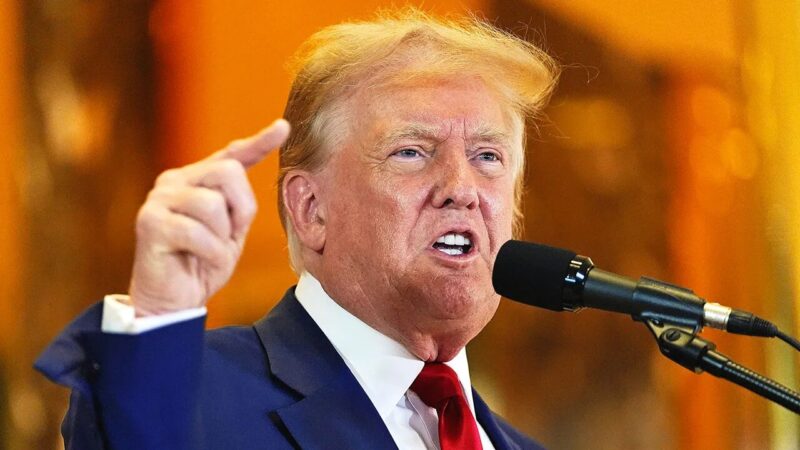
Nearly three years after Hamas’s October 7 attack ignited the war in Gaza, the pieces of an endgame are finally on the table. The US-led Board of Peace, working with mediators from Egypt, Qatar and Turkey, announced on Thursday that it had finalized a roadmap for the next phase of the ceasefire, one built around three interlocking commitments: staged Hamas disarmament, a phased Israeli withdrawal, and an international security architecture to fill the vacuum left behind. President Trump called it a “historic agreement.” Hamas says it has agreed. On paper, this is the closest the war has come to a genuine off-ramp.
On the ground, it is still a proposal, because the one signature that would make it real hasn’t been given. Benjamin Netanyahu has not endorsed the deal. That silence is not a procedural delay; it is the story. Every other actor in this process — Hamas, the mediators, the Trump administration, has effectively finished its move and is now waiting on Jerusalem. The world has been blunt about what that waiting signals. Neil Quilliam of Chatham House put it plainly: Netanyahu’s silence “speaks volumes,” because the decision he’s facing is existential for his political survival, not just for the war.
That’s not hyperbole. Israel goes to the polls in October, and several far-right parties that anchor Netanyahu’s coalition have campaigned explicitly against any Gaza withdrawal, some pushing instead for renewed Israeli settlement in the territory. Within hours of the announcement, coalition minister Orit Strouk rejected the agreement outright and hardline minister Itamar Ben-Gvir declared that “assassinations in Gaza must continue.” For Netanyahu, endorsing the deal risks fracturing the coalition that keeps him in office; rejecting it risks being blamed by Israelis exhausted by three years of war and by an American administration that has invested its credibility in this plan, for letting a viable peace collapse.
This is why the framing of “Hamas disarmament vs. Israeli withdrawal” understates the actual complexity. The deal isn’t really stuck on whether Hamas will give up its weapons. It’s stuck on whether an Israeli prime minister eleven weeks from an election can afford to be the one who ends the war.
Every phased peace deal in a protracted conflict runs into the same structural trap, and this one is no exception: each side wants the other to move first.
Hamas has been explicit that it will not implement disarmament unless Israeli forces first fulfill their own withdrawal obligations. Israel’s stated position — at least going into this round of talks has been the mirror image: complete Hamas disarmament and full demilitarization as a precondition for any further process.
That is not a contradiction that clever drafting alone can fix. It’s the reason the deal is being built in “carefully structured phases,” as Trump described it, with disarmament and withdrawal meant to move in parallel steps rather than either side going first. The design logic makes sense in theory. In practice, it means the entire agreement now depends on both a domestically embattled Hamas and a politically cornered Netanyahu trusting a sequencing mechanism neither fully controls — with an International Stabilization Force and a new Palestinian police force expected to absorb the security functions Israel currently performs unilaterally. That force doesn’t fully exist yet. Building it, staffing it, and getting regional and international buy-in for it is itself a multi-month undertaking layered on top of the disarmament sequencing problem.
Calling the agreement historic isn’t spin. A framework in which Hamas formally accepts staged disarmament, backed by mediators from four countries and a nominal international enforcement mechanism, is further than any previous round of this conflict’s diplomacy has gotten. That’s worth stating clearly.
But “fragile” is where the analytical weight sits, and it’s worth being specific about what makes it fragile rather than just asserting that it is: Political timing is adversarial to the deal’s survival. An Israeli election in October means Netanyahu has every incentive to either slow-walk a decision or extract maximum political cover before making one and slow-walking a phased security arrangement is exactly the kind of delay that lets it decay.
The coalition math doesn’t support ratification as written. Far-right partners whose support Netanyahu needs to govern has already rejected the framework. Absorbing the deal likely means either coalition rupture or watering down commitments Hamas and mediators have already signed onto, either of which reopens negotiations that just closed.
Enforcement is aspirational, not operational. The security guarantees the plan depends on an international stabilization force working alongside a Palestinian police force are still being stood up. A phased agreement is only as credible as the enforcement mechanism backing each phase, and that mechanism is not yet built.
Neither side has full control over its own compliance. Hamas’s ability to actually disarm “all other armed groups in Gaza,” as the Board of Peace’s announcement puts it, assumes a level of command authority over fragmented factions that may not exist in practice. Israel’s ability to withdraw on schedule assumes a governing coalition that currently includes ministers publicly campaigning against withdrawal.
The honest answer is that nothing structural changes until Netanyahu speaks — and even then, a public statement of support wouldn’t be the end of the uncertainty, just the start of the next phase of it. Egypt is expected to host follow-up talks among the US, Qatar and Turkey aimed at nailing down compliance mechanisms for this next phase, which suggests the parties themselves recognize that the framework, as announced, is not self-executing.
For Gaza’s population, the practical stakes of this ambiguity are not abstract. The choice on the table is genuinely binary: a de-escalation pathway that, however slow and contested, moves toward reconstruction and a handoff to civilian governance, or a reversion to the pattern of the last three years, where stalled negotiations have repeatedly given way to renewed strikes. That pattern isn’t hypothetical; it’s exactly what happened after phase one of this same broader framework, when talks stalled for months over disarmament disagreements amid continued Israeli strikes.
The deal that exists on paper is the best framework this war has produced. Whether it becomes the framework that ends the war depends less on the text of the agreement than on a decision Benjamin Netanyahu has not yet been willing to make in public, and on whether the politics of an Israeli election will let him make it at all.
























You must be logged in to post a comment Login