
Education
Rejoinder: NBAIS Is Not a Duplication of WAEC or NECO, It Is a National Necessity -By Abdullahi Adda’u Turawa
Public policy should be informed by research, consultation and evidence, not assumptions. Nigeria accommodates various educational models because our society is diverse. Just as international examination bodies coexist with WAEC and NECO, NBAIS exists to serve a legitimate educational constituency whose needs are distinct but nationally relevant.

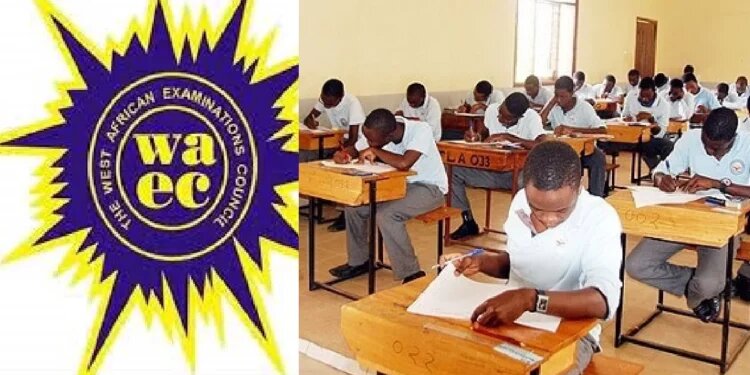
We read with profound disappointment the recent remarks credited to Dr. Umar Yakubu of the Centre for Fiscal Transparency and Public Integrity (CeFTPI) calling for the scrapping of the National Board for Arabic and Islamic Studies (NBAIS) on the grounds that its functions allegedly overlap with those of WAEC and NECO.
Suggesting that the National Board for Arabic and Islamic Studies (NBAIS) should be scrapped on the grounds that its responsibilities overlap with those of examination bodies such as the West African Examinations Council (WAEC) and the National Examinations Council (NECO).
While constructive criticism is a necessary ingredient for national development, such a position requires a careful understanding of the history, mandate and unique role of NBAIS within Nigeria’s education system. A closer examination shows that NBAIS is not a duplication of WAEC or NECO, but rather a specialised institution established to address a specific educational need that conventional examination bodies were not designed to handle.
The argument that NBAIS duplicates the functions of WAEC and NECO appears to misunderstand the difference between general examination bodies and specialised curriculum-based educational institutions.
WAEC and NECO are broad national examination bodies responsible for assessing students across various subjects in secondary education. Their primary responsibility is the administration of examinations and certification. NBAIS, on the other hand, focuses specifically on Arabic and Islamic Studies education, developing standards, promoting quality, coordinating curricula and providing specialised examinations in these areas.
A country as diverse as Nigeria requires institutions that recognise and support its various educational, cultural and linguistic needs. Arabic and Islamic Studies have historically played important roles in Nigeria’s educational development, particularly in northern Nigeria, where traditional Islamic scholarship contributed significantly to literacy and knowledge transmission before and after colonial education.
The establishment of NBAIS was therefore not an accident or an unnecessary addition to government bureaucracy. It was a response to the need for a specialised framework that would preserve standards, improve teaching quality and ensure that Arabic and Islamic education receives the same structured attention given to other areas of learning.
Comparing NBAIS with WAEC and NECO is similar to comparing specialised professional bodies with general regulatory institutions. The existence of one does not automatically make the other irrelevant. Different institutions can complement each other when their mandates are clearly defined.
If there are concerns about efficiency, funding, accountability or administrative reforms within NBAIS, such issues should be addressed through constructive reforms rather than advocating for the outright abolition of an institution that serves millions of learners and educators.
Nigeria’s education sector has several specialised agencies because different educational needs require different approaches. Institutions responsible for technical education, teacher training, examinations, science development and professional training exist because a one-size-fits-all system cannot adequately address the complexity of national education.
The call for the scrapping of NBAIS also raises a broader question: should every institution serving a particular educational interest be abolished simply because another agency operates in a related area? Such reasoning could lead to unnecessary erosion of specialised institutions that provide important services to specific sectors of society.
Rather than dissolving NBAIS, stakeholders should focus on strengthening it. This includes improving its curriculum development capacity, expanding digital examination systems, enhancing teacher training programmes, increasing collaboration with universities and ensuring that its certificates maintain high standards nationally and internationally.
Such a conclusion is not only inaccurate but also reveals a fundamental misunderstanding of Nigeria’s educational architecture, the legal mandate of NBAIS, and the historical evolution of Arabic and Islamic education in our country.
Nigeria’s education system has always accommodated multiple pathways. WAEC and NECO administer examinations based primarily on the conventional secondary school curriculum. NBAIS, on the other hand, was established to regulate, standardize and certify students in the Arabic and Islamic school system while integrating them into Nigeria’s national education framework.
Without NBAIS, millions of students from Islamiyya and Tsangaya schools would have remained outside the formal educational structure.
That is integration,not duplication.
WAEC and NECO do not regulate Arabic and Islamic curricula.
They neither develop syllabi for advanced Arabic studies nor supervise the specialized instructional standards of Islamiyya institutions. They do not accredit the thousands of Arabic schools across Nigeria.
Therefore, suggesting that the Board merely repeats the work of WAEC and NECO ignores the distinct responsibilities assigned to each institution.
One aspect strangely omitted from Dr. Yakubu’s comments is that NBAIS does not examine only Arabic and Islamic subjects.
The Board also conducts examinations in:
- English Language
- Mathematics
- Biology
- Chemistry
- Physics
- Government
- Economics
- Literature in English
- Geography
- Agricultural Science
- and many other conventional science and arts subjects.
Consequently, NBAIS students compete for admission into universities, polytechnics and colleges of education on the strength of a comprehensive curriculum comparable to other national examination bodies.
Rather than restricting opportunities, NBAIS expands them.
For decades, many graduates of Arabic schools faced barriers because their educational qualifications lacked national recognition.
NBAIS solved this problem by harmonizing Islamic education with Nigeria’s educational standards.
Today, NBAIS graduates are studying medicine, engineering, law, education, accounting, political science and other professional courses in Nigerian universities.
That achievement deserves commendation, not abolition.
Every public institution should be open to periodic review.
If there are administrative overlaps, the appropriate response is coordination, not elimination.
If standards require strengthening, recommend reforms.
If funding needs scrutiny, conduct audits.
If examination calendars require harmonization, establish technical committees.
But advocating outright abolition without presenting empirical evidence does little to improve public policy.
No evidence has been presented showing that NBAIS:
- produces inferior graduates;
- operates outside its legal mandate;
- is financially unsustainable; or
- duplicates the regulatory functions of WAEC or NECO.
Public policy should be informed by research, consultation and evidence, not assumptions. Nigeria accommodates various educational models because our society is diverse.
Just as international examination bodies coexist with WAEC and NECO, NBAIS exists to serve a legitimate educational constituency whose needs are distinct but nationally relevant.
Strengthening educational inclusion should remain our priority.
The debate should never be whether NBAIS should exist.
The real conversation should be how WAEC, NECO and NBAIS can continue collaborating to improve standards, widen access and enhance educational quality for every Nigerian child.
NBAIS is not a redundant institution.
It is a bridge between traditional Islamic education and Nigeria’s modern educational system.
Calls for its abolition are therefore not supported by the historical facts, legal mandate or practical realities of Nigeria’s education sector.
Rather than scrapping NBAIS, stakeholders should work collectively to strengthen it, improve its operations and ensure that every Nigerian student regardless of educational background has equal opportunity to succeed.
Abdullahi Adda’u Turawa, wrote from Zaria, Nigeria.

























You must be logged in to post a comment Login