Breaking News
2027: Wike’s Rivers Claim Sparks Fresh Election Debate as Abati, Rufai Clash
Wike’s claim that Tinubu will win Rivers State in 2027 sparks a heated ARISE TV debate between Reuben Abati, Rufai Oseni and Ayo Mairo-Ese.

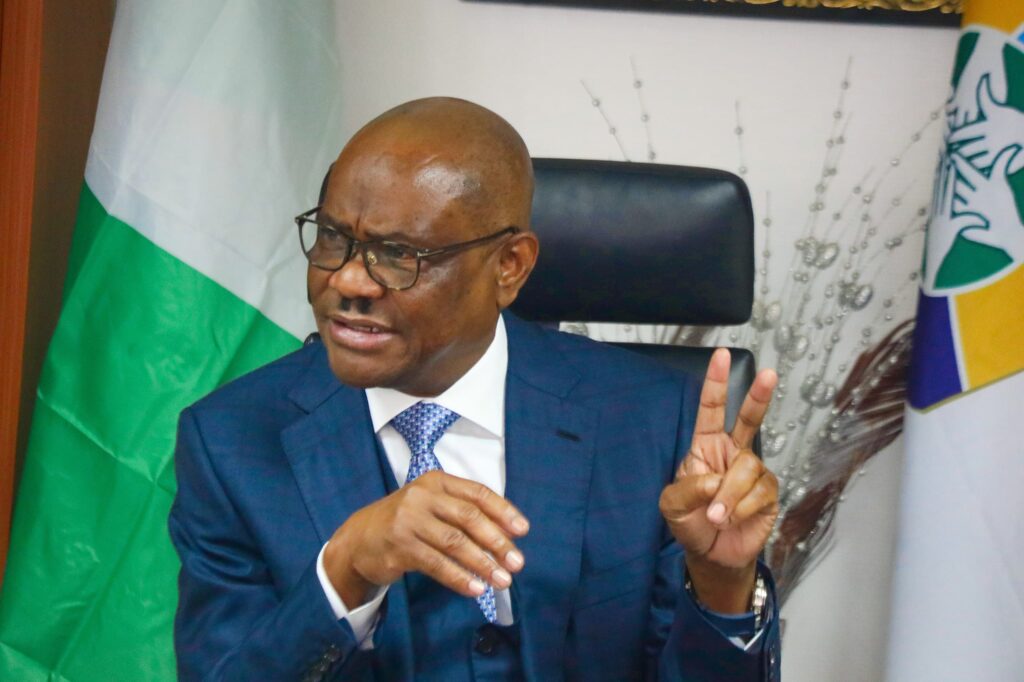
A fresh political controversy has erupted over the 2027 presidential election after Minister of the Federal Capital Territory, Nyesom Wike, declared that President Bola Tinubu was certain to win Rivers State.
Wike’s claim became the subject of a heated debate on ARISE Television’s The Morning Show, where analysts disagreed over whether the minister was merely playing political mind games or speaking from an understanding of how Nigeria’s electoral politics operates.
The discussion also touched on recent criticism of the Tinubu administration by Catholic leaders and whether the President is adequately aware of the hardship and concerns confronting citizens.
Wike had, during a media interaction in Abuja, warned politicians planning to contest for the presidency and hoping to win Rivers State in 2027 to “forget it”.
“I am telling you, let nobody make a mistake. The only person that can win Rivers State is Asiwaju Bola Ahmed Tinubu,” he said, describing himself as “a political realist.”
The declaration generated significant reactions, with some Nigerians expressing concern that statements suggesting a predetermined election outcome could discourage voters and weaken trust in democracy.
Mairo-Ese: Rivers People Will Decide
Ayo Mairo-Ese argued that Wike’s statement should not be interpreted as an indication that the outcome of the 2027 election had already been determined.
“What he was doing is what we call mind games. It is ‘political big speak’. It is psychological warfare,” she said.
She insisted that regardless of Wike’s political influence, the minister has only one vote.
“Wike has one vote, just like every other Nigerian. The people of Rivers State will determine who emerges as the winner.”
Mairo-Ese nevertheless warned that politicians should be careful about making statements that could make voters believe their choices no longer matter.
She also challenged INEC to strengthen public confidence in the electoral process.
“INEC has to demonstrate that every vote counts and that elections are free, fair and credible,” she added.
Rufai: Don’t Dismiss Wike’s Statement
Rufai Oseni took a completely different position.
He argued that Wike’s declaration should not simply be described as political posturing because the minister’s confidence was based on his established political influence and what Oseni described as controversies surrounding the 2023 presidential election in Rivers State.
Oseni referred to claims that results declared in Rivers did not tally with figures on IREV, saying the BBC had raised the issue in a special report on Nigeria.
“With due respect, he is not saying what he has not done. He is saying what he has done,” Oseni said.
He argued that public concerns over the integrity of elections cannot simply be ignored.
“We keep saying we don’t want voter apathy, but many people already believe the process is a charade already,” he said.
According to Rufai, journalists have a responsibility to confront the concerns surrounding Nigeria’s electoral system instead of dismissing them in the hope of encouraging people to participate.
Abati: Wike Cannot Declare Election Result
Reuben Abati, however, rejected Rufai’s interpretation and insisted that Wike has no authority to determine who wins Rivers State in 2027.
“Wike is just like every other Nigerian qualified to vote. He has only one vote,” Abati said.
“He cannot sit today and announce the outcome of the 2027 election in Rivers State.”
Abati described Wike’s position as “a trip of delusion”, maintaining that INEC is the institution legally empowered to declare election results.
He urged Rivers voters not to be intimidated by political declarations and to exercise their constitutional right to choose their preferred candidate.
“The people of Rivers State have the right to go out and make their own informed choice,” he said.
He also called for accountability against anyone who attempts to undermine the electoral process.
Rufai, Abati Debate Tinubu’s Awareness of Hardship
The conversation later moved to recent criticism of the Tinubu administration by Catholic leaders, including Archbishop Emeritus Cardinal John Onaiyekan and Monsignor Obiora Ike.
The discussion centred on whether people surrounding Tinubu shield him from public criticism and the realities of economic hardship.
Rufai rejected the suggestion that the President was unaware.
“There is no way the President will not know about all these things. He knows,” he said.
He pointed out that Tinubu has responded to criticism during meetings with religious leaders and traditional rulers, arguing that the real challenge is not whether the President knows about Nigerians’ problems but whether his administration’s message is convincing citizens.
“The issue is not awareness. The issue is whether the government’s narrative is landing with Nigerians,” he argued.
Rufai said rising hardship, insecurity and the high cost of living had left many Nigerians unconvinced by the government’s defence of its economic reforms.
Abati, meanwhile, defended the Catholic Church’s right to criticise government policies.
“The Catholic Church has a reputation for speaking its mind. They are not in the business of opposing the government for the sake of it,” he said.
He maintained that the government should view such criticism as part of the role religious institutions play in holding leaders accountable.
“What we want in Nigeria is a prophetic Church that defends the interest of the people and speaks truth to power.”
The exchange comes as political tensions and concerns about electoral credibility continue to build ahead of the 2027 general election, with the debate over Rivers State highlighting wider questions about voter power, political influence and trust in Nigeria’s democratic process.
Africans Angle News