Forgotten Dairies
If Peter Obi Wins: A Nation Still Bleeding From A War It Never Finished -By Kio Amachree
And Nigeria — all of Nigeria — must finally look the civil war in the eye. Not to re-litigate it. Not to assign eternal guilt. But to bury it properly, with truth, with acknowledgment, and with the full accounting of what all sides lost — including the Ijaw, the Kalabari, the minorities of the Niger Delta who were caught in somebody else’s war and are still paying for it today.

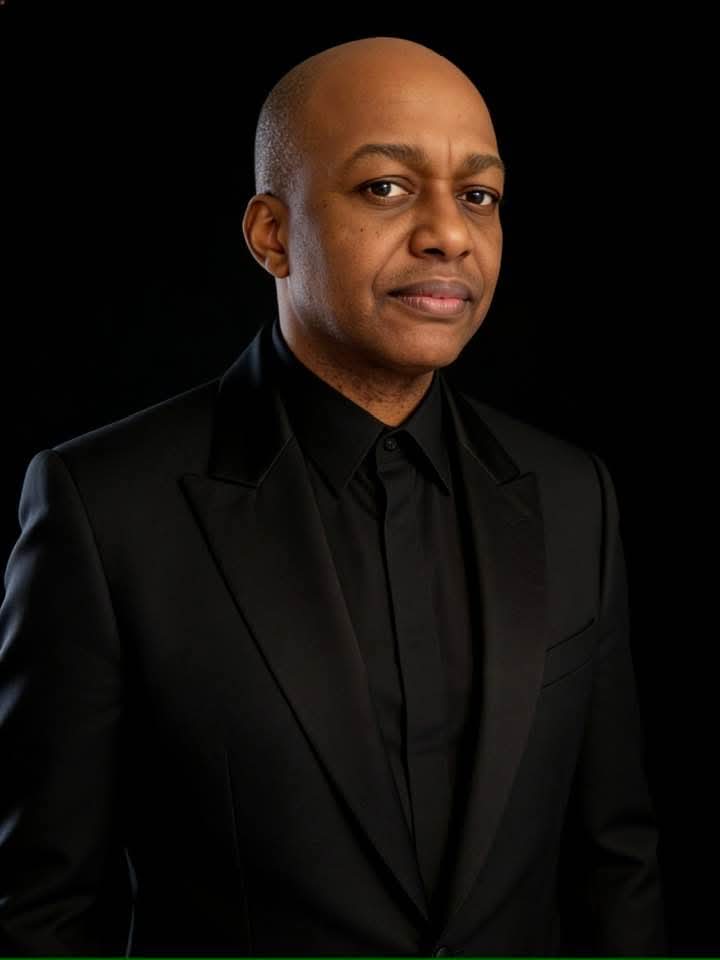
Nigeria is approaching 2027 with the familiar intoxication of possibility and the unspoken dread of consequences nobody wants to name out loud. Peter Obi has declared his intention to contest the 2027 presidential election  — and those of us who watched Nigeria bleed through a civil war, who lost family to it, who carry its geography in our bones — we are not merely spectators. We are the wound itself.
I am not here to tell you Peter Obi should not run. That is not my argument. My argument is simpler and darker: if he wins, the real test will not be governance. It will be survival — his, and Nigeria’s.
The War That Never Ended
Let me say what the polished commentators and the Abuja dinner-party crowd will not say: the Nigerian Civil War did not end in January 1970. It went underground. It was passed — like a curse, like a heirloom, like a loaded weapon — from parent to child, from community elder to impressionable youth, from trauma into ideology. I was a child during that war. I lived inside its geography. And I can tell you with absolute certainty: the wounds have not healed. They have mutated.
What I observe today, decades later, is a generation that did not fight in that war, was not alive during that war, has never set foot on a battlefield — and yet carries the rage of combatants. A generation taught to hate with the precision of people who suffered, without having suffered. That is not grief. That is programming. And programmed hatred is far more dangerous than earned anger, because it has no ceiling and no resolution.
My Father’s Role — And the Price My Family Paid
My father, Chief Godfrey Kio Jaja Amachree QC — Nigeria’s first Solicitor-General, the first African to serve as UN Under-Secretary-General, and General Gowon’s personal envoy to Washington — was a Kalabari man from the Niger Delta. He was not Igbo. He owed the Biafran state nothing. He served the Federal Republic of Nigeria because he believed in its unity and in the future of its peoples as one nation.
When he returned from Washington with the assurance of American support for the federal government, he helped bring a certainty of outcome to a war that had consumed three million lives. For that loyalty — for that act of statesmanship — certain quarters have spent decades branding him a murderer.
That is the Nigeria I am describing. A Nigeria in which a man who held office at the United Nations, who navigated the Congo Crisis, who served the law with distinction, cannot be remembered with honour by some — because he stood with the federation.
My grandfather, Chief Sekin Amachree — a man who participated in the 1958 Constitutional Conference in London — was imprisoned by Biafran forces. He was beaten. He was tortured. He never fully recovered. He died young. My people — the Kalabari, Ijaw — were held hostage in a conflict we wanted nothing to do with. Buguma, Abona, the whole of the Kalabari kingdom — occupied, brutalised, scarred. Men walk those streets today with missing limbs as living testimony.
We are not Igbo. We have never been Igbo. Yet I am consistently labelled so by those who are either determined to provoke or incapable of reading a map.
I carry no hatred for the Igbo people. They are what they are — a people of remarkable talent, energy, and ambition, who also suffered catastrophically in that war. But suffering does not excuse the weaponisation of grief against people who share that suffering, or against the descendants of those who simply chose a different side of a constitutional crisis.
The Pressure That Will Come
If Peter Obi is elected — and it is a possibility no serious analyst should dismiss — he will inherit not just a broken economy, a security catastrophe, and a dysfunctional federation. He will inherit a constituency of expectation that will not wait patiently for the protocols of governance to deliver justice.
There is a vocal, organised, and often threatening faction within the Igbo nationalist space that will arrive at Aso Rock with him in spirit, whether he invites them or not. They will demand a Biafran state within a state. They will frame every appointment, every contract, every security deployment through the lens of the war and its unresolved grievances. They will pressure him to think Igbo first — in every budgetary decision, every ministerial allocation, every military posting.
Only a fool listens to that kind of pressure. And whatever else Peter Obi may be accused of, he is not a fool. But the pressure will be immense, relentless, and public. And if he yields even partially — if he is seen to prioritise sectional interest over national duty — he will have handed his enemies in the northern elite the excuse they have been waiting for.
The Northern Calculation
Let us be direct: significant elements of the northern political establishment will not wish Peter Obi well in office. This is not conspiracy theorising — it is the architecture of Nigerian power politics laid bare. An Igbo president, in the minds of certain powerful northern actors, represents both a symbolic defeat and a structural threat. They will be watching for error. They will be manufacturing narratives. They will be calculating the moment at which intervention — political, institutional, or otherwise — becomes justifiable.
If that moment is handed to them by a president seen to be prosecuting a civil war by other means, Nigeria will face a crisis that makes every previous instability look manageable.
The Clinics We Actually Need
I have been receiving death threats for years. Every week, reliably, because I write. Because I am the son of a man whose decisions helped determine the outcome of a war fought fifty years ago. It has become boring. It has become a measure of how profoundly unwell a portion of this society has become.
Nigeria needs mental health infrastructure at national scale. Not as a diplomatic gesture — as a genuine emergency response. From the northeast to the southwest, from the Niger Delta to the Middle Belt, Nigerians are processing compounded trauma with no institutional support, no framework for reconciliation, and no honest national conversation about what happened and why. The fat cats in Abuja count dollars — proceeds, some of them, of the arms trade that keeps the killing going — while villages burn in Zamfara, Benue, Plateau. The stress is total. The depression is national.
Trauma clinics — physical and online — must be established. The civil war must be taught honestly in schools, not as a tale of federal triumph but as a shared catastrophe. The Willink Commission, the Constitutional Conferences, the voices of Niger Delta minorities who tried to carve a path between two nationalisms — all of it must enter the curriculum. The wounds will not close on their own.
A Warning, Not an Indictment
I do not know Peter Obi personally. I do not know with certainty that he will be elected. What I know — from history, from family memory, from the threats that arrive in my inbox each week — is that Nigeria is not ready for what his election will unleash if he is unprepared for it.
He must be twenty times tougher, twenty times more careful, twenty times more deliberate than any previous occupant of that office. He must refuse, publicly and repeatedly, to be the president of one people. He must treat the Igbo nationalist fringe with the same cold firmness with which he must treat every other ethnic power broker who attempts to colonise the state.
And Nigeria — all of Nigeria — must finally look the civil war in the eye. Not to re-litigate it. Not to assign eternal guilt. But to bury it properly, with truth, with acknowledgment, and with the full accounting of what all sides lost — including the Ijaw, the Kalabari, the minorities of the Niger Delta who were caught in somebody else’s war and are still paying for it today.
The wound is not Igbo. It is not Hausa. It is Nigerian. And it will kill us all if we keep pretending it healed.
Kio Amachree is a Stockholm-based diaspora activist, political commentator, and President of Worldview International.