
Opinion
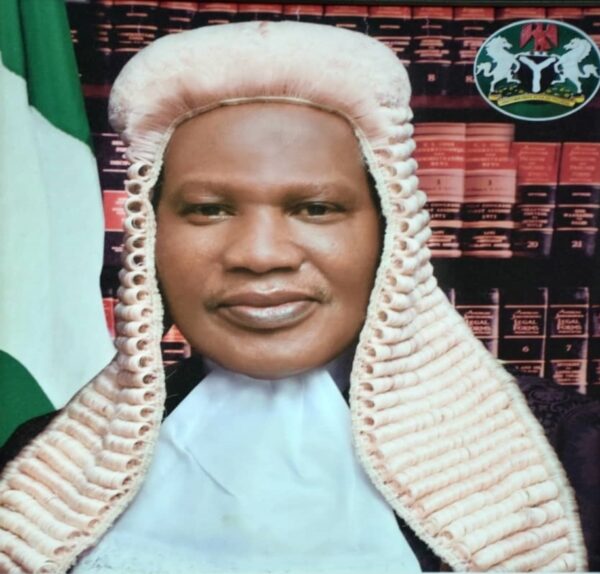
Justice Garba Mohammed and the Five-Member Panel’s Ultimatum: Save the Ruling Party or Save the Constitution and the People? -By Prof. John Egbeazien Oshodi
Voices across the country and even in the diaspora are no longer speaking in cautious tones. They are demanding neutrality. They are questioning whether institutions meant to referee democracy are now being viewed as participants within it.

A Game of Delays: Will the Five-Member Panel Postpone Nigeria into Crisis?
The Drama of the Reserved Verdict
Disenfranchising legislators who have defected to the ADC would be a profound provocation, directly undermining the democratic choices of their constituents. Such an action would send a dangerous message that representation can be erased by legal maneuvering, potentially igniting the very unrest the courts are meant to prevent.
Now the nation watches as the Supreme Court reserves judgment.
A five-member panel led by Justice Garba Mohammed listened to arguments in the appeal brought by Senator David Mark, challenging whether the courts even have the authority to interfere in the internal affairs of a political party. The argument is not new. It rests on an earlier position of the apex court itself, which had held that internal party matters fall outside judicial jurisdiction.
But this time, something is different.
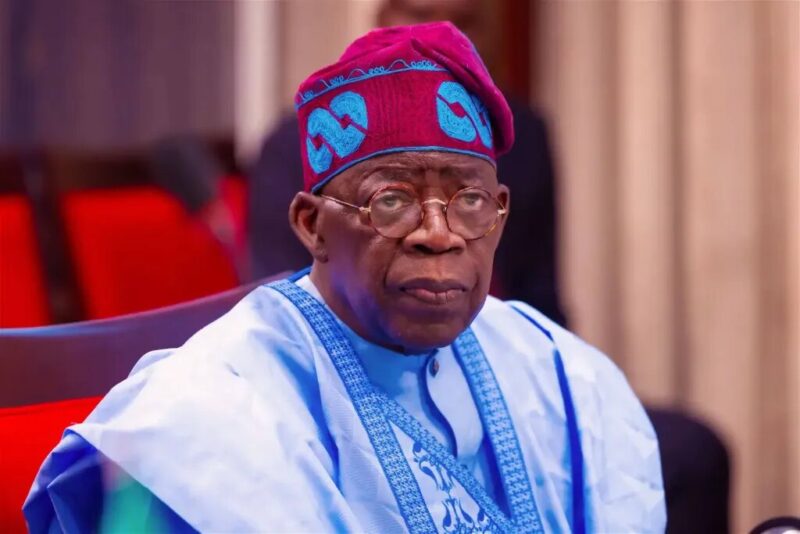
His image is now everywhere. The face of Justice Garba Mohammed is no longer confined to the courtroom. It is being watched by the public, by ordinary citizens, by young people, even by children who may not fully understand the law but understand fairness. Beyond Nigeria, the world is also watching.
And with that visibility comes memory.
There is a growing public belief, fair or not, that institutions often find ways to serve the powerful. That delays are sometimes not neutral. That outcomes can be shaped long before they are announced.
But this moment refuses to fit into that old pattern.
This time, the stakes are wider. The reactions are less predictable. The tolerance for perceived manipulation is lower. What may once have passed quietly now sits under intense scrutiny.
And yet, instead of clarity, the country receives delay.
Reserved.
Again.
Law, Precedent, and a Dangerous Crossroad
Counsel to the appellant argued that the issue had already been settled in principle. That the courts should not be entertaining such disputes in the first place. That jurisdiction itself is the foundation, and without it, the entire process collapses.
On the other side, opposing counsel urged caution, arguing procedural prematurity and supporting the lower court’s position.
But beneath these legal arguments lies a deeper national question:
If the court has already said it has no jurisdiction over internal party affairs, why is the matter still alive at this level?
And more importantly, what happens if that principle is suddenly bent?
This is not a routine legal moment. It is not even comparable to previous high-tension rulings such as those surrounding Rivers State, where many Nigerians and legal observers questioned delays, sequencing, and the overall direction of judicial decisions affecting that state. In those instances, concerns were raised about timing, interpretation, and the broader implications of judicial intervention.
But this time is different.
This is no longer confined to one state.
This is no longer a regional matter.
This is national.
And in many ways, it has become global in its visibility.
The country is watching. The legal community is watching. Observers beyond Nigeria are watching.
And because of that, the margin for perceived inconsistency is much smaller.
If precedent is upheld, the judiciary reinforces its own authority.
If precedent is altered without clear justification, the consequences may extend beyond the courtroom.
This is why caution is not optional. It is essential.
Because at this level, a decision is not just a ruling. It is a signal.
And that signal must not push a fragile nation toward unnecessary instability.
The Judges’ Private War
Inside the chambers, the tension is no longer theoretical. It is no longer about briefs, citations, or procedural arguments. It has moved into something more human, more fragile, more difficult to contain.
Silence sits heavily in the room, but it is not empty. It is filled with calculations, hesitation, and the quiet awareness that whatever is decided here will not end here.
One mind leans forward, not speaking immediately, as if weighing not just the law but the consequences of the law.
“If we follow precedent,” the voice finally says, measured and careful, “this matter ends here. Clean. Straight. No jurisdiction.”
A pause follows.
“But if we don’t… what exactly are we stepping into?”
That question lingers, because everyone present understands it is not purely legal. It is about reaction, pressure, and what unfolds beyond the courtroom.
Another mind responds, more directly this time.
“We are no longer just interpreting law. Every word will be read politically. Every delay will be interpreted. Even silence will speak.”
No one disagrees.
Because in that moment, they are not just judges. They are minds carrying the weight of perception, expectation, and a growing crisis of trust.
Outside that chamber, the pressure is no longer abstract.
The Chairman of the Independent National Electoral Commission, Joash Ojo Amupitan, is now at the center of a credibility storm. Allegations tied to social media activity, whether proven or disputed, have already triggered protests, calls for resignation, and warnings from civil society groups about a deepening legitimacy crisis.
Even where denials exist, the damage is not purely factual—it is perceptual.
And perception, in a fragile political moment, is powerful.
Voices across the country and even in the diaspora are no longer speaking in cautious tones. They are demanding neutrality. They are questioning whether institutions meant to referee democracy are now being viewed as participants within it.
This is the environment surrounding those five minds.
This is the atmosphere into which their decision will land.
Then comes the familiar signal, quiet but understood.
Delay.
Watch the country.
Watch the North.
Wait.
But delay, in this moment, is no longer neutral.
It feeds suspicion.
It stretches uncertainty.
It connects the judiciary to a wider pattern the public believes it is already seeing.
One part of each mind returns to law, to precedent, to the discipline that says jurisdiction must come first.
Another part sees the unfolding reality: an electoral body under scrutiny, a public already questioning neutrality, and a political environment where trust is thinning.
And that realization sharpens the warning.
If the electoral umpire is already perceived as compromised, then the judiciary cannot afford even the appearance of alignment, hesitation, or inconsistency.
Because in such a moment, silence is interpreted.
Delay is interpreted.
And decisions are judged long before they are delivered.
At that point, the word reserved changes meaning once again.
It is no longer just caution.
It becomes risk.
It becomes exposure.
And it places those five minds at the center of a national test of institutional credibility.
Because now the question is no longer just what they will decide—
But whether they will restore confidence…
or deepen the doubt already spreading across the system.
The Streets Are No Longer Predictable
For years, those in power believed they understood protest behavior in Nigeria. When unrest came, it often came louder from the South, with organized demonstrations following familiar patterns. And when force followed—tear gas, water cannons—the streets would scatter. People would retreat. The system would breathe again.
But this time is not following that script.
This time feels heavier. Riskier.
Now, Northern youths, including many from Muslim communities, are stepping forward more visibly into protest spaces—not as observers, but as participants. Their presence changes the emotional temperature of the nation. It introduces a different kind of resolve, a different kind of endurance.
They are not easily dispersed.
They are not easily dismissed.
And that is where the danger begins.
Because a system that relies on predictable reactions is now facing something it does not fully understand. The old expectation—that force will clear the streets—no longer holds with certainty.
What is emerging is not just protest.
It is resistance with memory.
It is presence with conviction.
And when that kind of energy meets uncertainty at the top, it does not fade quietly.
It builds.
This is no longer a manageable situation. It is a combustible one.
The Irony That Shocked Power
What was meant to stabilize the system is now unsettling it.
Actions taken by the Independent National Electoral Commission, including the de-recognition of the Mark-led ADC leadership, were expected to control the situation, to contain it, to buy time.
But the opposite has happened.
Instead of calm, there is suspicion.
Instead of trust, there are questions.
Questions about neutrality.
Questions about timing.
Questions about whether institutions are still standing above politics—or quietly bending within it.
The situation has become more fragile because perception has shifted.
And once the public begins to believe that the system is no longer neutral, every action—every delay, every silence, every signal—takes on a new meaning.
Even things as small as social media expressions now carry weight. They are read not as personal moments, but as institutional signals.
And when trust begins to crack, it does not crack neatly.
It spreads.
The Dark Moves Behind the Curtain
While the nation watches the courtroom, something else is unfolding quietly within the structure of the law itself.
The Electoral Act 2026 introduces a dangerous ambiguity. A provision allowing ballot papers without official marks to be counted at the discretion of a returning officer.
Discretion.
In a stable system, that word might pass unnoticed.
In this environment, it becomes a risk.
Because discretion, at that level, opens the door to doubt. To dispute. To claims of manipulation that may be impossible to contain once they begin.
As warned by many, this is not a small flaw. It is a structural weakness at the very point where the will of the people is meant to be protected.
So now the danger is layered.
Pressure at the front.
Uncertainty in the law.
And a public already on edge.
This is how systems fail—not in one moment, but in overlapping weaknesses that begin to feed each other.
The Five-Member Panel’s Warning Moment
This is where the weight falls.
Those five minds are no longer simply deciding a case. They are standing at the intersection of law, power, and public emotion.
And the truth must be faced clearly:
If they get this wrong, it will not stay inside the courtroom.
If they delay without clarity, tension will grow.
If they deviate without explanation, suspicion will harden.
And if their decision is seen as serving the powerful over the people, the reaction may not be containable.
This is how sparks become fire.
This is how uncertainty becomes chaos.
This is how institutions lose control of what they once believed they could manage.
So the question before them is no longer just legal.
It is existential.
The Chief Justice’s Moment of Truth
At the center of all this stands the Chief Justice.
This moment will not be remembered in technical language.
It will not be remembered in procedural terms.
It will be remembered in outcome.
This is not about ethnicity.
This is not about alignment.
This is about whether the judiciary stands with the Constitution… or is seen to stand with power.
If the judiciary appears uncertain, the country becomes anxious.
If it appears inconsistent, the country becomes suspicious.
If it appears influenced, the country becomes unstable.
And once instability begins, it does not ask for permission to grow.
The Final Instruction
The message to those five minds must be clear, and it must be heavier than any pressure around them:
Stand with the people.
Stand with the Constitution.
Stand with what is right in the sight of God, not in the comfort of power.
Because this is not just about law anymore.
This is about preventing a fire that, once started, may not be easily contained.
Closing Reflection
The question before the five-member panel is no longer legal.
It is moral.
It is historical.
Will they protect the Constitution, or will they be remembered as the moment when trust finally broke?
Because in moments like this, institutions do not just decide cases.
They either calm a nation…
or they set it on edge.
And a nation already on edge does not need another push.
This writer, a psychologist, has no personal or political connection to any of the individuals mentioned. This commentary is written solely in pursuit of democratic accountability, justice, and good governance.
About the Author
Prof. John Egbeazien Oshodi is an American psychologist, an expert in policing and corrections, and an educator with expertise in forensic, legal, clinical, and cross-cultural psychology, including public ethical policy. A native of Uromi, Edo State, Nigeria, and son of a 37-year veteran of the Nigeria Police Force, he has long worked at the intersection of psychology, justice, and governance. In 2011, he helped introduce advanced forensic psychology to Nigeria through the National Universities Commission and Nasarawa State University, where he served as Associate Professor of Psychology.
He teaches in the Doctorate in Clinical and School Psychology at Nova Southeastern University; the Doctorate Clinical Psychology, BS Psychology, and BS Tempo Criminal Justice programs at Walden University; serves as a visiting virtual professor in the Department of Psychology at Nasarawa State University; and lectures virtually in Management and Leadership Studies at Weldios University and ISCOM University. He is also the President and Chief Psychologist at the Oshodi Foundation, Center for Psychological and Forensic Services, United States.
Prof. Oshodi is a Black Republican in the United States but belongs to no political party in Nigeria—his work is guided solely by justice, good governance, democracy, and Africa’s development. He is the founder of Psychoafricalysis (Psychoafricalytic Psychology), a culturally grounded framework that integrates African sociocultural realities, historical awareness, and future-oriented identity. He has authored more than 700 articles, multiple books, and numerous peer-reviewed works on Africentric psychology, higher education reform, forensic and correctional psychology, African democracy, and decolonized models of clinical and community engagement.



















You must be logged in to post a comment Login