
National Issues
Nigeria’s Unfulfilled Promise: When Will Leaders Choose the Nation Over Themselves? -By Aliyu Baba Mohammed
Instead, what Nigerians have witnessed across decades of democracy is a troubling pattern of retrogression. Political leaders have too often prioritised personal enrichment over national development, funnelling public resources toward private pockets, families, and networks of allies. Corruption has not merely persisted — it has been gradually normalised. Accountability, when it comes at all, tends to be selectively applied: a political tool wielded against opposition figures rather than a genuine mechanism for justice.

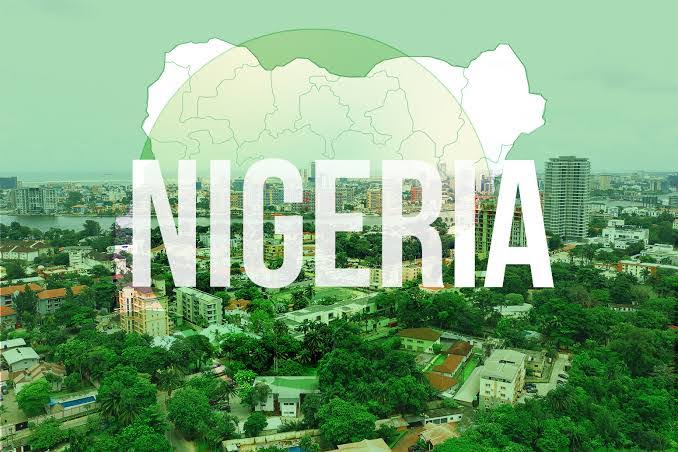
The basic needs of an average Nigerian are neither extravagant nor unreasonable — security, potable water, stable electricity, good roads, accessible healthcare, and quality education. These are the foundational pillars upon which any functional society is built. If the Nigerian government could make these amenities consistently available, affordable, and reliable, there would be little or no room for public frustration, criticism, or a crisis of confidence in leadership. The demands of the people have always been simple; it is the response of those in power that has been anything but.
Nigeria returned to democratic governance in 1999 — over 27 years ago — yet the country continues to grapple with these same fundamental needs. The problem is not a lack of resources. Nigeria is, by many measures, one of the most resource-rich nations on the African continent. The real deficit lies elsewhere: in political will, in wisdom, and perhaps most painfully, in basic human empathy. Far too many of the leaders the country has produced — past and present — have governed as though the welfare of citizens is secondary to the preservation of their own interests.
Consider a straightforward approach: what if a government committed to tackling one critical need at a time? For instance, dedicate one to three years exclusively to water supply — fix the infrastructure, expand access, and ensure that clean water reaches every corner of the country — then move systematically to electricity, roads, healthcare, and education. At that pace, even allowing four years per sector, Nigeria could have addressed every major gap within a generation of leadership. It is not a radical idea; it is simply focused governance. And yet, it has never happened.
Instead, what Nigerians have witnessed across decades of democracy is a troubling pattern of retrogression. Political leaders have too often prioritised personal enrichment over national development, funnelling public resources toward private pockets, families, and networks of allies. Corruption has not merely persisted — it has been gradually normalised. Accountability, when it comes at all, tends to be selectively applied: a political tool wielded against opposition figures rather than a genuine mechanism for justice.
Perhaps the most sobering reflection is what is happening just next door. Ghana — a country that once trailed Nigeria significantly in development — is now surpassing it in the very basics. Ghanaians today enjoy more reliable electricity, wider access to clean urban water, better-maintained road networks, and stronger security than many Nigerians can claim. Remarkably, these are the same people Nigeria expelled during the mass deportations of the mid-to-late 1980s. Ghana’s progress is not accidental or mysterious; it is the result of leaders who chose, at critical moments, to do what was right for their people. That contrast should not be a source of shame alone — it should be a source of urgency.
Nigeria cannot afford to continue down this path. The chaos is not sustainable, and the cost — measured in lives diminished, potential unrealised, and citizens displaced — grows heavier with every passing administration. The time has come to return to the drawing board with seriousness and sincerity. Nigerians must raise the bar of civic engagement: challenging the status quo with greater persistence, holding leaders to genuine accountability, and ensuring that those who abuse public office or privilege face real consequences. A nation this richly endowed has no business being this poorly governed — and its people deserve nothing less than leaders who finally choose the nation over themselves.
Aliyu Baba Mohammed, writes from Kaduna.
He can be reached via: aliyu0380@gmail.com






















You must be logged in to post a comment Login