
Forgotten Dairies
Offodile’s Synthesis On Nigeria – Biafra Troubled Road -By IfeanyiChukwu Afuba
Acknowledging Ahmadu Bello as a federalist, Offodile states unequivocally: ‘I believe that
Nigeria is redeemable if we fight for it’s liberation from the clutches of agents of centralisation.’ The desired destination is return to ‘1963 federal Constitution negotiated and accepted by the Nigerian people.’

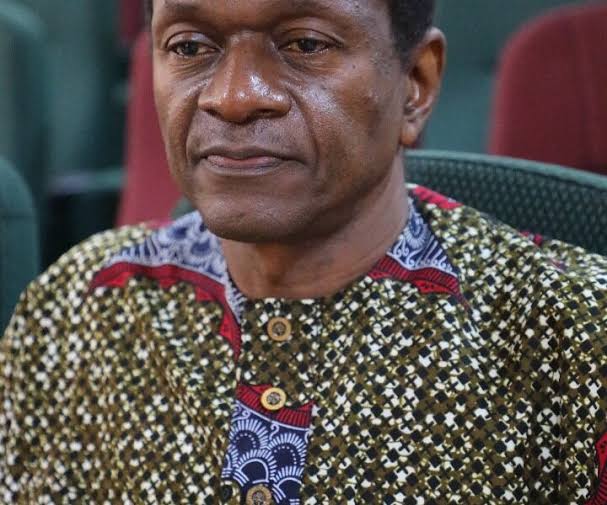
Hon Chudi Offodile’s energy – filled book calls to mind two striking titles from past intellectual engagement with Nigeria. In chronological order, the first was a 1985 poem by Sonala Olumhense in _The_ _Guardian_ “Because I Love You.” The other was Emeka Ojukwu’s 1988 book, _Because I am Involved._ Both works addressed Nigeria; in varying, heart – felt, critical terms and tones. A testament of belonging laced the lines, tempering occasional flow of anger as act of concern. And that is largely the spirit, the attitude that frames Offodile’s 297 page excursion.
Published ten years back in 2016, the book exudes scent of freshness. It’s a smell of currency as much derived from topicality of subject matter as mature handling. Predictive analysis is an indication of informed commentary. Offodile had written over a decade ago that the resurgence of separatist agenda in 1999 with formation of Ralph Uwazurike’s Movement for Actualisation of Sovereign State of Biafra was influenced by the conspiracy against Dr Alex Ekwueme’s presidential bid. It would be recalled that the setting was ripe for Ekwueme’s presidential nomination at PDP 1999 Jos convention until the deal by the military and PDP’s pseudo progressives aborted the mission. The bad faith demonstrated by the party’s blocs against it’s prime convener and first class candidate, rankled beyond partisan lines.
He wrote: ‘…collective injury or pain inflicted on a people is not easily assuaged because the Movement for Actualisation of Sovereign State of Biafra (MASSOB) was formed by Ralph Uwazurike in 1999, possibly in response to outcome of the election.’ The author’s thoughtful observation leads to a better appreciation of the dynamics of Mr Peter Obi’s current presidential quest and reception of Nnamdi Kanu’s agitation.
In effect, the book is concerned with the lessons of Biafra for Nigeria. _The Politics Of Biafra And The Future Of Nigeria_ is thus, a liberal, historical journey about statehood and nationhood. The book takes the reader on a calm but firm interrogation of historical narratives, power, ethnic identity, human ambition, political alliances, social justice, constitutionalism and development. Parts of the work are expository, analytical and exhortative. Account of the sometimes uneasy relationship between Azikiwe and the Ojukwus, from Sir Louis to his soldier son is gripping. Several assumptions about the civil war, for instance, are shattered not with rhetoric but by the illumination the work yields. Insights gained from authoritative account of some events leaves the reader exclaiming with surprise at certain junctures. It’s easy to follow the author all through the pages of the book not merely by the pull of lucid language and logic. To a large extent, the writer’s presentation achieves the demand of balance. He allows the actors speak for themselves or give their perspectives as reasonably practicable in the circumstance. Interestingly, the author’s father was Press Secretary to Ukpabi Asika, Administrator of East Central State.
One of the myths burst in the book is the popular view that Major Murtala Mohammed led the July 1996 counter coup. Drawing from the authorised biographies of Yakubu Gowon and Theophilus Danjuma, Offodile punctures the notion. Lt Col Gowon had called the Government House telephone number on July 29, 1966. When Danjuma picked the call, Gowon asked him if he had heard about the mutiny and killing of Igbo officers in Abeokuta early that morning. Danjuma responded yes, saying he was there in Ibadan to arrest the Head of State. ‘I would like to point out that the key players in the Ibadan coup, Majors Danjuma, Akahan, Walbe and even Captain Martin Adamu, who took command of the all important Ikeja barracks, despite the presence of Major Murtala Mohammed, were all Middle Belt, Christian officers – Gowon’s constituency. ‘ Major Walbe was appointed ADC to Gowon. Major Akahan was not only promoted to lieutenant colonel but also made chief of army staff in the new order. Offodile contends that in the face of worsening national crisis, Gowon appeased the north to hang on to power. Our experience of power consolidation supports this thesis. General Ibrahim Babangida on ascending the throne in 1985, could not have been oblivious of the challenges before him as an officer from the Middle Belt. It seems the case that Nigeria’s membership of the OIC few months after, was a deliberate step to win support of the core, muslim north.
Gowon’s love of power and the sudden catapult of the federal permanent secretaries as empire administrators found convergence in rejection of the January 1967 Aburi Accord. Their new world was threatened by the devolution of power enshrined in the Accord. It was a similar case of Obafemi Awolowo’s activism in the Gowon junta. The writer notes that
at a prime opportunity for dialogue at OAU Conference in Kinshasa, Zaire, Awolowo blocked the window with the pedant that the Organisation’s charter forbids interference in the internal affairs of member states. Emeka Ojukwu, Biafra’s leader had also caught the bug of power when, in 1968, against the wise counsel of Dr Nnamdi Azikiwe, Ojukwu declared at OAU summit in Ethiopia that Biafra’s sovereignty was not negotiable. In his broadcast to Biafrans three days after Ojukwu’s departure, acting Head of State, Philip Effing made reference to the “old regime who made negotiation and reconciliation impossible.”
But the writer dismisses as a non – starter, the criticism that the declaration of Biafra was a function of Ojukwu’s ambition. Biafra was an aggregation of the will of the intelligentsia and the masses at the time. Just as the author took care to portray the multi ethnic composition of the January 1966 coup plotters, he underscores the integral presence of non – Igbos in the Biafran project. There were the Philip Effiongs, N. U. Akpans and M.T. Mbus at every strata of Biafra. It should be remembered that the Ogoni leadership crisis of 1994 was in part a carryover of pro Biafra and pro Nigeria cleavage. Ken Saro Wiwa declared for Nigeria during the war but his kinsmen such as Edward Kobani, Ignatius Kogbara and Garrick Leton embraced Biafra. Leton was a prominent member of the engineering team who produced ogbunigwe and other projectiles for the army. Offodile’s book briefly ventilates the three positions on Biafra by easterners. There were the outright naysayers, albeit a tiny minority, led by Ukpabi Asika. There was the moderate school represented by the Azikiwes who conceived Biafra as means to an end. And there were the diehards represented by Ojukwu and Chinua Achebe who reasoned that negotiation died with the wilful, absolutist repudiation of Aburi Accord by Lagos. The big surprise from Offodile’s book is that Asika’s wife, Chinyere, was pro Biafra! The marriage came to near – breaking point over Biafra. Not even the super appointment of Administrator could automatically resolve the conflict. ‘It took more than a month of cajoling and begging by friends of the couple to convince his wife to join him in Nigeria. Finally, with great reluctance, she joined him in Lagos in November 1967.’ Such was the complexity of the Biafra situation.
It’s the writer’s impression that the ‘future of Biafra and Nigeria are inextricably linked.’ Aside marginalisation and the impediments of quasi unitarism imposed by a sectionally – dominated military, the author cites poor leadership in the southeast as causative factor for Ipob – ian illusions.
Acknowledging Ahmadu Bello as a federalist, Offodile states unequivocally: ‘I believe that
Nigeria is redeemable if we fight for it’s liberation from the clutches of agents of centralisation.’ The desired destination is return to ‘1963 federal Constitution negotiated and accepted by the Nigerian people.’
Afuba is of Politics & Governance Forge, Awka.
















You must be logged in to post a comment Login