Global Issues
Earthquake, Tsunami, Collapse: Mindanao Disaster Raises Questions of Negligence -By Fransiscus Nanga Roka
This begins with an audit to assess the integrity of buildings in affected areas, especially schools and hospitals. Second, the Philippines needs to diligently realign its disaster risk governance with an emphasis on enforcement mechanisms not just policies that remain unimplemented. Third, allocate resources to move from pilot programs to the establishment of national standards regarding early warning systems and community level evacuation protocols.

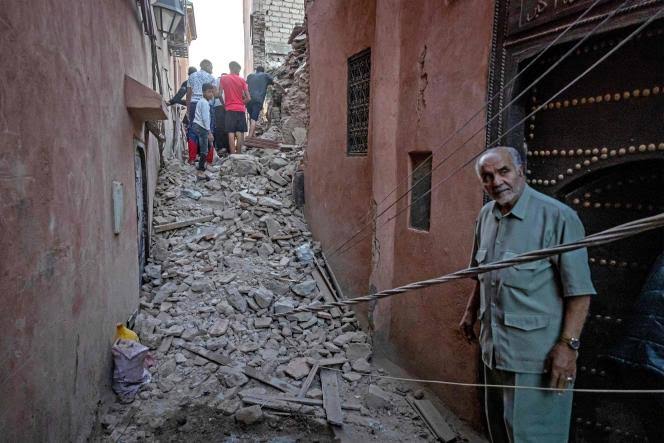
But what Mindanao shook out was not merely tectonic fault lines. The day of the 7.8 Magnitude offshore Sarangani earthquake on June 8, which killed at least 53 people and injured hundreds as it triggered landslides and local tsunami waves, was a day when the government faced not only devastation but also a deeper reckoning: was this nature’s cruelty untempered by human agency or how to contend with an ordinary tragedy?
No disaster this size is entirely “natural.” You are trained as seismic risk science, however neither new nor esoteric in science world. Cusco is inescapably located in the Pacific Ring of Fire, a long-established plate tectonic region recognized as extremely susceptible to earthquakes and tsunamis. But the scale of destruction in Mindanao, toppled public buildings, shattered hospitals and thousands of homes turned into rubble is hardly consistent with risk exposure; it suggests mismanagement instead.
Not the cracked roads or fallen structures but the timing perhaps: it was the first day of school and schools were closed for over 3.2 million students Classrooms what are supposed to be safe public places suddenly turned into potential death traps. It begs the question how building codes are enforced, how safety has been vetted and whether disaster preparedness had become a complacent bureaucratic exercise rather than a matter of life-and-death.
Adding to the crisis, tremors of over 2,000 aftershocks have kept communities in constant fear. Mind you, emergency declarations like that done in General Santos City are needed but they are only responsive tools. They avoid answering the more troubling question: why were critical infrastructures so vulnerable to start with?
To recast this catastrophe as inevitable is to free institutions from blame. Land-use planning, early warning systems and robust infrastructure are not aspirational goals, they ought to be baseline obligations of all states that are prone to disaster. Landslides in notorious high-risk coastal and cliffside locations suggest entrenched failings of planning enforcement and hazard mapping.
The response phase that is now in progress search and rescue, restoration of utilities and communication links, partial reopening of transportation hubs gives evidence to a government trying to reassert control. However, recovery should be a tool not renunciation. Aid can rebuild houses; it cannot repair relationships.
What comes next should be more than rebuilding, it needs to be reparation.
This begins with an audit to assess the integrity of buildings in affected areas, especially schools and hospitals. Second, the Philippines needs to diligently realign its disaster risk governance with an emphasis on enforcement mechanisms not just policies that remain unimplemented. Third, allocate resources to move from pilot programs to the establishment of national standards regarding early warning systems and community level evacuation protocols.
Equally critical is transparency. Where any compliance failures, procurement irregularities or regulatory lapses occurred, those should be non negotiable conditions in the public disclosure. Otherwise, the cycle of disaster and denial will only be repeated.
The tragedy of Mindanao is not an isolated case; it is a stress test that shows us the systemic cracks. Will those fractures be healed, or will they just be seven feet under the next disaster?
For when the earth shakes again and it will the true test of government will not be how fast a state responds but how fully it prepared.
Faculty of Law University 17 August 1945 Surabaya, Managing Partner of Law Firm Victorious Indonesia and Structural Engineering Expertize