
Education
Nigeria’s Education System: A Momentum Of Progress, Yet Regressive Outcomes -By Yekini Lukmon
Nigeria cannot continue to celebrate expansion while ignoring declining standards. Educational reform must move beyond policy pronouncements to measurable outcomes. Government at all levels must substantially increase investment in education, improve teachers’ welfare, modernise learning facilities, strengthen quality assurance mechanisms and guarantee the security of schools across the federation.

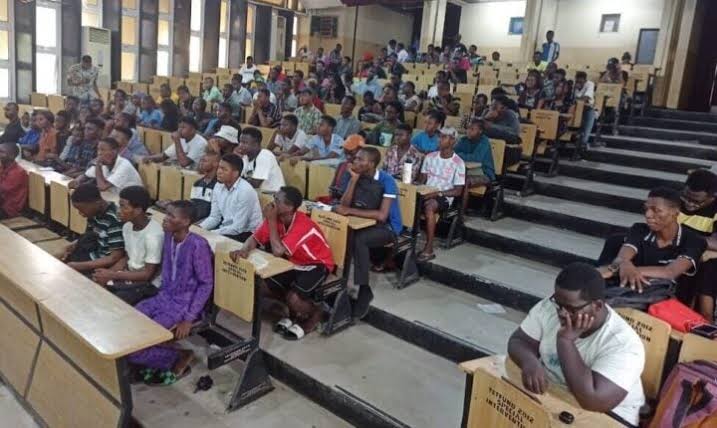
Education is universally acknowledged as the foundation of national development. No nation can attain sustainable economic growth, technological advancement or social stability without investing meaningfully in the education of its citizens. Yet, despite decades of reforms and billions of naira committed to the sector, Nigeria’s education system continues to struggle under the weight of persistent structural deficiencies that have steadily eroded public confidence.
The challenges are neither new nor hidden. Chronic underfunding, decaying infrastructure, overcrowded classrooms, inadequate teaching and learning materials, shortage of qualified teachers, and worsening insecurity have combined to undermine the quality of education across the country. In many communities, schools have become unsafe, while teachers and pupils increasingly face security threats that disrupt learning and discourage enrolment.
Ironically, Nigeria once demonstrated remarkable ambition in educational planning. The World Book Encyclopedia (1976) observed that only about one-quarter of Nigerians were literate and that the country lacked sufficient schools and teachers to meet growing demand. However, it also documented the Federal Government’s bold educational vision, which included the introduction of the Universal Primary Education programme in 1976, free elementary education, the construction of hundreds of primary and secondary schools, expansion of teacher-training institutions, technical and vocational schools, and the establishment of additional universities.
Those policies reflected a government that recognised education as the engine of national transformation.
More than five decades later, however, Nigerians are compelled to ask a fundamental question: Has the nation’s education system truly progressed, or has it merely expanded in size while declining in quality?
The question is not without merit. Many parents and grandparents maintain that the standard of education in their time was superior to what obtains today. While such views may partly be coloured by nostalgia, they nevertheless highlight an uncomfortable reality—that the quality of learning has become a major concern despite significant increases in school enrolment and the number of educational institutions.
Indeed, Nigeria has recorded impressive quantitative growth. There are more universities, colleges, secondary and primary schools today than at any other period in the nation’s history. Student enrolment has also risen considerably. Unfortunately, this expansion has not translated into a corresponding improvement in educational quality.
The country’s teaching workforce remains one of the sector’s greatest casualties. Poor remuneration, delayed salary payments, inadequate welfare packages and limited opportunities for career development have fuelled a disturbing brain drain, with many experienced teachers abandoning the profession or seeking greener pastures abroad. The inevitable consequence is a shortage of competent educators and declining classroom effectiveness.
Learning conditions in many public schools also remain deplorable. Millions of pupils continue to study in overcrowded classrooms, dilapidated buildings and poorly equipped laboratories, with little or no access to modern instructional materials. Rural communities and conflict-affected areas bear the heaviest burden of these deficiencies, widening the educational gap between urban and rural Nigeria.
Funding remains another critical obstacle. Although successive governments have increased education budgets in nominal terms, allocations have consistently fallen below UNESCO’s recommended benchmaprk of 15 to 20 per cent of national expenditure. The persistent underinvestment has hindered infrastructure development, teacher training, educational research, innovation and curriculum reform.
Compounding these challenges is the growing insecurity across several parts of the country. Repeated attacks on schools, the abduction of students and teachers, and the rising number of out-of-school children continue to threaten the future of basic education. Inflation and the depreciation of the naira have further weakened the financial capacity of public institutions to deliver quality education.
To be fair, the sector has not been without notable achievements. Recent initiatives by the Federal Ministry of Education to promote digital literacy, integrate Artificial Intelligence into teaching and learning, strengthen Technical and Vocational Education and Training (TVET), and improve access to student loans represent commendable steps towards modernising the education system. Likewise, various state and federal programmes aimed at reducing the number of out-of-school children deserve recognition.
However, increased enrolment alone cannot be mistaken for educational progress. The true measure of a successful education system lies in the quality of its graduates, the competence and motivation of its teachers, the relevance of its curriculum, and its ability to produce citizens equipped to compete in an increasingly knowledge-driven global economy.
Nigeria cannot continue to celebrate expansion while ignoring declining standards. Educational reform must move beyond policy pronouncements to measurable outcomes. Government at all levels must substantially increase investment in education, improve teachers’ welfare, modernise learning facilities, strengthen quality assurance mechanisms and guarantee the security of schools across the federation.
The future of Nigeria depends largely on the quality of education available to today’s children. Without a well-funded, secure and efficient education system, the country’s aspirations for economic prosperity, technological innovation and sustainable national development will remain elusive.
The verdict is therefore difficult to ignore. Nigeria’s education system has undoubtedly expanded in scope, but unless quality becomes the centrepiece of policy and implementation, that expansion risks becoming little more than statistical growth. A nation that neglects the quality of its education ultimately mortgages its future.
























You must be logged in to post a comment Login