
Forgotten Dairies
From Claims To Facts: What M.A Actually Delivered For Bauchi -By Sani Danaudi Mohammed
These programs show that M.A. Abubakar, SAN approached youth and women empowerment with both immediate relief and long-term capacity building. By combining BACYWARD’s direct interventions with education support, vocational training, and economic access, his administration laid a foundation where youths and women were not just beneficiaries of government, but active participants in Bauchi’s development.

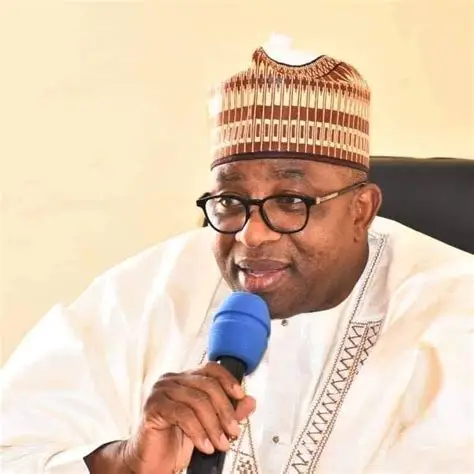
The social media have been aggoged by some individuals who claimed that M. A Abubakar SAN should campaign on performance not name calling. One of such is Ishaq Dabo the DG of SBU Vanguard for Governor 2027. The M. A Abubakar SAN and those behind him including my humble self have since chosen to focus on the 2027 elections rather than distraction but addressing baseless claims of this nature became necessary to avoid the public been misled. I hold Senator Shehu Buba Umar to the highest esteem not as aligned direct supporter but as someone who’s votes counting included mine been a Senator representing me at the 10th Senate.
I have never engaged nor written anything that ever undermines his reputation or character in both ends. But this response is not decending directly on the video that surfaced online where my principal and incoming Governor of Bauchi State M. A Abubakar SAN was engaging the PRP Gubernatorial Candidate Senator Shehu Buba Umar but it is a response to those asking questions about M. A Abubakar SAN performance and the need to be school regarding their international questions. Recently, the M. A Abubakar SAN camp has continued to received decompress from all angles without anyone been influenced but for widely acceptance and records of performance from 2015 to 2019 when he served as Governor of Bauchi State.
As 2027 approaches, the political conversation in Bauchi has seen a shift where some elements have chosen to focus on personal attacks against former Governor M.A. Abubakar, SAN, rather than on the records of his administration. Instead of engaging with documented achievements and policy outcomes, the strategy has relied on content and narratives aimed at shaping perception through personality. This approach has not altered the broader public assessment because the emphasis remains on what was delivered and how government was run, not on rhetoric.
The public discourse continues to return to governance, accountability, and the capacity to manage a state under pressure, areas that define the basis of his standing ahead of 2027. The reason these attacks have not given his opponents the edge is rooted in decades of experience and a reputation for accountability in managing public resources. M.A. Abubakar is associated with a style of leadership that prioritizes transparency, fiscal discipline, and completion of projects over political noise.
The 21st-century reality of governance demands more than political power. It requires experience, transparency, and the capacity to deliver difficult tasks under pressure. As former Vice President Yemi Osinbajo noted, Nigeria is a complex federation that cannot be run by trial and error. It needs leaders who understand institutions, can manage limited resources, and are accountable to the people. That standard is what Bauchi voters are now applying as they look toward 2027.
Now that M.A. Abubakar, SAN, is on the ballot, verifiable data remains the guide. Figures do not lie and need no embellishment to convince an informed public. From 1999 to date, the administration of M.A. Abubakar, SAN, recorded the lowest FAAC allocation to Bauchi State among all governments within that period. He inherited a debt profile of over ₦126 billion. Despite operating through an economic recession, slow revenue inflows, and reduced FAAC receipts to Bauchi, his government fully offset the inherited liabilities and left behind over ₦15 billion in the treasury at handover in May 2019.
The record in health and human development speaks directly to that stewardship. The administration built 19 fully equipped Primary Healthcare Centres, one in 19 of the 20 LGAs, each with equipment, staff quarters, boreholes, and VIP toilets under the SDGs framework. It also funded 33 solar boreholes, 57 hand-pump boreholes, and 6 ambulances. For water and sanitation, Bauchi paid ₦111.9 million as counterpart funding with DFID and UNICEF to deliver 300 hand-pump boreholes in Shira and Toro LGAs. A solar-powered borehole with storage tank was also completed in Babban Garejin, Azare.
The EU-UNICEF MNCHN project saw 40 of 107 targeted PHCs renovated by 2019, and the groundwork for the World Bank IMPACT project for 118 PHCs was concluded in 2018. Beyond that, the Bauchi Specialist Hospital was upgraded with new equipment and General Hospitals in Azare, Ningi, Misau, Katagum and Jama’are were renovated. Over 200 Primary Health Centers were renovated and equipped under NSHIP and state counterpart funding, ensuring that citizens who depend on PHCs had functional facilities closer to them.
In education, the commitment was systemic and measurable. Education received 19.22% of the 2017 budget and saw over 600 new primary and JSS schools built and 800 others renovated statewide, with about 28,000 desks distributed. Specific interventions included the full renovation of Government Girls Secondary School Soro after a Boko Haram attack, a four-storey upgrade and laboratory installation at Government Girls College Special School Kafin Madaki in Ganjuwa, and the tuition-free Ambassador M.C.
Abubakar OVC Vocational College with 170+ students, workshops, and an ICT centre. To access UBEC intervention funds, the state paid its mandatory 50% counterpart for the 1,400+ school projects executed between 2015 and 2019. USAID also supported education with a $57 million grant equivalent to about ₦17.385 billion during 2015-2016, with the state providing counterpart logistics. At Bauchi State University Gadau now Sa’adu Zungur University, new faculties, hostels and an ICT center were delivered largely through TETFund. For four consecutive years, the state government paid WAEC and NECO fees for Bauchi students, removing a major barrier to secondary school completion.
Youths and Women Empowerment were not left as talking points but were backed with programs and resources. Through N-Power and other SIP programs, Bauchi youths were enrolled and supported. Under the Bauchi Agency for Youth and Women Development, BACYWARD, over 4,000 youths were employed into various security outfits including the Civilian JTF and other community policing structures. More than 10,000 youths and women benefited from payment of JAMB, WAEC and NECO fees, with many now graduates.
An additional 100,000 youths and women benefited from empowerment programs championed by BACYWARD. Vehicles were also procured for police and Civilian JTF to support security operations. Hundreds of motorcycles and vehicles were distributed to empower youths and stakeholders across the state. These interventions were deliberate efforts to move people from survival to productivity and to give young people a stake in governance.
Infrastructure delivery under his watch was driven by capital priority even during recession. Between 29 May 2015 and 29 May 2019, his government operated on budgets that prioritized capital expenditure: ₦145 billion in 2017 with 59% capital, ₦168 billion in 2018 with 60% capital, and ₦196.7 billion in 2019 with ₦117.5 billion or 60% for capital projects. A total of 175.312km of roads were approved at ₦20.487 billion. In Bauchi metropolis, 11.6km of roads were completed including Gombe Road, Ibrahim Bako Estate, Ran Road, Tafawa Balewa Estate, and ATAP 1 and 2 at ₦1.957 billion.
The 4.5km CBN–Railway Roundabout was executed at ₦2.3 billion, while 2.5km dualization of the Awalah–Kano Road cost ₦1.183 billion. Rural connectivity received priority with over 100km of Misau–Udubo–Gamawa Road with two bridges, extension to Gamawa–Zaki at ₦4.719 billion, 22km Darazo–Gabchiyari Road, and over 50km Hanafari–Jurara–Garin Babani–Sabon Kafi–Dogon Jeji Road in Giade. The Jama’are Road dualization and Sule Katagum Road rehabilitation in Azare gulped ₦2.4 billion. Across the 20 LGAs, over 780 kilometers of roads and 10 bridges were constructed or rehabilitated. Key routes included Gombe-Abba-Kirfi Road, Ningi-Warji Road, Jama’are-Katanga Road, and Misau-Udubo Road. The State High Court Complex was also completed, and the dualization of Ahmadu Bello Way, Wunti, Ibrahim Babangida Way and Maiduguri Road formed the core of the Bauchi Urban Renewal program.
Agricultural investment and value chain development were revived with clear IGR and employment targets. The Bauchi Fertilizer Company was resuscitated to supply Bauchi and Gombe and generate IGR while employing youths. Five hundred tractors were procured and subsidized by 25% for farmers. A shared facility for MSMEs was commissioned, and ₦1 billion interest-free loans were provided to traders and artisans.
The Bauchi Agricultural Supply Company, BASAC, was revived to support input delivery and market linkages. In water, the Bauchi, Azare, Misau and Jama’are water schemes were rehabilitated, and the Gubi Dam treatment plant was upgraded to improve urban water supply. Electrification of 22 villages in Barra, Ningi LGA, was executed at ₦589.79 million and commissioned by VP Osinbajo. In housing, 5,000 low-cost units were planned with the African Nations Development Programme, and an ultra-modern cattle market was established in Alkaleri.
Governance reforms anchored fiscal discipline and merit. An anti-corruption recovery committee was set up to retrieve looted government properties and funds. The Judiciary was strengthened with the completion of a new Chief Judge’s Chamber and Phase II of the High Court Complex with eight courts at 70% completion. Security was improved through synergy with military and para-military agencies despite Bauchi’s proximity to Sambisa. A BVN verification exercise saved about ₦1 billion monthly from the recurrent wage bill of 105,000 workers.
Every month, ₦200 Million was paid as gratuities and pensions to retirees, totaling ₦9.6 billion over 48 months. Workers received salaries on the 25th of every month, and the administration exited office without salary or pension liabilities. Merit based appointments guided recruitment and deployment, ensuring that competence, not patronage, determined who served.
On counterpart funds and federal partnerships, the administration met obligations to unlock larger donor resources. It paid ₦111.9 million for the DFID/UNICEF water project, committed to the World Bank RAAMP process which Bauchi led among 19 states, and paid yearly UBEC matches for school construction. Under the FG Road Refund arrangement, the state pre-financed ₦14.6 billion for federal roads and approved ₦8.9 billion to contractors two days before handover on 29 May 2019.
The 2018 budget also provided ₦6.672 billion for debt servicing, which often covered counterpart arrears. Between June 2015 and May 2019, Bauchi State received approximately ₦414 billion from FAAC including statutory allocation, VAT, excess crude, and refunds. Beyond FAAC, the administration accessed over ₦13.6 billion in UBEC matching grants for basic education between 2015 and 2019, TETFund support to BASUG and Abubakar Tatari Polytechnic, and three tranches of Paris Club refund which were deployed largely to payment of salaries and pensions.
What distinguishes M.A. Abubakar, SAN in 2027 is not just what he did, but how he did it. The period 2015-2019 was a recession period and FAAC crashed, with some months recording inflows to Bauchi as low as ₦3 billion to ₦4 billion. Yet Bauchi paid salaries, built roads, renovated hospitals, equipped schools, rehabilitated water schemes, and still accessed over ₦13.6 billion in UBEC. That is prudence. The Vanguard named Governor Abubakar “Governor of the Year 2017” for strategic planning.
He was the first government in Bauchi to lose re-election in 2019, but also the first to clear a ₦126 billion debt, pay ₦9.6 billion in pensions over four years, and deliver 175km of roads, 19 PHCs, 1,400+ school projects, and rural electrification without new borrowing for salaries. This is not content created to distract. It is a compilation of verifiable data that can be checked from OAGF and NBS portals, BudgIT and Tracka.
Most importantly, his integrity and performance have been tested and that is why he contested and won both the endorsements of President Bola Ahmed Tinubu GCFR, the National Leadership of the APC and Bauchi APC stakeholders. The decision was not based on noise or empty rhetoric but on tested integrity and uncompromised principles of transparency and accountability to public service.
Party leaders across levels looked at the record, looked at the character, and concluded that Bauchi cannot afford on-the-job learning. His leadership from Attorney General to Governor was defined by law, due process, and restraint. That reputation is why stakeholders continue to rally around him ahead of 2027, and why the decompression into his camp has continued from all angles without anyone been influenced but for widely acceptance and records of performance.
The strategy of personal attacks has failed because voters are asking for issues, for records, and for competence. It is unfortunate to hear claims that “nothing was done” between 2015 and 2019. That is not truth, that is bitterness. The people saw roads, schools, and hospitals delivered. They saw hundreds of motorcycles and vehicles distributed to empower youths and stakeholders. They saw ghost workers removed and savings reinvested in development. Bauchi people are not children. They remember who worked and who only talked. The old strategy of stomach infrastructure politics has no place in 2027. Citizens want leadership shaped by record, not rhetoric.
Government is continuity. Like every administration, the 2015-2019 team handed over projects at various stages including the Bauchi-Kano Road dualization, the Tafawa Balewa-Bogoro-Lere Road, the new Bauchi Airport Terminal, and some rural roads under RAAMP flagged off in 2019. The difference is that the team did not use “ongoing projects” as an excuse to neglect salaries, basic services, or transparency. Tourism was included in the 6-Point Agenda, and the SDGs framework was mainstreamed into the state’s Development Action Plan. The record shows leadership that chose discipline over waste even when resources were lean.
Under the leadership of M.A. Abubakar, SAN, youth and women empowerment was treated as a core pillar of governance and not as a side project. Through the Bauchi Agency for Youth and Women Development, BACYWARD, over 4,000 youths were recruited and supported in various security outfits including the Civilian JTF and other community policing structures. More than 10,000 youths and women benefited directly from the payment of JAMB, WAEC and NECO fees, an intervention that removed financial barriers and produced graduates who are now contributing to the state.
An additional 100,000 youths and women accessed empowerment programs championed by BACYWARD, covering skills acquisition, small-scale trade support, and distribution of motorcycles and vehicles to boost mobility and livelihoods. Alongside BACYWARD, federal and state platforms such as N-Power and other SIP programs were also fully utilized in Bauchi to enroll youths and provide stipends, while vehicles and equipment were procured for police and Civilian JTF to support security and create jobs for young people.
Beyond BACYWARD, the administration extended empowerment through agriculture, MSMEs, and education. ₦1 billion interest-free loans* were provided to traders and artisans, a shared facility for MSMEs was commissioned, and 500 tractors were procured and subsidized by 25% for farmers to increase productivity and youth involvement in agribusiness. The tuition-free Ambassador M.C. Abubakar OVC Vocational College was also established with workshops and an ICT center for over 170 students, while four years of free WAEC and NECO payments kept thousands of girls and boys in school.
These programs show that M.A. Abubakar, SAN approached youth and women empowerment with both immediate relief and long-term capacity building. By combining BACYWARD’s direct interventions with education support, vocational training, and economic access, his administration laid a foundation where youths and women were not just beneficiaries of government, but active participants in Bauchi’s development.
You left, you criticized, but the facts remain. Politics built on betrayal and inconsistency cannot stand the test of time. It is the second time we are hearing the claim that M.A. Abubakar SAN stopped many developments in Bauchi State. The irony is that those they are now tagging as “victims” are the same people in the forefront today, advocating for his return. That alone tells you this is not about development, it is about stomach and convenience. These people have lost it completely.
They have no consistent position, no principles, and no shame. Yesterday they condemned, today they are campaigning. Tomorrow they will deny again. Bauchi people are watching. The record of 2015 to 2019 is there, and no amount of double talk will erase it. Between perception and reality, the records of M. A. Abubakar, SAN point to one thing: accountability is possible, even in hard times, when leadership chooses the people over politics.
Danaudi, Writes From Bauchi Via danaudicomrade@gmail.com

















You must be logged in to post a comment Login