
Politics
The Opposition’s Biggest Enemy May Not Be Tinubu, but Its Own Arithmetic: Who Has the Magic Wand? -By Daniel Nduka Okonkwo
Now the opposition says it will unite. Fine. But Nigerians are entitled to ask what is different this time. Where is the evidence? Where is the structure? Where is the candidate? Where is the programme? Where is the national coalition? Where is the strategy for turning millions of fragmented votes into one winning majority? Until those questions are answered, the opposition’s promise to defeat Tinubu remains less a demonstrated political strategy than a political aspiration. And in an election as brutally competitive as Nigeria’s, aspiration is not enough.

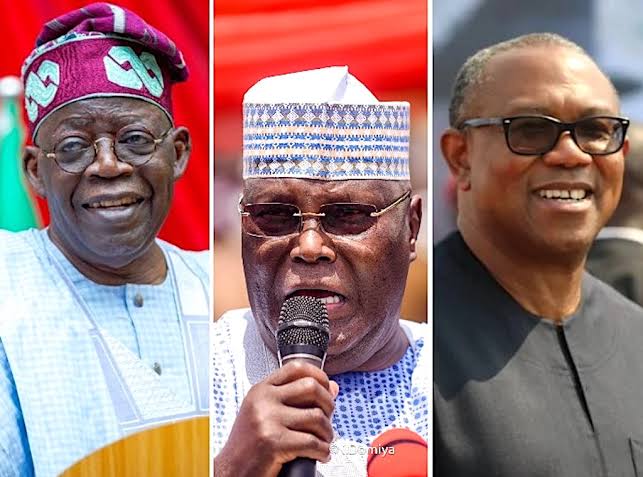
In Nigerian politics, anger can create momentum, but it cannot by itself create a majority. That may be the most important lesson the country’s opposition needs to confront before the 2027 presidential election. The political environment appears ripe for an electoral backlash: millions of Nigerians are struggling with the cost of living, insecurity remains a national concern, and public confidence in government remains deeply contested. Yet the opposition faced a similar opportunity in 2023 and failed to convert it into power. Bola Ahmed Tinubu won with 8,794,726 votes, while Atiku Abubakar and Peter Obi alone collectively polled more than 13 million. Add Rabiu Kwankwaso’s nearly 1.5 million votes and the arithmetic becomes even more revealing. The problem was never simply a shortage of votes; it was the inability to transform separate political movements into one electoral force. Three years later, the proposed solution is again coalition, litigation, and the mobilisation of public anger. But beneath all the political manoeuvring lies one question that could determine the fate of 2027: what, fundamentally, has changed?
There is a question Nigeria’s opposition has been avoiding as the country moves steadily toward the 2027 presidential election. What exactly has changed? Not what has changed in the country. Nigerians know what has changed. Food is more expensive. The naira has undergone enormous pressure. Insecurity remains a major concern. Millions of households are struggling with the cost of living. Public frustration is real, and the political class would be dangerously arrogant to pretend otherwise. The more important question is what has changed inside the opposition itself. Because if the opposition could not defeat Bola Ahmed Tinubu in 2023, when it had enormous political energy, three nationally recognisable presidential contenders, a deeply unpopular incumbent administration to attack, and a fragmented but formidable electorate, why should Nigerians automatically believe that the same political forces, operating with many of the same contradictions, will suddenly defeat him in 2027?
This is not an argument that Tinubu cannot lose. He can. Every incumbent can lose. It is an argument that the opposition has not yet produced a convincing explanation of how it intends to make him lose. And that may be the most uncomfortable question in Nigeria’s 2027 politics.
The 2023 presidential election remains the most important political event available to anyone trying to understand 2027. Bola Tinubu received 8,794,726 votes. Atiku Abubakar received 6,984,520. Peter Obi received 6,101,533. Rabiu Kwankwaso received 1,496,687. The official results placed Tinubu ahead of Atiku by 1,810,206 votes. But the deeper story is not simply the margin between first and second place. It is what happened to the opposition vote. Atiku and Obi together received more than 13 million votes, substantially more than Tinubu’s total, yet those votes were distributed between competing political projects. That was the fundamental weakness of the opposition in 2023. The election did not produce one unified anti-Tinubu candidate. It produced several powerful candidates competing for overlapping segments of the electorate. Tinubu did not need to win the combined Atiku-Obi vote. He needed to win more votes than each of them individually while satisfying the constitutional spread requirement. He did. The opposition must now explain why the voters who refused to unite behind one candidate in 2023 will suddenly unite behind one candidate in 2027. That is the missing equation, and it deserves far more scrutiny than the opposition’s rhetoric is currently receiving.
The opposition appears to have several possible weapons. A court case. A coalition. Public anger. Economic hardship. Security failures. Youth frustration. Regional voting blocs. The promise of a new political order. But none of these is a magic wand. A court case can potentially remove a candidate from a ballot, but it cannot manufacture a popular alternative. Public anger can weaken an incumbent, but anger does not automatically translate into votes for one opposition candidate. Economic hardship can produce an electoral backlash, but voters must still decide whom they trust to replace the government. A coalition can combine votes, but only if the coalition actually exists, survives internal bargaining, and produces a candidate acceptable to the constituencies whose votes it needs.
Former Vice President Atiku Abubakar and the African Democratic Congress have taken one of the most consequential legal routes available to the opposition. Their Federal High Court case seeks to challenge President Tinubu’s eligibility for the 2027 election over allegations surrounding an NYSC certificate submitted to INEC. The plaintiffs allege that the certificate bears the name “Tinubu Bola Adekunle” and argue that its submission amounts to the presentation of a forged certificate, relying, among other provisions, on Section 137(1)(j) of the Constitution. The case has now been adjourned to September 28, following a dispute over service of the originating summons on President Tinubu. The case is serious, but politically, the opposition should be careful about confusing a legal possibility with an electoral strategy. Even if the case succeeds, it does not automatically solve the opposition’s larger problem. Someone still has to unite the electorate. Someone still has to produce a candidate. Someone still has to build a national organisation. Someone still has to persuade millions of Nigerians who voted for Tinubu, Atiku, Obi, Kwankwaso, or other candidates in 2023 to change their minds. A courtroom victory could alter the race. It cannot, by itself, win the race for whoever replaces Tinubu. And until the courts decide otherwise, Tinubu remains the incumbent president and a potential candidate for a second term.
The opposition understands the mathematics, and that is why the word coalition has become one of the most repeated words in Nigerian politics. Recent opposition consultations have focused on producing a common platform and potentially a single presidential candidate. The G100 process, for example, has been working toward an opposition framework, while the PDP has also indicated support for an all-opposition process. The theory is simple: put Atiku’s northern political network together with Obi’s southern and youth appeal, add other opposition structures, combine the votes, and Tinubu becomes vulnerable. On paper, it sounds formidable. Politics, however, is not mathematics performed on a calculator. The question is not whether Atiku and Obi together have more votes than Tinubu. The question is whether Atiku supporters will vote for Obi if Obi becomes the coalition candidate, whether Obi supporters will vote for Atiku if Atiku becomes the candidate, whether Kwankwaso’s political base will accept either, what happens to the regional calculations, who controls the party structure, who controls the delegates, who gets the presidential ticket, who becomes vice president, and what happens when politicians who have spent years attacking one another suddenly have to campaign together. These are not small details. They are the election.
There is another problem. Nigeria’s opposition is attempting to sell a message of political renewal while repeatedly returning to many of the same personalities who have dominated the country’s political landscape for decades. Atiku is an experienced politician and former vice president. Obi has demonstrated an ability to mobilise a powerful movement, particularly among younger Nigerians. Kwankwaso possesses a formidable political base. These are significant assets, but political experience and electoral novelty are not the same thing. For many Nigerians, the question will not simply be “Do you want Tinubu?” It will be “If not Tinubu, then who?” And that second question is much harder. An opposition campaign cannot permanently run on the rejection of the incumbent. At some point, it must become a positive proposition. What will happen to the economy? What will happen to fuel pricing? What will happen to the naira? What is the security doctrine? What is the education plan? What will happen to unemployment? How will government spending be controlled? How will corruption be prosecuted? What will happen to Nigeria’s enormous debt burden? What will be done differently, and how will it be done?
There is no serious argument that Nigerians are not experiencing economic pressure. But the opposition should not assume that hardship automatically translates into votes against the government, because the Tinubu administration has constructed its own counter-narrative. The presidency and its supporters argue that the reforms inherited from the administration’s early period were necessary to prevent a deeper economic crisis. Recent economic data give the government something to point to. Nigeria’s economy grew by 4.43 percent year-on-year in the second quarter of 2026, according to the National Bureau of Statistics, up from 3.89 percent in the first quarter, with oil production also increasing during the quarter. Reuters has reported that Finance Minister Taiwo Oyedele argues that the administration’s reforms helped avert economic collapse, while also acknowledging that those reforms created significant short-term hardship for ordinary Nigerians. That creates an interesting political battlefield. The opposition says look at what Nigerians are suffering. The government says look at what we inherited and what we are fixing. Both messages can resonate with different segments of the electorate. Growth on a national ledger does not automatically register as relief in a household budget, and the opposition would be right to press that gap hard. But it cannot simply document suffering. It must convince voters that its alternative will produce better results without recreating the fiscal problems it criticises.
Consider the recent argument over Nigeria’s land borders. Atiku has spoken about reopening land borders if elected. The federal government responded that the borders are not closed and therefore cannot be reopened, pointing to several border crossings that have been reopened under previous and current administrations. This may appear to be a minor political dispute, but it illustrates a larger problem confronting opposition politics: the opposition must define the problem accurately before promising to solve it. If the government says the borders are open but subject to controls, the opposition has to demonstrate exactly what is closed, to whom, under what regulation, with what economic consequences, and what its policy would change. Otherwise, an apparently attractive campaign promise becomes vulnerable to an equally simple government response, namely that the thing promised to be reopened is already open. Modern elections are increasingly fought over competing facts, not merely competing emotions.
None of this means the president is politically invulnerable. Far from it. The administration has enormous vulnerabilities, and they deserve equal weight in this analysis. Cost-of-living pressures remain politically potent. Security remains a central national concern, and the government’s own record on this front is far from settled. Public trust remains fragile after years of promises that outpaced delivery. The benefits of macroeconomic reforms have not necessarily been felt equally by ordinary Nigerians, and a growth figure on a government dashboard means little to a family that cannot afford transport fares or school fees. The government’s success in stabilising some economic indicators does not erase the immediate pain experienced by households, and every incumbent carries the burden of performance. By 2027, Tinubu will not merely be asking Nigerians to imagine what he might do. He will be asking them to judge what he actually did, on security, on the cost of living, and on whether the sacrifices demanded of ordinary citizens produced results they can feel. That is the opposition’s greatest opportunity. But opportunity is not strategy.
Opposition politicians often point to 2015 as evidence that an incumbent can be defeated when opposition forces unite. They are correct, but history cannot simply be copied. The political conditions that produced the 2015 transition were unique. A coalition requires more than powerful personalities agreeing that they dislike the incumbent. It requires an organisation capable of surviving the distribution of power. It requires discipline, a common message, nationwide structures, money, polling-unit agents, voter mobilisation, and credible candidates. And above all, it requires the political maturity to accept that one person will not get everything. This may be the hardest part. Nigeria’s opposition does not merely have to defeat Tinubu. It has to first defeat its own ambitions.
It is tempting to frame 2027 as Tinubu versus Atiku, or Tinubu versus Obi, or APC versus a coalition. That is too simplistic. The real contest is between an incumbent with a national governing structure and an opposition attempting to construct a national governing structure while simultaneously negotiating who should lead it. Tinubu already occupies the presidency. The APC already possesses a national political structure. The government controls the machinery of the federal executive. The president has the advantage of incumbency. The opposition has to build its alternative from the ground up. That does not make victory impossible. It makes victory expensive, complicated, and dependent on execution.
If the opposition genuinely wants to defeat Tinubu, it needs more than another press conference announcing unity. It needs one candidate, not two, not three, not a gentleman’s agreement that collapses six months later, but one candidate capable of attracting votes beyond the traditional base of his or her party. It needs a national rather than regional strategy, because Nigeria’s presidency is won through a national electoral coalition, and a candidate cannot simply dominate one region and expect mathematics to do the rest. It needs a coherent economic alternative, because “Nigerians are suffering” is not an economic policy, and the opposition must explain what it would do differently and how it would pay for it. It needs a new political narrative, because if the opposition spends the entire campaign talking about Tinubu, Tinubu remains the centre of the election, and Nigerians need to know what the alternative looks like. And it needs grassroots machinery, because social media popularity is not the same thing as electoral organisation. The 2023 election should have made that obvious. Followers do not automatically become voters. Voters do not automatically turn up. And votes do not automatically become counted votes without agents, logistics, mobilisation, and organisation.
The opposition’s biggest enemy may not be Tinubu. It may be arithmetic. It may be ego. It may be distrust. It may be the inability of powerful politicians to agree on who should lead. It may be the assumption that public anger automatically belongs to whoever opposes the government, and the belief that because Nigerians are unhappy, they will automatically vote for whoever presents himself as the alternative. That assumption is dangerous. Nigerians are not a political inheritance waiting to be claimed. They are voters. They can be angry with Tinubu and still reject Atiku. They can admire Obi and still refuse to vote for him. They can be frustrated with the APC and still fear an opposition coalition. They can dislike the government’s economic policies and still believe the reforms require more time. That is the complexity the opposition must confront, and it is a complexity the government cannot escape either, because a frustrated electorate does not need a coalition’s permission to punish an incumbent at the polls.
The Atiku-ADC case could become a major turning point if the court ultimately makes a finding that affects Tinubu’s eligibility, but until a court reaches a final determination, it remains a legal challenge, not a political victory. The Federal High Court has scheduled further proceedings for September 28. The opposition, therefore, faces two separate battles, one in the courtroom and one in the country. Winning the first would not necessarily win the second, and losing the first would not necessarily mean losing the second. That is why the opposition cannot afford to make the court its only strategy.
The central question ahead of 2027 should not be who can defeat Tinubu. It should be who has a credible plan to govern Nigeria better than Tinubu. That is a much harder question. It forces politicians to move beyond personality, beyond ethnic arithmetic, beyond religious calculations, beyond court cases, beyond social media, beyond slogans, beyond anybody-but-Tinubu. Nigeria does not merely need a government to replace another government. It needs a governing alternative, and that alternative must be convincing enough to make a Nigerian voter in Kano, Lagos, Anambra, Rivers, Kaduna, Oyo, Borno, Plateau, Enugu or Bayelsa believe that the same candidate understands his or her future.
The 2027 election is still far enough away for the political equation to change dramatically. Coalitions can form. Candidates can withdraw. Parties can merge. New movements can emerge. Court decisions can transform the field. Economic conditions can change. Security conditions can change. And voters can change their minds. So it would be premature to declare Tinubu unbeatable. But it would be equally premature for the opposition to declare victory simply because Nigerians are angry. The lesson of 2023 is staring directly at them. They had three major opposition candidates. They had millions of votes. They had enormous public enthusiasm. They had a country searching for change. Yet they could not convert that energy into a single electoral force. Tinubu won. Now the opposition says it will unite. Fine. But Nigerians are entitled to ask what is different this time. Where is the evidence? Where is the structure? Where is the candidate? Where is the programme? Where is the national coalition? Where is the strategy for turning millions of fragmented votes into one winning majority? Until those questions are answered, the opposition’s promise to defeat Tinubu remains less a demonstrated political strategy than a political aspiration. And in an election as brutally competitive as Nigeria’s, aspiration is not enough.
There is no magic wand. If the opposition wants to remove Tinubu from power in 2027, it must do something considerably harder than attack him. It must give Nigerians a reason to choose them, because the 2027 election will not be won by whoever is most dissatisfied with Nigeria. It will be won by whoever can convince the largest coalition of Nigerians that their alternative is better, more credible, and capable of governing the country. That is the real battle, and so far, neither the opposition nor the government has fully answered it.
Daniel Nduka Okonkwo is an investigative journalist, human rights advocate, and publisher, and the founder of Profiles International Human Rights Advocate, PIHRA. His work focuses on governance, accountability, and the protection of fundamental rights across Nigeria and Africa. His reporting has appeared in Vanguard, Daily Trust, Sahara Reporters, African Defence Forum, Opinion Nigeria, and Daily Intel, among others.
Read more of his work on the PIHRA blog: https://profilesinternationalhumanrightsadv.blogspot.com
For tips, feedback, or collaboration, reach him at dan.okonkwo.73@gmail.com



















You must be logged in to post a comment Login