
Politics
Southwest and the Power of Early Preparation -By Abiodun KOMOLAFE
Emotion does not win an election, strategy does. Noise does not yield victory, structure does. Also, electoral success is never a function of social media fanfare or crowd size, but the hard dividend of early preparation, ward-level discipline, and ballot protection on polling day. The striking irony of Nigerian politics is that while sympathy lacks both strategic weight and workable structure, losers rarely know how to become winners, and winners seldom understand how easily they can court defeat.

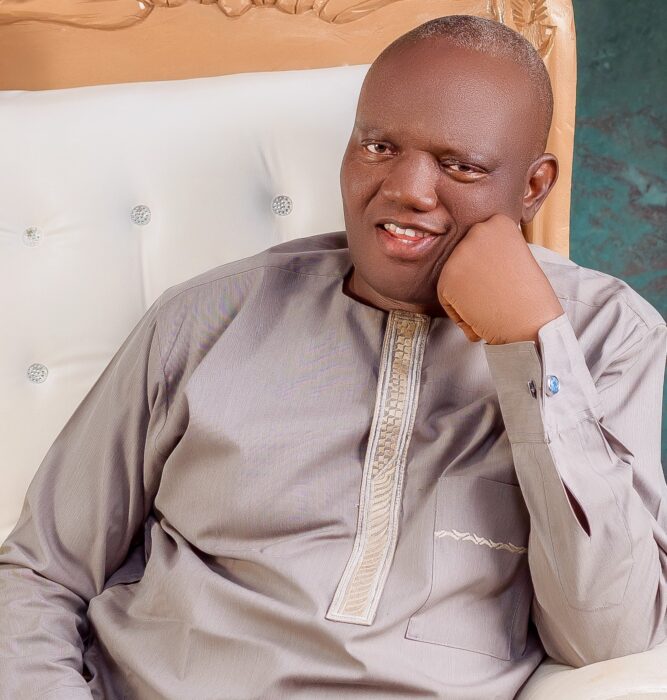
The Southwest, although it now laudably has a Development Commission, ought to project a future that will match the best days of the past. With off-cycle elections now out of the way in Ekiti and Osun States, the region needs to now begin a succession planning. This is so vitally necessary because the region today should see itself as being placed in “catch-up” mode.
Yorubaland has a lot of catching up to do in every area of development planning, including infrastructure, the modernisation of agriculture, education, and health in particular. We should also now begin to pay focused attention, in view of what’s happening all over the world, to environmental issues. Indeed, the issue of the environment and its impact deserves to now be on the front burner, dictating the fundamentals of all infrastructural projects.
Talking seriously, it should be obvious by now that in Nigeria’s debilitating quasi-federalism, the best option for the states of the Southwest – and indeed, of any other zone – is to coalesce in the development project. The ministries of regional integration, if they still exist, should have been working in concert with the newly-created South West Development Commission (SWDC). Together, they ought to develop a 25-year programme for the modernisation and long-term relevance of the zone.
More often than not, the Southwest continues to contend with a parliament of political helmsmen who are emotionally stunted – leaders who see the states they were elected to govern as private fiefdoms, presiding over them as ‘Kabiyesis.’ Unless a new cadre free of this sort of mindset is produced to take over the running of the region into the 2030s and beyond, the zone will fail to be “above, and not beneath.”
A recent interview with John Cardinal Onaiyekan confirms what many have said over the last five decades or more. Indeed, the current social conflicts in Northern Nigeria can be attributed to the abandonment of the roadmap constructed by the Sardauna of Sokoto, Sir Ahmadu Bello following his death in 1966. Unfortunately, we are all – and not just the Northern Region – paying the price for this. The Southwest should see this as a forewarning and go all out to produce the technocrats needed to steer the affairs of its states as it ought to in the 2030s and 2040s. Both decades will be ‘make-or-break’ in view of the region’s demographic composition.
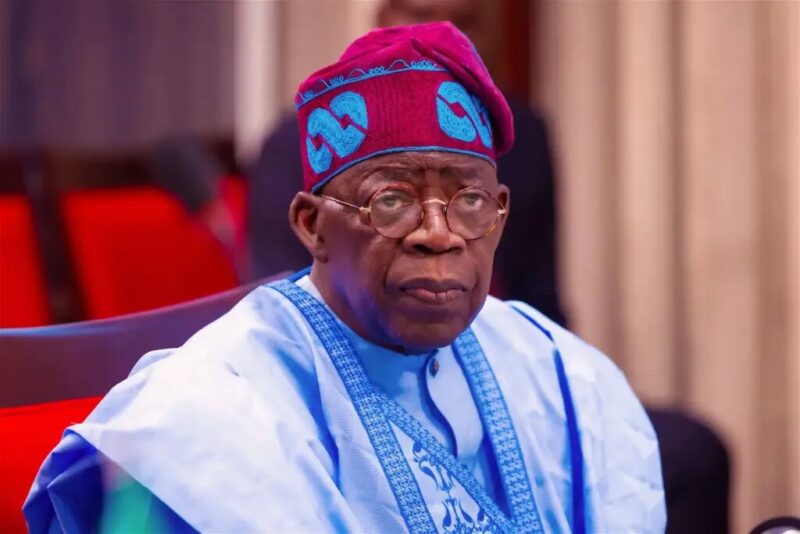
At the centre, we are already seeing the emergence of promising technocrats such as Zacch Adedeji, Olubunmi Tunji-Ojo, Ayodele Olawande, Taiwo Oyedele, and Jumoke Oduwole. Kudos should be given to President Bola Ahmed Tinubu’s talent spotting and keen sense of succession planning. It is, however, open to debate whether this is being replicated at the state level. Nigerians expect leaders like the consensual and equable Governor Biodun Abayomi Oyebanji (BAO) of Ekiti State to step up their game in this arena, especially since, come 2027, there will be new governors due to term limits in Lagos, Ogun and Oyo States.
If we are seeing, as Osun is indicating, an end to the antediluvian politics centred on ‘dìbò kó o sèbẹ̀’, thuggery and voter suppression, decisive action is required. The Southwest should therefore become the arrowhead of a new politics based on voter mobilization through public education, using the most modern methods of agitation and propaganda. This is the only way to appeal to the new social media-oriented demographics who will be key in the elections over the next ten years.
Chief Obafemi Awolowo famously developed new methods of electioneering well ahead of his time for the 1959 pre-independence general elections. In that same spirit, the Southwest should learn from case studies coming out of countries such as Brazil, Mexico and parts of the United States that focus on developing what is now referred to as retail politics.
Today, we operate in a fragmented media landscape, which means that election strategists have to segment potential voters into targeted groups, appealing specifically to the desires and needs of particular demographics such as artisans, traders, professional classes and students. In the modern world, it is the amalgamation of these distinct interest groups that will produce electoral majorities. Any dispassionate and discerning analysis of the just-concluded governorship election in Ekiti and Osun States will reveal that the days of generic mass appeal are gone.
The next governors to be elected in the states under review should be at the forefront of a Yoruba renaissance. They should be intellectually prepared for a fundamental redefinition of the governor’s role. They will need a mix of emotional stability, political expertise and managerial capacity to lead in a constantly changing, demand-driven world of innovation. It will be ill-advised to put individuals with no preparation outside of “politics” at the helm of affairs at the state level. This is a throwback to the past. The pioneers of the first formalized entry into a Western interpretation of politics all had a “second address.” Men like Adeyemo Alakija, Bode Thomas, F.R.A. Williams, Adegoke Adelabu, D.J. Adegbenro, M.A. Majekodunmi, D.A. Ademiluyi, and Awolowo had all proved themselves in other fields before entering public life. They practised politics in its highest sense: as a noble vocation to serve the people, rather than a mere career.
Inarguably, in statecraft, the work for the next election begins the moment the last one is won or lost. For Ekiti, that moment was June 20, 2026. For Osun, it was August 15, 2026. That is to say, we are late. But as our people say, it is better to be late than to be buried. In a country where the elite is a “Vanguard of the Belly”, to wait until the eve of another election is to mistake a pimple for a dimple and a marathon for a hundred-metre dash. The states of the Southwest, starting with the upcoming off-cycle elections – where there will be incumbents vacating offices – ought to now look for a new crop of renaissance men and women to pilot the region as 2030 and beyond approaches.
Beauty is synonymous with flowers. Both fade with time. So it is with political power. A winner who folds his arms will watch power succumb to the rage of the rogues, for power does not preserve itself without daily work. A loser who also sits back to nurse self-pity has already given tomorrow away without firing a shot. The referee has blown the whistle in Ado-Ekiti and Osogbo, but the pitch remains open to any group with enough sense to act before odious sycophancy, pedestrian blame-trading, and cheap, ten-for-ten-kobo excuses ruin everything again.
“B’omode bá ṣubu, a wo’waju; b’agbalagba ba ṣubu, á w’ẹ̀yìn.” (Upon falling, a youngster looks forward; an adult looks back). The backward vision helps one to know where one erred, then to mobilize and psyche oneself for the future. Yes, we have to start now, for in real politics, a late starter can still catch the bus, while the man who sleeps through the morning will watch it pass him by. The people are watching. Now is the time for future leaders to pick up the pieces, face their own blunders, and speak to the grassroots in words they can trust.
Emotion does not win an election, strategy does. Noise does not yield victory, structure does. Also, electoral success is never a function of social media fanfare or crowd size, but the hard dividend of early preparation, ward-level discipline, and ballot protection on polling day. The striking irony of Nigerian politics is that while sympathy lacks both strategic weight and workable structure, losers rarely know how to become winners, and winners seldom understand how easily they can court defeat.
May the Lamb of God, who takes away the sin of the world, grant us peace in Nigeria!
Email: ijebuijesa@gmail.com.
Mobile: 08033614419 SMS only.















You must be logged in to post a comment Login