
Forgotten Dairies
America Must Not Criminalize Kratom by Chemistry -By Fransiscus Nanga Roka
Indonesia shall implement a requirement for certificates of analysis, batch-level traceability (for food products), accredited laboratories and classification under a separate tariff heading for botanical powder, extracts and synthesized derivatives. Jakarta and Bangkok should also call for advance US–ASEAN regulatory consultations before enforcement interrupts legitimate trade.

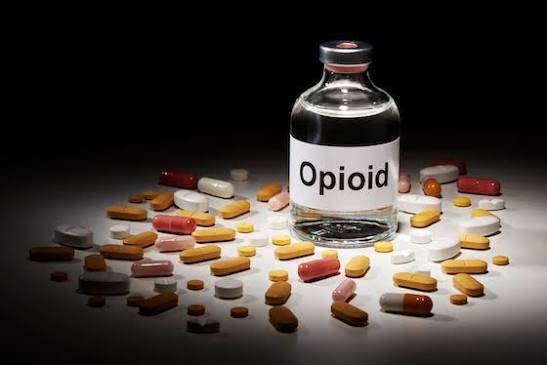
Life insurance has finally come face to face with a serious lie: laboratory manipulated opioids disguised as “kratom.” But unless Washington clarifies its legal definition of manipulatively created chemicals versus traditional botanical products, an urgent public health intervention here could become a too-universal bomb on a Southeast Asian commodity.
Mitragynine pseudoindoxyl (MGPI), MGM-15, and MGM-16, along with specified chemical derivatives and salts, were temporarily scheduled as Schedule I substances for at least 12 months when the Drug Enforcement Administration within the Department of Justice placed them into Schedule I on Aug. 26. The order is in force until, at least August 26, 2028 when it may be extended or made permanent. DEA invoked its emergency authority after determining the compounds posed an “imminent hazard” to public health.
What exactly was prohibited? Not kratom as a plant, nor mitragynine in general but 3 derivatives chemically related to 7-hydroxymitragynine. They are potent mu-opioid-receptor agonists with the potential for dependence and the ability to cause respiratory depression, as supported by preclinical data. MGPI and MGM-15 have reportedly been found in commercially manufactured consumer goods marketed for their opioid effects; MGM-16 has not yet documented outside-use but may be forthcoming as a substitute.
Why act now? Because the agency is chasing a fast-moving target of chewable tablets, concentrated shots and powders, whose branding as “kratom” can mask pharmaceutical-grade opioids that have been transformed by a chemist. Schedule I provides criminal, civil and administrative protections covering manufacture, possession, distribution as well as importation & exportation. In terms of legality, these drugs are characterized as having a high potential for abuse and no currently accepted medical use in treatment within the US along with a lack of accepted safety under medical supervision.
The intervention is defensible. The drafting is not yet safe.
The DOJ maintains that its aim is synthetic, high-down or high-purity opioid products—not traditional herbal kratom. It promises enforcement discretion where testing identifies only incidental traces of MGPI in an otherwise botanical product. However, the agency also recognizes that this discretion does not create a legal safe harbor: MGPI remains Schedule I regardless of concentration.
Which is a contradiction, and an invitation to arbitrary enforcement. At a port of entry, any trace discovered during customs inspection can theoretically turn a legal shipment of plants into Schedule I evidence. This means consumers, farmers, exporters, laboratories and police officers should not have to guess where legality ends and felony exposure begins. American Kratom Association supports action against adulterated products, and has sued for that very reason: prosecutorial discretion is no substitute for a de facto trace threshold.
The international consequences are serious. Indonesia: Whole leaves and material larger than 600 microns will be banned for export under Trade Minister Regulations Nos. 20 & 21 of 2024, whereas qualifying fine powder and crushed products are to be regulated. In the country, BPOM bans Mitragyna speciosa with traditional medicines and health supplements.
This creates a regulatory paradox for Indonesia: it cracks down on kratom domestically but cultivates and guides a controlled export market that is susceptible to America’s chemically fuzzy prohibition.
They should set scientifically justified concentration limits, uniform testing protocols and a clear safe harbor for uncontaminated botanical kratom. Periodic evidentiary review should be mandated by Congress, licensed research pathways preserved and intentional fortification should be penalized rather than trace blend chemistry.
Indonesia shall implement a requirement for certificates of analysis, batch-level traceability (for food products), accredited laboratories and classification under a separate tariff heading for botanical powder, extracts and synthesized derivatives. Jakarta and Bangkok should also call for advance US–ASEAN regulatory consultations before enforcement interrupts legitimate trade.
Dangerous synthetic opioids deserve prohibition. Traditional kratom deserves evidence-based regulation. Precision is not the bureaucratic mercy when chemistry determines criminality, it is the rule of law.
Fransiscus Nanga Roka
Faculty of Law University 17 August 1945 Surabaya and Managing Partner Law Firm Victorious Indonesia






















You must be logged in to post a comment Login