Forgotten Dairies
Outbreak and Chaos: Congo’s Ebola Crisis Spirals Amid Violence and Global Alarm -By Fransiscus Nanga Roka
The tragedy of xenophobia is that it attacks the very people who help sustain the economy it claims to protect. In addition, if the current trend continues, South Africa may eventually learn a costly lesson: that the continent it often takes for granted is far more indispensable to its survival than many are willing to admit.

The recent wave of xenophobic attacks in South Africa, which has triggered the repatriation of thousands of African nationals from countries such as Ghana, Nigeria, Malawi, Mozambique, and Zimbabwe, raises a question that many on the continent have been reluctant to ask openly: “Can South Africa truly survive without the rest of Africa?”
At first glance, the answer may seem obvious. South Africa is Africa’s most industrialized economy, boasts relatively advanced infrastructure, possesses sophisticated financial institutions, and enjoys global recognition as a gateway to the continent. For many South Africans, this economic status has fostered a dangerous illusion that their country can thrive independently of its African neighbours. Yet, beneath this perception lies a reality that is far less flattering.
The current xenophobic climate reflects more than hostility toward foreigners. It reveals a growing tendency among some South Africans to view fellow Africans as burdens rather than partners. Foreign nationals are routinely blamed for unemployment, crime, housing shortages, and poor service delivery. However, repeated studies and economic analyses have consistently shown that migrants are not the root cause of these challenges.
In fact, African migrants contribute significantly to South Africa’s economy. They own businesses, provide skilled and unskilled labour, create jobs, pay taxes, and support sectors where labour shortages exist. From healthcare professionals and academics to traders and artisans, migrants have become woven into the fabric of South Africa’s economic and social life.
The irony is striking. Many of the countries whose citizens are now being harassed and driven out were among the strongest supporters of South Africa during the anti-apartheid struggle. Nigeria, for instance, invested enormous financial and diplomatic resources in the fight against apartheid. Zambia, Zimbabwe, Tanzania, Mozambique, Angola, and several others provided sanctuary, training grounds, and political support for South African liberation movements. The freedom South Africans enjoy today did not emerge in isolation. It was nurtured through continental solidarity.
This is why the images of African migrants being chased through streets, their businesses looted and their lives threatened, evoke not only outrage but also profound disappointment across the continent. More importantly, xenophobia ignores a fundamental economic truth: South Africa’s prosperity is deeply intertwined with Africa.
Its banks operate across the continent. Its telecommunications companies generate substantial revenues from African markets. Its retailers have expanded aggressively into countries from Nigeria to Zambia. Its airlines, logistics firms, mining companies, and manufacturers depend heavily on regional partnerships and access to African consumers.
If African countries were to respond to xenophobic attacks with reciprocal restrictions, South Africa would quickly discover the extent of its dependence on the continent. Imagine a scenario where African consumers deliberately avoid South African products and services. Imagine governments limiting market access to South African corporations. Imagine stricter immigration measures against South African professionals and investors. The economic consequences would be severe.
This is not to advocate retaliation. Rather, it is to highlight a simple reality: interdependence is not weakness; it is the foundation of modern economies.
Even South Africa’s labour market tells the same story. Many sectors rely on workers from neighbouring countries. Agriculture, construction, hospitality, domestic services, and informal trade networks have long benefited from regional labour mobility. Removing these workers would not solve unemployment. It would create labour gaps and disrupt economic activity.
Furthermore, xenophobia damages South Africa’s international image. Investors seek stability and predictability. Recurring scenes of violence against foreigners send precisely the opposite message. They create perceptions of social instability and political risk, factors that can discourage investment and weaken economic growth.
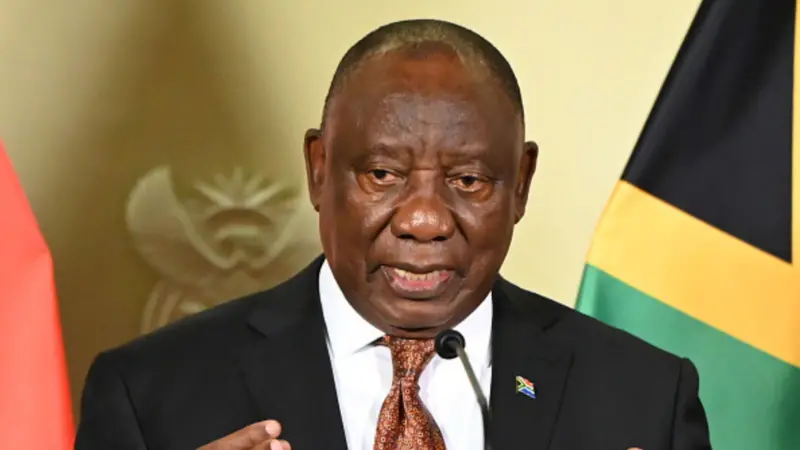
President Cyril Ramaphosa has repeatedly condemned xenophobic violence. His government has also acknowledged the need for cooperation with other African countries to address migration challenges. Yet condemnation alone is insufficient. The persistence of these attacks suggests that deeper structural and societal issues remain unresolved.
The question, therefore, is not whether Africa can survive without South Africa. The continent has repeatedly demonstrated resilience and adaptability. The more pertinent question is whether South Africa can afford to alienate the very countries that constitute its largest regional partners, markets, allies, and historical supporters.
The answer to the foregoing question is becoming increasingly clear. No nation, regardless of its economic strength, can flourish in isolation. South Africa’s future prosperity depends not on building walls against fellow Africans but on strengthening bridges with them.
The tragedy of xenophobia is that it attacks the very people who help sustain the economy it claims to protect. In addition, if the current trend continues, South Africa may eventually learn a costly lesson: that the continent it often takes for granted is far more indispensable to its survival than many are willing to admit.
In a world defined by interconnectedness, South Africa does not stand above Africa. It stands because of Africa.