
Forgotten Dairies
Zaria’s Worst Rainy Season Without Electricity, A City Held Hostage by Darkness -By Abdullahi Adda’u Turawa
A city cannot reach its full economic potential when its people are left in darkness for most of the day. This rainy season should not be remembered only for the rain, but also as a moment when the authorities were challenged to confront a problem that has gone on for far too long.

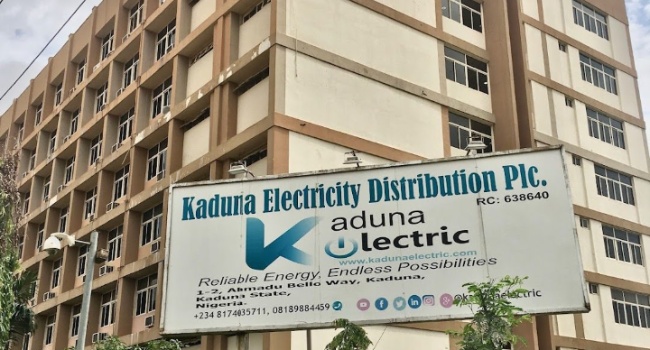
As the rainy season comes to an end, residents of Zaria and its surrounding communities are enduring what could be described as one of the most frustrating periods of electricity supply in recent years. At a time when rainfall, thunderstorms, and humid weather make electricity even more important for daily living, many residents are struggling to cope with an almost complete absence of power supply.
For many households, getting two hours of electricity in a day has become a luxury. Even more frustrating is that when electricity eventually comes, it is often during the early hours of the morning, when most residents are fast asleep and unable to make meaningful use of it. By the time people wake up and prepare for their daily activities, the electricity is gone again, leaving homes, shops, offices, and businesses in darkness for the remainder of the day.
This is not merely an inconvenience. It is a daily struggle that exposes the persistent failure of Nigeria’s electricity system and raises serious questions about the responsibility of electricity distribution companies to the communities they serve.
In Zaria, the situation has become particularly disturbing, with residents complaining about prolonged power outages affecting major parts of the city and its environs. What should ordinarily be a season of agricultural activities, commercial opportunities, and improved economic productivity has instead become a period of frustration, financial losses, and uncertainty.
Electricity shortages are not new to Zaria. Residents have lived with inconsistent power supply for years, often adjusting their schedules around unpredictable electricity availability. However, the current situation appears to have reached a different level of hardship.
Although previous power failures in Zaria have not always lasted for weeks at a time, the widespread disconnection and near-total absence of electricity now being experienced by many residents have made the situation particularly difficult to tolerate.
For some residents, the problem has become a daily sing-song. Complaints about the absence of electricity dominate conversations in neighbourhoods, markets, shops, and social gatherings. People ask the same questions every day: When will the light return? Why is the supply so poor? And how long are residents expected to continue living this way?
Unfortunately, answers remain elusive.
The situation is so hopeless that some residents appear to have given up on expecting any meaningful improvement. Instead of looking forward to a stable electricity supply, they have resigned themselves to enduring another day of darkness.
This growing sense of helplessness is perhaps one of the most troubling aspects of the crisis. When citizens begin to regard electricity as a privilege rather than an essential public service, it reflects a deeper problem in the relationship between service providers and the people they are supposed to serve.
Among the explanations circulating among residents is the allegation that the electricity supply crisis is connected to poor bill-payment performance and the failure of some consumers to settle their electricity bills before the stipulated deadlines.
There are also complaints that officials of Kaduna Electric, commonly known as KAEDCO, have expressed concerns about failing to meet their monthly revenue targets. According to accounts circulating among residents, the company faces difficulties achieving its expected objectives at the end of the month because of inadequate bill payments.
If these reports are accurate, the question that must be asked is whether ordinary residents should bear the consequences of the company’s revenue challenges through prolonged electricity shortages and widespread disconnections.
Electricity distribution companies have legitimate commercial obligations. Consumers who receive electricity are expected to pay their bills in accordance with applicable regulations, while distribution companies must collect revenue to sustain their operations and meet their obligations across the electricity value chain.
Revenue collection cannot become an excuse for subjecting entire communities to prolonged hardship. Nor should the alleged failure of some consumers to pay their bills automatically become a reason for other residents, including those who pay regularly, to endure an inadequate supply.
KAEDCO must not hold the people of Zaria to ransom over electricity bills.
If particular customers have outstanding debts, the appropriate response should be transparent, lawful, and consistent with the applicable rules governing electricity distribution and disconnection. Residents who have paid their bills deserve clear explanations about the service they are receiving, while those with genuine payment difficulties should be treated in accordance with established procedures.
Collective punishment, whether deliberate or an unintended consequence of poor electricity management, is not an acceptable substitute for an effective revenue-collection system.
What is happening in Zaria cannot be separated from Nigeria’s broader electricity problem. Across the country, consumers continue to grapple with unreliable power supply, high operating costs, and the financial burden of finding alternatives whenever the national grid fails to meet their needs.
Nigeria has struggled for years with inadequate generation, transmission constraints, distribution challenges, infrastructure deficiencies, and commercial problems across the electricity value chain.
Even when electricity is generated, it must pass through transmission and distribution networks before reaching homes and businesses. Weaknesses at any stage can undermine the entire system. Distribution companies also face challenges involving revenue collection, technical and commercial losses, infrastructure maintenance, and the cost of delivering electricity to consumers.
These structural problems help explain why electricity supply remains unreliable in many parts of the country. However, they do not excuse poor communication, inadequate service, or a failure to address the needs of affected communities.
For residents of Zaria, the distinction between the national electricity crisis and KAEDCO’s local responsibilities may offer little comfort. What matters to a family trying to preserve food, a tailor attempting to complete customers’ clothes, a barber waiting for electricity to operate his equipment, or a small business owner trying to keep a shop running is whether electricity is available when it is needed.
The electricity sector may have complicated financial and technical challenges, but those challenges are ultimately felt by ordinary Nigerians whose livelihoods depend on a reliable supply.
Perhaps the most painful consequence of the current electricity situation is the financial damage being inflicted on small businesses.
Zaria is a major commercial and educational centre in Kaduna State. Its economic activities depend on the daily operations of shops, markets, workshops, food vendors, tailoring businesses, salons, barbershops, cold-drink sellers, phone-charging outlets, cybercafés, and numerous other small enterprises.
Most of these businesses operate on limited capital. Their owners cannot easily absorb additional expenses, particularly when their profit margins are already under pressure from inflation, transportation costs, rent, and rising prices of goods.
When electricity disappears for most of the day, business owners are forced to make difficult choices. Some purchase fuel for petrol generators, while others invest in solar systems, rechargeable equipment, inverters, and batteries. These alternatives require money that many small businesses would otherwise use to purchase stock, pay workers, or support their families.
Generator owners face additional expenses from petrol, engine oil, servicing, and repairs. Those who cannot afford generators may have to close early, turn away customers, or operate at reduced capacity.
The result is a chain reaction of economic losses.
A barber who cannot power his clippers loses customers. A tailor who cannot operate a sewing machine struggles to meet deadlines. A cold-drink seller risks losing perishable goods. A phone-charging business loses the very service that sustains it. A small restaurant must spend more to preserve food and prepare meals.
For businesses that depend on refrigeration, the consequences can be particularly severe during hot and humid weather.
The irony is that many of these business owners are expected to continue meeting their financial obligations, including electricity bills, rent, taxes, and other levies, even when the absence of electricity makes it difficult for them to earn enough income.
How can small businesses survive when the cost of operating increases while the service they depend on remains unavailable?
That is a question KAEDCO and the relevant authorities must take seriously.
The timing of the current crisis makes it even more frustrating. During the rainy season, residents already have to contend with heavy rainfall, flooding risks in some locations, damaged roads, and the disruption of normal activities.
Reliable electricity is essential for household comfort, communication, business operations, and access to information. During periods of severe weather, it can also support essential needs such as charging mobile phones and powering equipment used by households and businesses.
Yet residents who expect electricity to make life easier are instead struggling with darkness that stretches across most of the day.
Rainy weather can complicate electricity distribution because of faults, damaged equipment, safety-related interruptions, and other technical challenges. Such problems should be investigated and communicated transparently. However, where outages are associated with revenue disputes, disconnections, or distribution-management decisions, consumers deserve an explanation that distinguishes those issues from genuine technical faults.
Residents should not be left to speculate about whether their neighbourhoods are experiencing a technical problem, a commercial decision, a feeder fault, or some other disruption.
Clear communication is a basic responsibility of a service provider.
One of the concerns raised by residents is the economic condition of the people KAEDCO serves.
Zaria is home to civil servants, artisans, traders, students, pensioners, transport workers, and other residents whose incomes vary considerably. Many households are already struggling to meet basic needs amid the rising cost of living.
For low-income earners, electricity bills are only one component of an increasingly difficult household budget. Food, transportation, school expenses, healthcare, rent, and other necessities compete for the same limited income.
This reality does not mean that electricity should be consumed without payment. Rather, it means that the relationship between electricity providers and consumers must recognise the economic circumstances of the communities involved.
A responsible distribution company should pursue revenue collection while also providing clear billing information, resolving disputed charges, facilitating appropriate payment arrangements where available, and complying with the rules governing customer disconnections.
It should also explain the relationship between payments, electricity supply, and service quality in a way that customers can understand.
Where consumers are billed for electricity, they have a legitimate interest in knowing what they are paying for, how their tariff category affects their charges, and what level of service they can reasonably expect under the applicable regulatory framework.
The relationship must not be one-sided, where the company demands payment but residents are left without meaningful information about the quality and availability of the service.
KAEDCO needs to address the concerns of Zaria residents with urgency. Silence and uncertainty will only deepen public frustration and erode confidence in the electricity distribution system.
The company should publicly clarify the reasons for the prolonged outages affecting major parts of Zaria and its environs. If the problem is caused by technical faults, residents should be informed about the affected areas and the expected timeline for repairs. If disconnections have occurred because of outstanding bills, the company should explain the applicable procedures and clarify how customers who have paid their bills can avoid being unfairly affected.
If revenue shortfalls are contributing to the situation, that too should be explained transparently, alongside the steps being taken to improve collections without imposing unreasonable hardship on entire communities.
Residents also need accessible channels through which they can report outages, verify bills, challenge errors, and obtain reliable updates.
The Nigerian Electricity Regulatory Commission (NERC), together with other relevant authorities, should ensure that customer complaints are handled in accordance with applicable electricity-market rules. Where necessary, the regulator should investigate whether the treatment of affected consumers complies with the relevant service standards and consumer-protection requirements.
Accountability should apply to consumers and service providers alike. Customers must meet their legitimate payment obligations, while distribution companies must comply with their own legal and regulatory responsibilities.
Neither side should be exempt from scrutiny.
The people of Zaria are not asking for an impossible favour. They are asking for a dependable electricity service, honest communication, and a fair approach to resolving the challenges facing the distribution system.
KAEDCO should urgently review the situation affecting the city and surrounding communities, identify the causes of the prolonged outages, and provide a clear plan for restoring and improving supply.
The company should also ensure that residents who have fulfilled their payment obligations are treated fairly and that any action taken against customers with outstanding bills follows the appropriate procedures.
Where the electricity supply is substantially below the level consumers have been led to expect, the company should communicate the reasons and explain what corrective measures are being taken.
The relevant regulatory authorities must also pay attention to the economic consequences of prolonged outages, especially for small businesses and low-income households that have few alternatives.
Nigeria’s electricity crisis will require long-term reforms, improved infrastructure, better commercial management, stronger regulatory oversight, and investment across the power sector. But residents should not have to wait for the complete transformation of the national electricity system before local problems receive attention.
Immediate, practical steps can still make a difference.
The experience of Zaria residents during this rainy season is a reminder of how deeply Nigeria’s electricity crisis affects ordinary life. When electricity is available for barely two hours a day, and those hours occur when most people are asleep, the service offers little practical relief to households and businesses that depend on it.
When the absence of power forces business owners to spend scarce resources on generators and alternative energy, the consequences extend beyond inconvenience to lost income, reduced productivity, and greater economic hardship.
And when residents are left to believe that their communities are being kept in darkness because of alleged failures to meet revenue targets, public confidence in the electricity system inevitably suffers.
KAEDCO must understand that electricity distribution is not merely about collecting bills and meeting monthly financial targets. It is also about delivering a service that supports economic activity, household welfare, and the everyday lives of millions of people.
The company has a responsibility to explain what is happening in Zaria, address legitimate complaints, and take practical steps to improve the situation.
The people of Zaria should not have to choose between paying their bills and running their businesses, nor should they be expected to accept darkness as the price of living in a country that continues to struggle with electricity supply.
As Nigeria continues to search for a lasting solution to its power-sector problems, residents of Zaria deserve more than explanations, rumours, and promises. They deserve accountability, fairness, and electricity that comes at hours when they can actually use it.
A city cannot reach its full economic potential when its people are left in darkness for most of the day. This rainy season should not be remembered only for the rain, but also as a moment when the authorities were challenged to confront a problem that has gone on for far too long.
KAEDCO and the relevant authorities must act. Zaria deserves light, not another season of darkness.
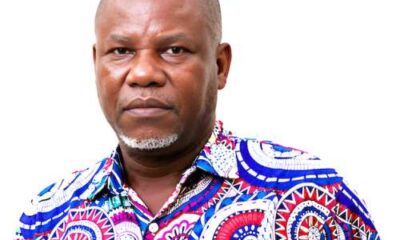
Abdullahi Adda’u Turawa, Wrote from Zaria, Nigeria.


















You must be logged in to post a comment Login