
Entertainment
Political Songs as Instruments of Political Communication: An Analysis of Sani Danja’s “Barau Rigijib” -By Turaki Abdulhamid Yahya
From the standpoint of agenda-setting and political branding, this is a significant communication advantage. Repeated exposure through music enhances message recall, strengthens candidate recognition, and contributes to political mobilisation.

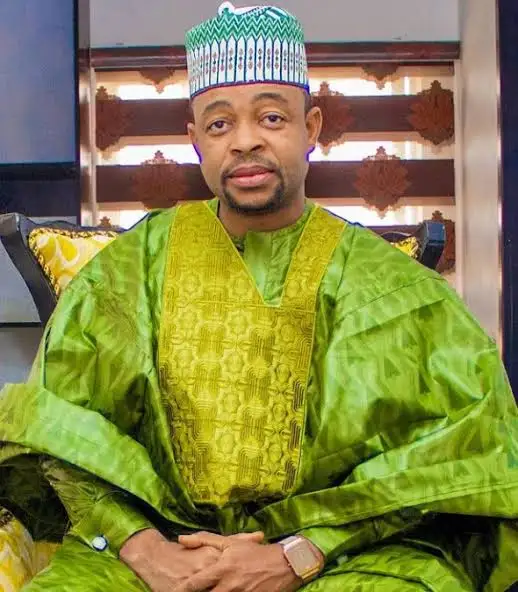
As someone who teaches Political Communication, I view political songs from an academic perspective rather than an emotional or partisan one. Political communication is fundamentally about how political actors use different communication channels to inform, persuade, mobilize, and sometimes manipulate public opinion. Among the many techniques of political propaganda identified by scholars, music and political songs remain one of the most effective tools for influencing voters’ attitudes and behaviour.
It is within this context that I see nothing unusual about Sani Danja’s new political song, “Barau Rigijib.” Like every political campaign song, it serves a strategic communication purpose: to increase visibility, reinforce political branding, shape public perception, and keep the candidate constantly in the minds of the electorate.
One important characteristic of political songs is that they have a political lifespan. They are highly effective during a specific political cycle but naturally lose relevance once that cycle ends. In other words, political songs have an expiry date, often lasting only for the duration of an election season.
History provides several examples. At one point, the political space was dominated by Dauda Kahutu Rarara’s songs for President Bola Ahmed Tinubu, including the widely celebrated “Omologo” and songs praising Seyi Tinubu. Today, those songs receive far less public attention because they had already fulfilled their campaign objectives.
Similarly, during the first tenure of the late President Muhammadu Buhari, Rarara’s famous “Masu Gudu Su Gudu” became a political anthem across Northern Nigeria. Today, the song has largely disappeared from political discourse because its communication relevance has expired.
The same pattern can be seen in Naziru Sarkin Waka’s campaign song for Alhaji Atiku Abubakar ahead of the 2023 general election, titled “Sai Mun Basu Wuta.” During the campaign period, it enjoyed widespread popularity, but after the election, it gradually faded from public attention. This is the natural lifecycle of political communication through music.
Viewed from this perspective, Sani Danja’s “Barau Rigijib” is simply the latest political communication product in Kano’s political environment. Today, a quick look across TikTok and other social media platforms shows that it has become one of the most trending political songs in the state. This demonstrates that the song has already achieved one of its principal communication objectives: attracting public attention, stimulating political conversation, and keeping Senator Barau I. Jibrin’s name continuously in circulation.
From the standpoint of agenda-setting and political branding, this is a significant communication advantage. Repeated exposure through music enhances message recall, strengthens candidate recognition, and contributes to political mobilisation.
As campaigns and rallies gather momentum, songs like “Barau Rigijib” are likely to become regular features at political events, creating emotional connections between supporters and the candidate. Whether this ultimately translates into electoral victory depends on many factors, including party strength, campaign organisation, candidate performance, and voter preferences. However, from a political communication perspective, the song undeniably provides Senator Barau I. Jibrin with a valuable campaign advantage, particularly in maintaining visibility and energising supporters throughout the electioneering period.
Ultimately, political songs should be understood as strategic communication tools rather than permanent cultural products. They rise with the political moment, dominate public discourse during campaigns, influence political engagement, and gradually fade once their mission has been accomplished. That has been the pattern in Nigerian politics for decades, and “Barau Rigijib” is simply the latest example of this enduring tradition.





















You must be logged in to post a comment Login