Forgotten Dairies
A Call To Return: Why Nigeria Must Heed Chief Emeka Anyaoku’s 14 Year Clarion For Regional Government -By Chimezie Obi Esq.
Traditional rulers, town unions, professional bodies, civil society organisations and community leaders also have important roles to play in this national conversation. Citizens must be properly educated that regionalism is not a call for division or secession but a practical solution for more efficient governance. Legislators should be encouraged to sponsor the necessary constitutional reforms, while Nigerians across all regions should participate constructively in the debate.

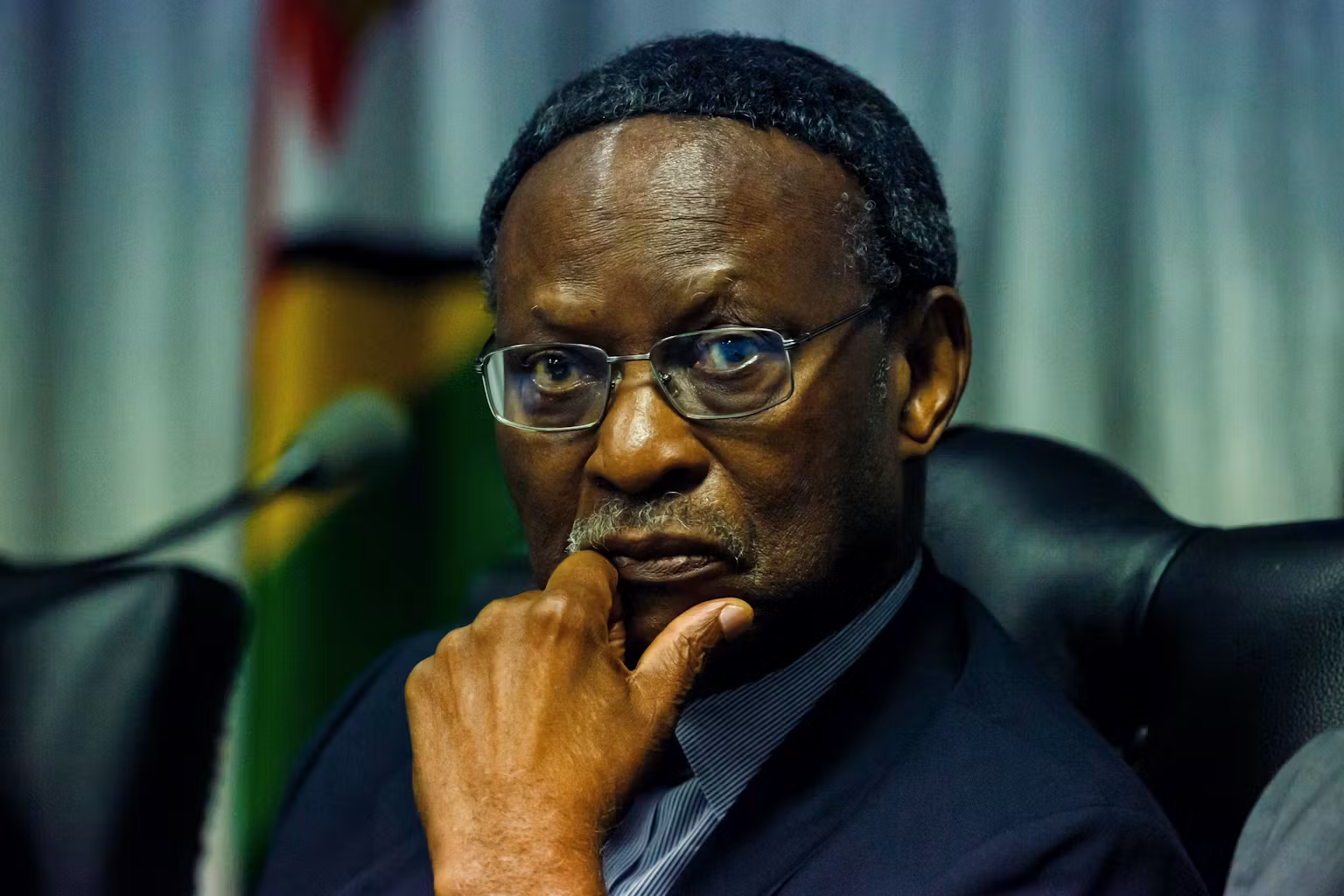
Nigeria stands at a critical point in its history. Years of worsening insecurity, deepening poverty, rising unemployment, wasteful governance and slow development have left many citizens questioning whether the present federal structure is capable of meeting the country’s needs. For more than fourteen years, one of Nigeria’s most respected elder statesmen, former Commonwealth Secretary General, Chief Emeka Anyaoku, has consistently maintained that the nation can only achieve lasting stability and development by returning to a true regional system of government.
Chief Anyaoku’s position is neither new nor political. Since 2012, he has repeatedly argued that the present arrangement of 36 states and a powerful central government has become economically unsustainable and constitutionally ineffective. Speaking at a lecture in Awka that year, he recalled how Nigeria enjoyed healthy competition and rapid development under the regional system and urged the country to return to that model.
He reinforced this position in 2015 during lectures in Abeokuta and Lagos, where he described the present presidential system as wasteful and insisted that Nigeria performed better when it operated as a federation of regions. Later that same year, he warned that without returning to regional government, the country would continue its fruitless search for meaningful development. Over the years, his message has remained unchanged because the challenges facing Nigeria have remained the same.
The reasons behind this proposal are compelling. Maintaining 36 governors, 36 state assemblies and numerous bureaucracies consumes enormous public resources that could otherwise be invested in infrastructure, education, healthcare and economic growth. A regional structure would significantly reduce the cost of governance while allowing resources to be directed towards development.
Nigeria’s experience before 1966 also demonstrates the benefits of regionalism. The regions competed in agriculture, education, commerce and industrial development, leading to remarkable achievements such as free education in the West, thriving agricultural exports, industrial expansion and landmark projects that remain symbols of progress today. Healthy competition among the regions encouraged innovation and economic growth.
Regional government would also strengthen security and deepen true federalism. Governments closer to the people are better positioned to understand local challenges and respond effectively. Greater regional control over policing, education, transportation and natural resources would reduce excessive dependence on the Federal Government while promoting accountability and faster decision making.
The Constitution already provides a lawful path to achieve this objective. Through constitutional amendments or, if necessary, the adoption of a new constitution agreed upon by Nigerians, the existing six geopolitical zones can become the country’s federating regions, with greater legislative and economic powers while the Federal Government retains responsibility for national unity, defence and foreign affairs.
Traditional rulers, town unions, professional bodies, civil society organisations and community leaders also have important roles to play in this national conversation. Citizens must be properly educated that regionalism is not a call for division or secession but a practical solution for more efficient governance. Legislators should be encouraged to sponsor the necessary constitutional reforms, while Nigerians across all regions should participate constructively in the debate.
Chief Emeka Anyaoku has remained unwavering in this advocacy for more than fourteen years because he believes it offers Nigeria a realistic path to peace, prosperity and sustainable development. His counsel deserves careful consideration. If Nigeria truly seeks a stronger federation that delivers security, economic growth and good governance, then the time has come for the nation to seriously examine a return to regional government.
Chimezie Obi Esq.
President-General, Obosi Development Union Worldwide.
Obosi, Anambra State.