Forgotten Dairies
If The Pastors Soludo Ordered Their Arrest For Allegedly Being Fake Are True Men Of God, Let Them Prove It -By Isaac Asabor
The ball is now in the court of those who insist they are true men of God. The Bible shows repeatedly that when genuine servants of God faced challenges, heaven responded. Moses was vindicated. Daniel was vindicated. Elijah was vindicated. Paul and Silas were vindicated. If the men of God whom Soludo allegedly dubbed fake are indeed authentic servants of the Almighty, then this may be their moment to demonstrate it. Anambra is watching. Nigeria is watching. And perhaps, more importantly, the credibility of modern Christianity is watching too.

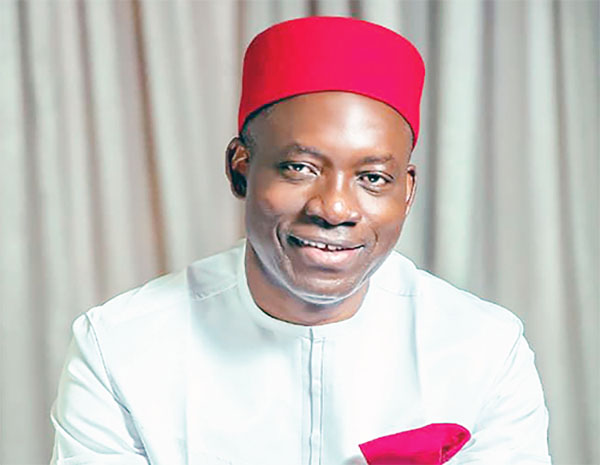
The recent arrest of several pastors in Anambra State under Governor Charles Soludo’s ongoing campaign against what his administration describes as fraudulent religious practices has once again thrust the issue of faith, authenticity, and accountability into the national spotlight. The controversy became even more dramatic when the governor reportedly threw down a challenge: any of the detained pastors who claims to possess genuine divine power should prove it by healing a cripple.
Predictably, reactions have been swift and divided. Some have condemned the arrests as an attack on Christianity and religious freedom. Others have applauded the government for confronting what they see as the commercialization of faith and the exploitation of vulnerable worshippers.
Yet beyond the politics, emotions, and legal arguments lies a fundamental question: if those arrested are indeed true men of God, why not seize this moment to prove it?
Throughout biblical history, genuine servants of God were often challenged, ridiculed, persecuted, arrested, and even condemned. However, when their authority was questioned, they did not rely on public relations campaigns, emotional blackmail, or appeals for sympathy. Their defence was the unmistakable manifestation of God’s power.
For instance, When Moses appeared before the Egyptian ruler demanding the freedom of the Israelites, Pharaoh did not bow in reverence. He mocked the message and hardened his heart. It was not lengthy arguments that eventually convinced Egypt. Rather, it was the extraordinary display of divine power through signs, wonders, and plagues that forced the mightiest king of his era to acknowledge the supremacy of God.
In a similar vein, Daniel’s unwavering commitment to prayer led to his arrest and eventual confinement in the lions’ den. Yet God intervened. The lions could not touch him. What was intended as a public humiliation became a public testimony. The king who authorized his punishment was ultimately compelled to honour the God whom Daniel served.
Then there were Shadrach, Meshach, and Abednego. Their refusal to worship Nebuchadnezzar’s golden image earned them a death sentence. They were thrown into a furnace so hot that it killed the men who cast them in. Yet they emerged unharmed. Their deliverance was not hidden in a private corner. It happened in full public view, transforming scepticism into awe.
And who can forget Elijah on Mount Carmel? At a time when Israel was drowning in idolatry and confusion, Elijah challenged hundreds of prophets of Baal to a public contest. There was no appeal for understanding. There was no demand for tolerance. There was simply a test. The God who answered by fire would be acknowledged as the true God. The prophets of Baal cried from morning until evening. Nothing happened. Then Elijah prayed, and fire descended from heaven. The debate ended immediately. Divine power settled the argument.
Perhaps the most relevant example is found in Elijah’s encounter with the soldiers sent by King Ahaziah. Twice, military captains arrived with their men to arrest him. Elijah did not organize a press conference. He did not accuse the government of persecution. Instead, he declared: “If I am a man of God, let fire come down from heaven and consume you and your fifty men.” Scripture records that fire indeed fell from heaven.
The point is not that modern pastors should call down fire upon government officials. Rather, the lesson is that when Elijah’s spiritual authority was challenged, he pointed to divine evidence rather than human arguments.
The New Testament offers similar examples. Paul and Silas were arrested, beaten, and imprisoned for preaching the Gospel. Yet while they prayed and worshipped at midnight, an earthquake shook the prison, opened the doors, and loosened the chains of the inmates. The very jailer assigned to watch them became a convert. Again, God’s power became their defence.
Against this backdrop, Governor Soludo’s challenge assumes significance beyond politics. Whether one agrees with his methods or not, he has effectively asked a question that millions of Nigerians have quietly pondered for years. If so many pastors claim miraculous powers, where are the miracles when they are most needed? If some claim to heal the blind, why can they not heal a cripple? If some claim to raise the dead, why can they not demonstrate such power under public scrutiny? If some claim to possess extraordinary spiritual gifts, why do those gifts often appear only in carefully controlled environments before devoted followers? These are uncomfortable questions, but they are legitimate questions.
It is no more news that Nigeria has become a fertile ground for religious entrepreneurship. Across cities and villages, countless self-proclaimed prophets, apostles, seers, miracle workers, and spiritual fathers command enormous followings. Many live in opulence while their followers struggle with poverty. They promise instant wealth, miraculous healing, supernatural breakthroughs, and divine solutions to virtually every problem of life. Yet despite the abundance of miracle claims, verifiable miracles remain remarkably scarce.
This reality has fuelled growing public scepticism. That scepticism is precisely why the Anambra controversy resonates beyond the state’s borders. It is not merely about a handful of arrested pastors. It is about the credibility of religious leadership itself.
If the detained pastors are genuine servants of God, this controversy presents an unprecedented opportunity for vindication. Nothing would embarrass their critics more than a clear, undeniable demonstration of divine power. Nothing would silence doubters more effectively than evidence that transcends argument. After all, if biblical precedents are to be taken seriously, God has never lacked the ability to vindicate His servants.
However, if no such evidence emerges, then many Nigerians will inevitably draw their own conclusions. Faith should never be criminalized. Religious freedom remains a constitutional right and a cornerstone of democratic society. Governments must exercise caution when dealing with religious institutions. But religious leaders must also recognize that extraordinary claims invite scrutiny. The greater the claim, the greater the burden of proof.
Governor Soludo has thrown a challenge into the public square. Whether one sees it as provocative, controversial, or unfair, it has forced a national conversation about authenticity in the pulpit.
The ball is now in the court of those who insist they are true men of God. The Bible shows repeatedly that when genuine servants of God faced challenges, heaven responded. Moses was vindicated. Daniel was vindicated. Elijah was vindicated. Paul and Silas were vindicated. If the men of God whom Soludo allegedly dubbed fake are indeed authentic servants of the Almighty, then this may be their moment to demonstrate it. Anambra is watching. Nigeria is watching. And perhaps, more importantly, the credibility of modern Christianity is watching too.