
National Issues
DEMOCRACY DAY: Twenty-Seven Years of Civil Rule, Yet Democracy’s Promise Remains Unfulfilled as Kidnappers Collect Ransom from the Poor -By Daniel Nduka Okonkwo
The average Nigerian farmer in Benue, the market trader in Onitsha, the university graduate in Kano, and the widow in Abeokuta genuinely experience the dividends of good governance in their daily lives, the celebration of Democracy Day will remain incomplete. The day will mark a political anniversary, but not yet a human triumph.

In Nigeria, Democracy Day has become less a celebration of freedom than a stark reminder of unfulfilled promises. While the government marks June 12 with official ceremonies, flag-raising parades, and presidential addresses, millions of citizens remain trapped in poverty, exposed to the daily terror of bandits and insurgents, and waiting anxiously for loved ones abducted by kidnappers to return home. Families negotiate ransoms in desperation. Children endure torture. Women suffer sexual violence at the hands of captors. For many Nigerians, the foundational ideals of democracy security, liberty, and welfare feel not merely distant but painfully mocked by the realities of daily life.
This is the Nigeria that greets another Democracy Day. Since the return to civilian rule on May 29, 1999, successive administrations have mounted the podium with ambitious visions and soaring rhetoric. From poverty reduction and job creation to improved infrastructure, stable electricity supply, quality education, affordable healthcare, and economic prosperity, every government has presented a blueprint for a better Nigeria. Yet for the majority of ordinary citizens, those blueprints have rarely translated into brick and mortar, food on the table, or safety on the roads.
The pattern is as familiar as it is wearying. Campaign promises dissolve into hollow gestures. Token distributions of cups of rice substitute for structural policy. Communities continue to bleed under the weight of violence and deprivation while their leaders celebrate milestones that the people themselves cannot feel. The paradox is glaring and increasingly difficult to ignore: democracy is constitutionally mandated to guarantee life and dignity, yet Nigerians are left questioning whether those guarantees have been quietly abandoned by the very system designed to uphold them.
The comparison, however uncomfortable it may be to state openly, arises with increasing frequency in public discourse: that the military era appeared to provide more social stability than many of the democratic governments that followed. Few Nigerians would wish for a return to the barracks. But the fact that the comparison is being made at all is itself a verdict on the quality of governance delivered since 1999.
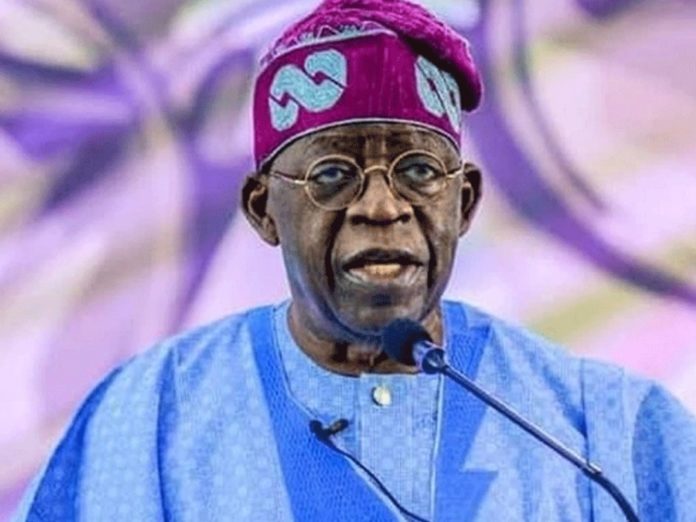
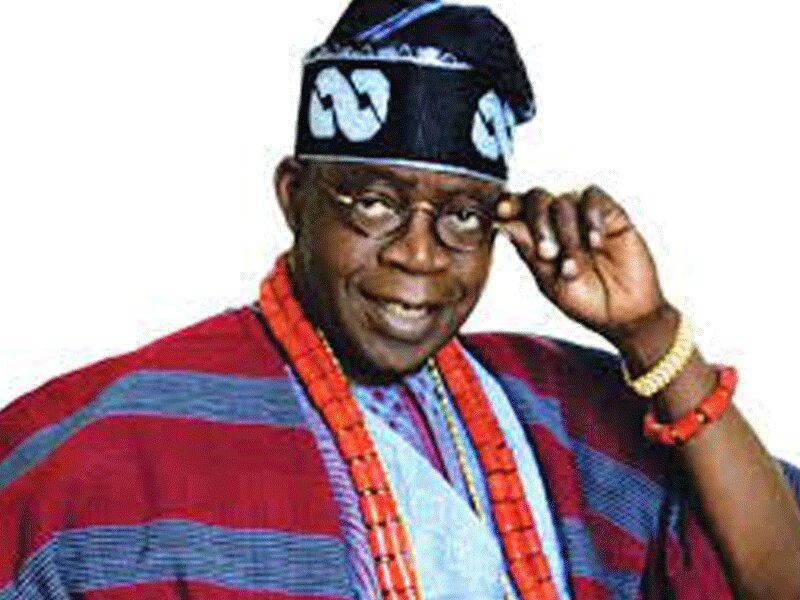
As Nigeria marked twenty-seven years of uninterrupted democratic governance this June 12, President Bola Ahmed Tinubu called on citizens to continue defending the nation’s democracy despite its imperfections. In his Democracy Day address, the President reminded Nigerians that since 1999, the country has witnessed successive elections, peaceful transfers of power, and the resolution of political disputes through constitutional institutions rather than through military coups or armed conflict.
“Our democracy is not perfect, but it is ours, and we must continue to defend and strengthen it,” President Tinubu declared.
He urged young Nigerians to resist the temptation of emigration and to invest their talents at home.
“Nigeria is your home and your future. Build here, code here, work here, and vote here. Every great nation was built by those who stayed to solve problems, not by those who abandoned ship,” he said.
The President also paid tribute to members of the armed forces, security agencies, traditional rulers, religious leaders, civil society groups, journalists, students, women, labour leaders, and the countless pro-democracy activists whose sacrifices helped secure the democratic freedoms Nigerians exercise today.
These are noble sentiments. They are, in many respects, true sentiments. Nigeria’s democratic survival across twenty-seven turbulent years is not a trivial achievement. It deserves acknowledgment. But Democracy Day also demands something more difficult than tribute and celebration. It demands honest reckoning.
Beyond celebrating democratic survival, Nigerians must ask a fundamental question: Has democracy delivered on its promises?
For millions of citizens, the answer remains painfully uncertain.
Despite nearly three decades of uninterrupted civilian governance, Nigeria continues to register some of the worst development indicators on the African continent. Millions of Nigerians struggle daily with rising poverty, mass unemployment, entrenched insecurity, runaway inflation, inadequate healthcare, crumbling educational infrastructure, and an electricity supply so unreliable that it has spawned an entire informal economy of generators and alternative energy workarounds. While democratic institutions have endured, the quality of life for the average citizen has remained stubbornly resistant to improvement, surviving administrations and surviving promises, but rarely improving in any durable or transformative way.
This reality explains why many Nigerians approach Democracy Day with profoundly mixed emotions. They celebrate, rightly, the defeat of military dictatorship and honour the sacrifices of the June 12 heroes whose courage gave this day its name. Simultaneously, they nurse a quiet, deepening frustration over the perceived failure of democratic governance to produce broad-based prosperity for those it was established to serve.
Democracy is not merely the conduct of elections every four years. It is not simply the peaceful transfer of power from one civilian administration to another. True democracy is measured by how effectively a government improves the lives of the people it governs. It is reflected in accessible healthcare, quality education, economic opportunity, security of lives and property, accountability in public office, transparency in the management of public resources, and equal access to justice regardless of wealth or political connection.
On these critical indicators, Nigeria still has a considerable and sobering distance to travel.
It would be intellectually dishonest to pretend that nothing has changed since 1999. Nigeria has recorded genuine achievements across this period. The telecommunications revolution transformed a country where fixed-line phones were a luxury into one with hundreds of millions of mobile subscribers. Banking sector reforms rebuilt a financial system once ravaged by insolvency and fraud. Infrastructure development, while uneven and often below standard, has produced roads, bridges, and urban projects that did not previously exist. Democratic consolidation itself, the simple fact that elections, however imperfect, have continued to hold and that power has changed hands without military intervention, is an achievement worth naming.
But achievements in one sector cannot serve as a shield against accountability in others. The gains in banking and telecommunications have not prevented 242 million Nigerians from living in multidimensional poverty, according to the National Bureau of Statistics. The construction of highways has not resolved the insecurity crisis that makes those highways death traps after dark. Democratic consolidation has not translated into the rule of law for the farmer whose land is seized, the widow whose pension is stolen, or the student who graduates into a labour market that has no place for her.
The heroes of June 12 did not endure imprisonment, exile, persecution, and death for civilian rule alone. They fought for a democratic system that would guarantee freedom, justice, accountability, and better living conditions for all Nigerians, regardless of tribe, religion, or political affiliation. Twenty-seven years later, the distance between that vision and the lived reality of most Nigerians remains the central unresolved question of the republic.
This year’s Democracy Day is therefore not a festival of triumph. It is a day of accountability.
It is a reminder that leadership requires more than slogans, ceremonial addresses, and political ambition. It requires the courage to confront insecurity head-on, to dismantle the structures of impunity that allow bandits and kidnappers to operate with near-total freedom, to alleviate poverty not through rice distribution but through genuine structural investment, and to restore dignity to a population that has been patient for far too long.
As President Tinubu rightly observed, democracy must be defended. But democracy must also justify that defence by producing tangible, visible, and measurable benefits for the people who live under it. Citizens want more than speeches and commemorations. They want functional hospitals, schools that prepare their children for the future, security that allows them to travel, farm, and trade without fear, and a government that treats their welfare as its primary obligation rather than a campaign afterthought.
The challenge before Nigeria’s political class is therefore greater and more urgent than the preservation of democratic institutions. It is to ensure that democracy translates into meaningful, lived development for the majority of Nigerians who have been waiting, with diminishing patience, for the system to work in their favour.
As the nation reflects on twenty-seven years of democratic governance, Nigerians can take measured pride in having sustained civilian rule through coups, crises, economic shocks, and security emergencies that might have destabilised less resilient societies. But they must also confront an uncomfortable truth: the ultimate test of democracy is not how long it survives, but how well it serves the people.
The average Nigerian farmer in Benue, the market trader in Onitsha, the university graduate in Kano, and the widow in Abeokuta genuinely experience the dividends of good governance in their daily lives, the celebration of Democracy Day will remain incomplete. The day will mark a political anniversary, but not yet a human triumph.
The task before today’s leaders is not to celebrate democracy. It is to make democracy work. For every Nigerian. Without exception.
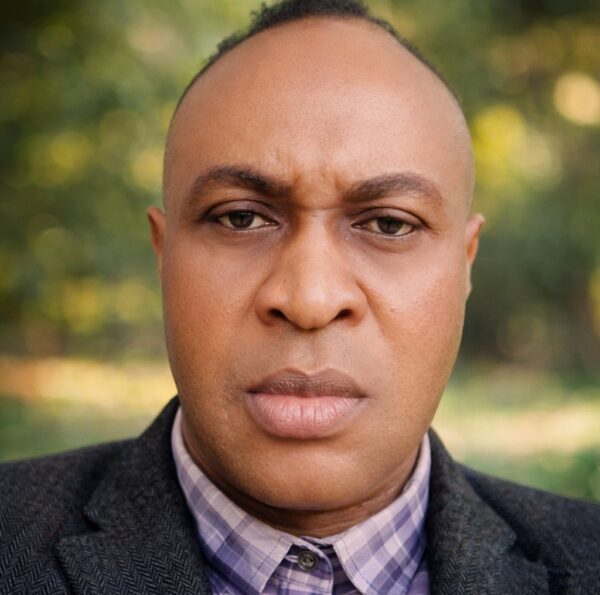
Daniel Nduka Okonkwo is an investigative journalist, human rights advocate, and policy analyst based in Abuja, Nigeria. He is the publisher of Profiles International, a platform dedicated to accountability journalism, governance reporting, and the documentation of human rights issues across Africa. His work examines the intersection of political power, institutional failure, and the human cost of corruption, with a particular focus on Nigeria and the broader African continent. Okonkwo’s reporting and analysis have appeared in Sahara Reporters, African Defence Forum, Daily Trust, Vanguard, Daily Intel, Opinion Nigeria, African Angle, Local Newsbreak, and several international outlets. He is a committed advocate for transparency, democratic principles, and justice, and collaborates with Daniels Entertainment on human rights initiatives that extend his work beyond the written word. He writes from Abuja and can be reached at dan.okonkwo.73@gmail.com.













You must be logged in to post a comment Login