
Forgotten Dairies
Nigeria: Living On Generators, But Led By Solar —By Abdulsalam Abdullahi Opeyemi
At the same time, generators remain deeply embedded in Nigeria’s energy reality. They continue to provide immediate reliability in situations where alternatives are either unavailable or unaffordable. For many households, the choice is not between solar and grid power, but between generators and no electricity at all

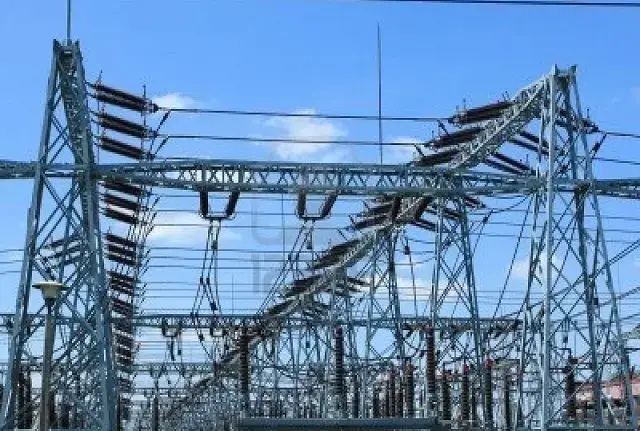
In Nigeria today, the hum of generators is as familiar as traffic noise. From small roadside shops to large corporate offices, petrol and diesel generators have become an unofficial backbone of daily life. Yet beneath this noisy reality, a quieter transition is emerging, one increasingly shaped by sunlight.
Nigeria may still rely heavily on generators, but it is also being steadily influenced by solar energy. This dual reality reflects a country caught between present necessity and future possibility.
Nigeria’s dependence on generators is not necessarily a matter of preference, but of survival. The national grid has long struggled with instability and underperformance. Although installed generation capacity is often reported to exceed 13,000 megawatts, actual supply remains significantly lower for most of the time.
Even for those connected to the grid, outages are frequent. A large number of Nigerians still lack reliable access to electricity, while many others experience highly inconsistent supply.
In this gap, generators have become the default alternative. They are immediate, flexible, and widely available. For businesses, they often determine whether operations continue. For households, they provide basic comfort and continuity.
However, this reliance comes with significant costs—financial, environmental, and social. Fuel prices remain volatile, especially in the context of subsidy reforms and currency fluctuations. Noise pollution is widespread, and air quality is affected in urban areas. For small businesses, fuel expenses can significantly reduce already narrow profit margins.
In many ways, generators reflect a deeper structural challenge: an energy system that has yet to consistently meet growing demand.
While generators dominate the present, solar energy is increasingly shaping future possibilities. Over the past few years, Nigeria has seen notable growth in solar adoption, particularly within off-grid and decentralized systems.
Much of this expansion has not come from large-scale national infrastructure, but from households, small businesses, and mini-grid solutions. Rooftop systems, solar kits, and hybrid setups are gradually becoming more common in both urban and rural areas.
Imports of solar equipment have also increased in recent years, reflecting growing interest in alternative energy solutions. For many users, solar adoption is driven less by environmental considerations and more by economic necessity, particularly the need to reduce dependence on fuel.
While solar capacity is still relatively small compared to the national energy deficit, its rate of adoption suggests a shift in direction rather than scale.
The idea of solar “leading” is therefore not about dominance in output, but about influence in trajectory. Increasingly, solar solutions are shaping how individuals and businesses think about energy independence, especially in response to grid limitations and fuel costs.
At the same time, generators remain deeply embedded in Nigeria’s energy reality. They continue to provide immediate reliability in situations where alternatives are either unavailable or unaffordable. For many households, the choice is not between solar and grid power, but between generators and no electricity at all.
Several barriers still affect broader solar adoption. These include high initial costs, limited financing options, infrastructure constraints, and dependence on imported components. Policy inconsistency also continues to affect investor confidence in the sector.
For now, Nigeria’s energy system remains a hybrid of necessity and transition. Many households and businesses combine multiple sources—grid, generators, batteries, and increasingly solar—to manage reliability.
Over time, improvements in technology, financing, and policy may gradually shift this balance further toward renewable options. Still, the broader direction appears to be toward more diversified and sustainable energy solutions rather than reliance on a single source.
Abdulsalam Abdullahi Opeyemi is a journalist. He can be reached via abdulsalamabdullah1234@gmail.com.






















You must be logged in to post a comment Login