
Forgotten Dairies
Blood On The Epaulettes: A Nation Mourns The Rising Killing Of Senior Military Officers In Nigeria -By Godwin Philip Malgwi
And perhaps that is the deepest sorrow of all—that those entrusted with defending the nation have themselves become among the most visible victims of its insecurity. Yet in remembering them, Nigeria also remembers the enduring cost of peace, and the heavy burden borne by those who stand in its defence.

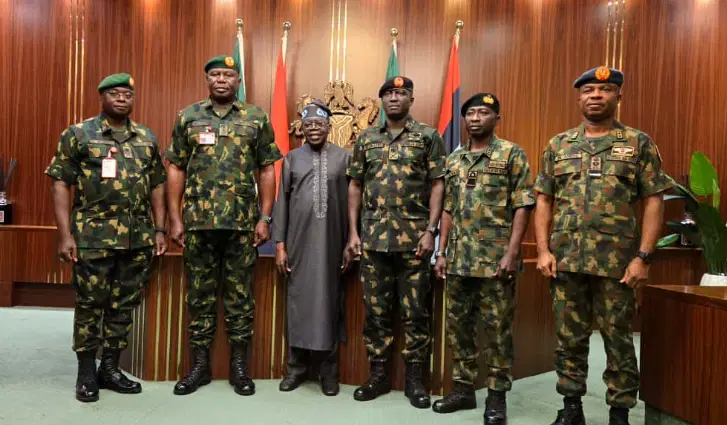
In a country burdened by insurgency, banditry, communal violence and organized criminal attacks, the death of any soldier is a painful reminder of the sacrifices made daily to keep Nigeria together. But when high-ranking military officers—those entrusted with command, strategy and leadership—are killed in active operations, the tragedy resonates even more deeply. It is not merely a loss for the military institution; it is a wound to the nation’s morale, a blow to security confidence, and a painful reminder that even those who lead the battle are not immune to the dangers of war.
Across Nigeria, the killing of senior army officers has become a troubling and emotional issue, one that continues to provoke grief, concern and difficult questions. Reports in Nigerian newspapers such as Daily Trust, The Punch, Premium Times, Vanguard, and Leadership have documented incidents where senior officers have died in ambushes, insurgent attacks, helicopter crashes linked to military operations, and direct confrontations with armed groups. Each incident tells a story not only of conflict, but of sacrifice, vulnerability and national pain.
When news broke of the death of Brigadier General DzarmaZirkusu and three other officers in an ambush near AskiraUba in Borno State in 2021, the country was shaken. Nigerian newspapers reported that the senior officer died while leading troops in pursuit of insurgents. For many Nigerians, the incident symbolized both courage and tragedy: a commander leading from the front, only to fall in the line of duty. Daily Trust described the killing as a devastating loss to the armed forces, while The Punch reported widespread reactions from military circles and the public, with many expressing sorrow over the death of a respected officer.
The death of Major General Idris Alkali, though under different circumstances years earlier, had also raised national concern about the safety of military personnel and the broader climate of insecurity. More recently, reports of attacks leading to the deaths of senior officers in the Northeast have continued to deepen fears that military commanders themselves have become strategic targets in a prolonged and brutal conflict.
These are not just names in newspaper headlines. These are men who had families, colleagues, subordinates and communities that looked up to them. Behind every fallen general or brigadier is a grieving spouse, children left with memories instead of presence, aging parents who must bear the unimaginable pain of losing a son, and fellow soldiers forced to continue fighting while mourning their leaders. Too often, public discussion focuses on the tactical consequences while overlooking the human cost. But war is always deeply personal.
The killing of senior officers also carries a symbolic pain. In military culture, rank represents experience, discipline and leadership earned over decades of service. When such officers are killed, especially in hostile attacks, it sends shockwaves beyond the barracks. It shakes public confidence, affects troop morale, and raises questions about the intensity of the threat facing the country. If generals can be ambushed or attacked, ordinary citizens naturally begin to wonder how secure anyone truly is.
Many security analysts, quoted over time by Premium Times and Vanguard, have argued that insurgents increasingly target high-ranking officers for strategic reasons. Killing a senior commander can disrupt operations, weaken coordination and serve propaganda purposes. But beyond strategy lies a disturbing reality: these killings reveal the dangerous conditions under which Nigerian troops operate, often in difficult terrain, under enormous pressure, against determined and adaptive enemies.
Nigerian newspapers have also repeatedly highlighted operational concerns surrounding some of these tragedies. Questions often arise about intelligence failures, delayed reinforcements, inadequate surveillance, poor equipment, or vulnerabilities in military formations. In some reported cases, communities have responded not with anger alone, but with heartbreak—mourning soldiers who died while trying to protect others.
In the Northeast, where the conflict has endured for years, many senior officers have reportedly chosen to remain close to the frontlines to inspire troops and oversee critical operations. That decision often reflects courage, duty and commitment. Yet it also exposes them to extraordinary risk. When such officers fall, their deaths are often remembered not only as military losses, but as acts of sacrifice.
The repeated killing of senior officers also reflects the heavy burden carried by Nigeria’s armed forces in a war without simple endings. Many of these commanders have spent years rotating through conflict zones, confronting insurgents, rebuilding formations after attacks, and making life-or-death decisions under extreme pressure. Their deaths often reveal the exhaustion and human cost embedded in prolonged warfare.
There is something especially tragic about the image of experienced commanders—men who have trained generations of soldiers, planned operations, and dedicated decades to service—dying in the same insecurity they have fought tirelessly to contain. It forces the nation to confront uncomfortable truths about the scale of the challenge and the price being paid by those in uniform.
Yet amid grief, there is also a story of resilience. Nigerian newspapers often report how fallen officers are remembered with honors, tributes and solemn military ceremonies. Their colleagues salute them, families receive condolences, and the nation pauses, however briefly, to recognize service and sacrifice. These moments of remembrance matter because they affirm that those lost are not forgotten.
Still, remembrance alone is not enough. Many editorials in Nigerian newspapers have argued that each loss should compel reflection and reform. If senior officers continue to die in preventable circumstances, then mourning must be accompanied by accountability, strategic reassessment and stronger support for those still serving. Grief without reform risks becoming ritual.
The emotional weight of these killings also extends to civilians in conflict-affected communities. In places where soldiers are often seen as protectors against insurgent violence, the death of commanders can intensify fear among residents already living with trauma. Communities may interpret such losses as signs of worsening insecurity, further deepening anxiety in areas long scarred by conflict.
There is also the silent pain borne by surviving soldiers. When a commanding officer is killed, those who served under him often carry emotional wounds beyond the battlefield. They lose mentors, leaders and, in many cases, father figures within the military structure. Such losses can leave scars that statistics and official statements rarely capture.
The issue, therefore, is not simply that high-ranking army officers are being killed. It is that these deaths symbolize something larger: a nation struggling with insecurity, a military bearing immense strain, and families paying heartbreaking prices. Each fallen officer represents more than a casualty figure; he represents service interrupted, duty fulfilled at the highest cost, and a life given in defense of others.
For Nigeria, the challenge is not only to honor these officers in death, but to create conditions that better protect those who continue to serve. That means strengthening intelligence systems, improving operational support, addressing equipment gaps, enhancing troop welfare, and pursuing broader solutions to insecurity beyond battlefield responses alone.
But beyond policy and strategy lies a moral responsibility: to remember the human beings behind the ranks. The stars on a general’s shoulder may symbolize authority, but beneath the uniform is a father, husband, son, colleague and citizen. When such a person falls, the loss is not abstract. It is deeply human.
As Nigerian newspapers continue to report these painful incidents, one truth remains clear: the killing of senior military officers is not merely a security issue. It is a national tragedy written in grief, courage and sacrifice. It demands not only analysis, but empathy. Not only headlines, but remembrance. Not only sorrow, but resolve.
And perhaps that is the deepest sorrow of all—that those entrusted with defending the nation have themselves become among the most visible victims of its insecurity. Yet in remembering them, Nigeria also remembers the enduring cost of peace, and the heavy burden borne by those who stand in its defence.
Godwin Philip Malgwi is 200 Level Student From Mass Communication Department, University Of Maiduguri.






















You must be logged in to post a comment Login