National Issues
Six Years of Silence: El-Rufai’s Revelation Demands International Investigation into Dadiyata’s Enforced Disappearance -By Nnamdi Prince
Six years is too long to wait for justice. Six years is too long for a family to live in anguish. Six years is too long for a democracy to tolerate the enforced disappearance of one of its citizens. The time for action is not tomorrow. It is not next week. It is now. And if the Nigerian state will not act, then the international community must step in. Because Dadiyata’s disappearance is not just a Nigerian tragedy, it is a human rights crisis that demands a global response.

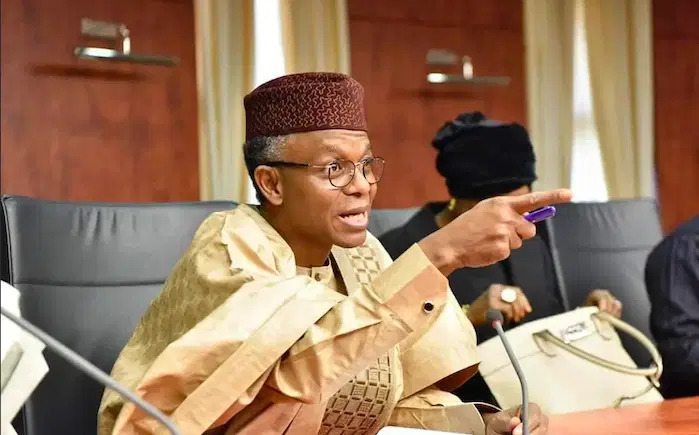
On Friday, February 13, 2026, former Kaduna State Governor Nasir El-Rufai sat for an interview on Arise Television that should disturb every Nigerian who values freedom, accountability, and the rule of law. In his characteristically matter-of-fact manner, El-Rufai confirmed what many have long suspected: that Abubakar Idris, the social media critic known as Dadiyata, was likely abducted by state actors. More troubling still, he revealed that a police officer allegedly confessed to the crime three years after the fact, yet no arrests were made, no investigation was launched, and no justice was pursued.
It has been six years, seven months, and twelve days since masked gunmen seized Dadiyata from his home in Kaduna’s Barnawa neighbourhood on the evening of August 2, 2019. Six years since his wife watched helplessly as her husband was dragged away. Six years since his children last saw their father. And in all that time, despite repeated calls from human rights groups, despite the anguish of a family torn apart, despite the constitutional obligation of the state to protect its citizens, the Nigerian government has offered nothing but silence, deflection, and bureaucratic indifference.
El-Rufai’s interview has inadvertently torn the veil off this silence. His attempt to distance himself from culpability has instead provided the most damning evidence yet that this was not a random kidnapping, but a calculated political abduction carried out with the knowledge and participation of state security apparatus.
During the interview, El-Rufai insisted that Dadiyata was not his problem. He was, according to the former governor, a critic of the Kano State government under Abdullahi Ganduje, not Kaduna. “It was Ganduje that was his problem,” El-Rufai stated. “I didn’t even know he existed until he was abducted.”
Yet this defense collapses under the most basic scrutiny. Dadiyata lived in Kaduna. He was abducted in Kaduna. As the chief security officer of Kaduna State at the time, El-Rufai bore constitutional responsibility for every resident’s safety. To claim ignorance of a prominent social media critic living under his jurisdiction, a man whose disappearance would spark national and international outcry, strains credulity beyond breaking point.
More significantly, El-Rufai revealed information that should have triggered immediate criminal investigations. He claimed that three years after the abduction, “a policeman that was posted out of Kano to Ekiti State confessed to someone that they were sent from Kano and they took the guy, they abducted Dadiyata, and he felt bad about it.”
Let us pause and consider what this admission means. A serving police office, an agent of the Nigerian state, allegedly confessed to kidnapping a citizen. This officer admitted the crime was politically motivated, carried out on orders from another state. And rather than this confession leading to arrests, prosecutions, and a full-scale investigation, it was apparently treated as gossip, a casual aside shared with the former governor and then buried.
If El-Rufai indeed received such information, his legal and moral duty was crystal clear: report it to federal law enforcement authorities immediately. Instead, he sat on this explosive revelation for years, only mentioning it now in the context of defending himself against allegations of complicity. This is not the behaviour of an innocent bystander; it is the behaviour of someone who knows far more than he is willing to admit.
El-Rufai’s claims about Kano’s involvement also ring hollow when examined alongside the documented timeline. Within days of Dadiyata’s abduction, his son Bashir El-Rufai posted a tweet that has since been deleted but was widely documented: “The same clowns who encouraged him when he was creating false stories and capitalizing on lies that could endanger lives solely for political ends are the same individuals trending hashtags asking #WhereisDadiyata. Dangerous lies in the public space have consequences.”
This was not the tweet of someone who had never heard of Dadiyata. It was a deliberate, targeted statement that framed the abduction as justified consequence for the victim’s criticism. The implication was unmistakable: Dadiyata had it coming. Such a statement from the governor’s son, posted just four months after the disappearance, suggests intimate knowledge of both Dadiyata’s activities and the circumstances of his removal.
Now, El-Rufai expects us to believe he knew nothing? That his son was somehow more informed about a critic in Kaduna than the governor himself? The contradictions are stark, and they point in only one direction: El-Rufai’s administration was deeply aware of Dadiyata, considered him a threat, and either participated in or tacitly approved his abduction.
Dadiyata’s case is not an isolated incident. It is part of a disturbing pattern of enforced disappearances in Nigeria, a tactic historically associated with authoritarian regimes seeking to silence dissent without the inconvenience of due process. The message such disappearances send is simple: speak out, and you vanish. No arrest, no trial, no accountability, just silence. Your family will search for you, advocacy groups will demand answers, and the state will shrug its shoulders and move on. This is psychological warfare against civil society, a deliberate erosion of the social contract between government and governed.
The cost is measured not just in the suffering of Dadiyata’s family; though that alone should be enough to demand action. His mother died without ever knowing what became of her son. His father’s health has deteriorated under the weight of unanswered questions. His wife raises their children alone, unable to provide the closure they desperately need. “They ask me every day, ‘Where is Daddy?’ And I have no answers,” Khadija Lame testified through tears.
But the cost extends far beyond one family. It is measured in the journalists who self-censor, the activists who abandon their work, the ordinary citizens who decide it is safer to remain silent than to speak truth to power. Every day that Dadiyata remains missing is another day the Nigerian state signals that it will not protect those who dare to criticize it.
For six years, civil society organizations have called on the Nigerian government to conduct a thorough investigation into Dadiyata’s disappearance. For six years, these calls have been met with bureaucratic stonewalling, jurisdictional buck-passing, and calculated indifference. The Nigeria Police Force investigated and found nothing. The Department of State Services remained silent. The Attorney General’s office offered no progress reports. The Buhari administration, which was in power at the time of the abduction, did nothing. The current Tinubu administration has shown no greater urgency.
This failure is not accidental. It is structural. When state actors are implicated in human rights violations, domestic investigations are inherently compromised. Police officers investigate fellow officers. Security agencies shield their operatives. Politicians protect political allies. Evidence disappears, witnesses recant, and cases quietly die.
El-Rufai’s revelation about the confessing police officer is a perfect illustration of this failure. Here was actionable intelligence, a direct admission of criminal conduct by a state agent. Yet no arrest was made, no interrogation conducted, no follow-up investigation launched. The confession was simply absorbed into the machinery of impunity and forgotten.
This is why domestic investigation, at this point, is insufficient. The Nigerian state has demonstrated, through six years of inaction, that it either cannot or will not pursue justice in this case. What is needed now is external pressure, independent oversight, and international accountability mechanisms that cannot be compromised by local political considerations.
Nigeria is a signatory to multiple international human rights instruments, including the International Convention for the Protection of All Persons from Enforced Disappearance (ICPPED), having acceded to it on July 27, 2009. Nigeria also ratified the convention and submitted reports to the UN Committee on Enforced Disappearances in 2021. This treaty impose binding obligations on the Nigerian government to investigate allegations of enforced disappearances, prosecute perpetrators, and provide remedies to victims’ families.
When domestic mechanisms fail, as they manifestly have in this case, international mechanisms must be invoked. There are several avenues available:
United Nations Working Group on Enforced or Involuntary Disappearances: This body has the mandate to investigate cases of enforced disappearances globally. It can request urgent action from the Nigerian government, conduct independent fact-finding, and issue recommendations. Amnesty International and Dadiyata’s family should formally petition this working group to take up the case.
African Commission on Human and Peoples’ Rights: Nigeria is subject to the jurisdiction of the African Commission, which can hear complaints about human rights violations and issue binding decisions. A formal complaint alleging violation of Articles 4 (right to life), 6 (right to liberty and security), and 9 (right to freedom of expression) should be filed immediately.
International Criminal Court: While the ICC’s jurisdiction is limited, enforced disappearances as part of a widespread or systematic attack against a civilian population can constitute crimes against humanity. If Dadiyata’s case is shown to be part of a broader pattern—and there is evidence to suggest it is—ICC intervention could be warranted.
Universal Jurisdiction: Several countries, including Spain, Belgium, and Germany, have laws allowing their courts to prosecute international crimes committed abroad. If Nigerian authorities continue to shield perpetrators, civil society should explore whether charges can be brought in jurisdictions that recognize universal jurisdiction over enforced disappearances.
Independent International Commission of Inquiry: The United Nations Human Rights Council has the power to establish independent commissions to investigate systematic human rights violations. Given the pattern of enforced disappearances, extrajudicial killings, and suppression of dissent in Nigeria, there is a strong case for such a commission to be established, with Dadiyata’s case as a focal point.
These mechanisms are not abstract legal theories. They are proven tools that have been successfully deployed in other countries to break cycles of impunity. They work because they operate outside the compromised structures of domestic politics, bringing international scrutiny, technical expertise, and political pressure that local authorities cannot ignore.
El-Rufai’s interview has provided new momentum to a case that was in danger of being forgotten. His revelations, however self-serving they were intended to be,have created an opening that must be seized. Here is what must happen immediately:
First, the Nigeria Police Force must issue a public statement clarifying whether it has any record of the confession El-Rufai referenced. If such a confession exists, the officer in question must be identified, questioned, and if evidence warrants, prosecuted. If no such record exists, El-Rufai must be compelled to provide evidence for his claims or face charges for making false statements that obstruct justice.
Second, President Bola Tinubu must break his silence on this case. He must publicly commit to a full, transparent, and time-bound investigation, with regular progress reports to the family and the public. This investigation must be led by individuals with no political ties to the parties implicated, neither the current Kaduna State government, the current Kano State government, nor any federal actors who served during the Buhari administration.
Third, civil society organizations, must escalate this case to international human rights bodies without delay. Formal petitions should be filed with the UN Working Group on Enforced Disappearances, the African Commission on Human and Peoples’ Rights, and any other relevant international mechanisms. The time for hoping the Nigerian government will act on its own has passed.
Fourth, the Nigerian media must not let this story die. Every political interview, every press conference, every public appearance by El-Rufai, Ganduje, or any official from the relevant administrations must include questions about Dadiyata. The questions must be relentless: Where is he? What do you know? Why has no one been held accountable?
The case of Dadiyata is ultimately a test of Nigeria’s claim to be a democracy governed by the rule of law. Can a citizen be snatched from his home by masked men and simply disappear without consequence? Can a police officer confess to abduction and face no investigation? Can those in power deflect responsibility indefinitely while a family waits in anguish for answers?
If the answer to these questions is yes, then Nigeria is not a democracy. It is an oligarchy where power insulates its holders from accountability, where the law exists only for the powerless, and where constitutional rights are privileges that can be revoked at will by those who find criticism inconvenient.
Abubakar Idris believed in the power of the pen to change Nigeria. He believed that speaking truth to power, despite the risks, was a patriotic duty. He believed, that “the pen could change this country.” For holding these beliefs, for exercising rights supposedly guaranteed by the constitution, he was taken.
Six years is too long to wait for justice. Six years is too long for a family to live in anguish. Six years is too long for a democracy to tolerate the enforced disappearance of one of its citizens. The time for action is not tomorrow. It is not next week. It is now. And if the Nigerian state will not act, then the international community must step in. Because Dadiyata’s disappearance is not just a Nigerian tragedy, it is a human rights crisis that demands a global response.
Where is Dadiyata? After six years, Nigeria owes his family—and the world—an answer.