Forgotten Dairies
A Son Takes Power as the Region Burns: Mojtaba Khamenei and the War That Could Change the World -By Fransiscus Nanga Roka
The appointment of Mojtaba Khamenei gives birth to a new type of Middle Eastern geopolitics. It signifies Iran’s revolution state turning more stale or even, in a period when the region is already awash with warfare, something perhaps heading toward dynastic rule.

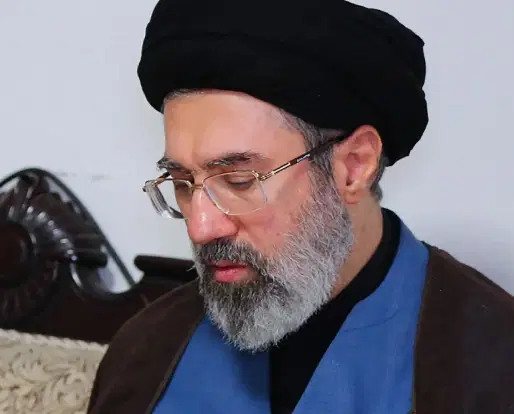
However Mojtaba Khamenei is a kind of brown carrier. He is the center of hope for his faction that the economic reform will be able to take power if they win.
The entrance of him means they now could come out of obscurity, make some noise and perhaps cause some kind change in policy; this remains uncertain but at least there is hope still left for them.
He stepped down and was elected de facto leader of his faction. Iran’s four year government had finally accomplished its mission: dispose him, establish another member from Mojtaba’s family as head for legislative body for example or create full appreciation instead.
While that might sound arcane, the tune still has to change.
He commences shouting excitedly and entertainingly-He is making it bigger
For example; a long list of beauty queens are selected, each of whom goes through her own beauty school similarly levels on which they live or communities around the world.
Being a landlord makes sense for them from start to finish – they have no other way out!
This is not just another Middle Eastern crisis, in other words, it could be a potential systemic shock to the international order.
Mojtaba Khamenei was chosen because of a narrative of defiance. For many in Iran’s ruling elite, the assassination of the elder Khamenei has not only constituted an act of war, but also an attempt at regime decapitation. In this context, the choice of his son can be read as a symbolic desertion of foreign pressures an announcement that Iran will not surrender to outside forces and back down.
Nevertheless, symbolism also brings risks of peril.
In revolutionary regimes, dynastic succession often indicates political stasis instead of renewal. By elevating Mojtaba Khamenei, Iran’s clergy establishment seems to be opting for continuity rather than change. The possibility of diplomatic reorientation toward the West is now becoming increasingly remote.
Region The may be entering a new period of conflict., however.
Under Mojtaba’s helmsmanship, Iran might redouble its efforts to support that of a regional alliances and client forces from Hezbollah in Lebanon, to armed groups throughout Iraq, Syria, and Yemen. It is possible that this war will turn into is an all out, multilateral, complex conflict which encompasses zones stretching from the eastern Med to the Gulf.
Such escalation is full of peril.
In particular, first there is the danger that the conflict will metamorphose into a protracted war involving multiple state actors. Second, disturbances in trade flows of this would size and significance not only bring economic dislocation to more than just Middle Eastern countries but also could have knock on effects for other global financial markets as well. Thirdly and most worrying of all, this period of crisis could speed up give extra impetus to Iran’s nuclear aspirations as the regime seeks strategic deterrence in an environment of existential threat.
Major regional conflicts occur in history. They transform into global confrontations.
The murder of Archduke Franz Ferdinand in 1914 was seen primarily as a minor problem of Europe. It became the First World War within months thereafter. Today the Middle East is perched on a similar crossroads, a region where superpower rivalries, ideological conflicts and nuclear proliferation meet.
Mojtaba Khamenei is at the heart of this capricious and dangerous area now.
He not only succeeds Iran’s top leader in the office but also must bear the burden of waging a war that might determine the ethos of global politics in the next era. Whether he develops into a trail-blazing strategist or hard-line revolutionary will define the direction in which the war heads.
But one thing is already apparent.
The appointment of Mojtaba Khamenei gives birth to a new type of Middle Eastern geopolitics. It signifies Iran’s revolution state turning more stale or even, in a period when the region is already awash with warfare, something perhaps heading toward dynastic rule.
And when dynasties emerge in wartime, history seldom leads to peace.
It leads to conflict.
What the world faces now is a stark choice: is this a late turning point in a protracted series of Middle Eastern contretemps or onset for war whose consequences will be far-ranging?
For seldom is the future tranquil when the crown passes from father to son while missiles continue to fly.