
Global Issues
The Silent Crime of War: How Forced Displacement Escapes Global Justice -By Fransiscus Nanga Roka
The silent crime of war Is not only about cities destroyed. It is also about human lives torn up by their roots and with justice possibly blown away at sea. That displacement is not just a result but often a deliberate or planned outcome of war, means international law must face reality. And until it is seen as such by global justice systems, millions of displaced people will not only suffer conflict and its consequences but also find themselves victims of a failure in the law to safeguard them.

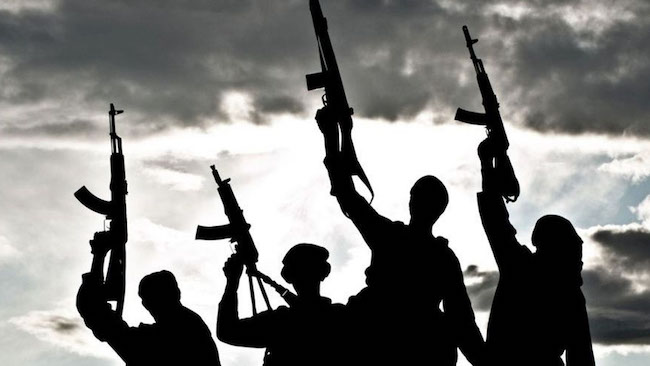
Nevertheless, there is a consequence of war which is often overlooked: it deprives people suffering from forced displacement of attention when it comes to the architecture schedule of civic penalty. Each year millions of people are driven from their houses by war not simply by chance but on purpose as an outcome of fight, coercion, and calculated and strategic fighting. The ills of forced displacement, however, have not yet been recognized as such according to international law. According to international humanitarian law, forced displacement of civilians is prohibited unless their safety requires it or military necessity makes it indispensable. The Geneva Conventions and their Additional Protocols deem the protection of civilians a fundamental obligation in armed conflict. Likewise, international human rights law guarantees the rights to life, dignity, security, and freedom of movement. But in truth many of these legal guarantees break down when confronted with the realities of modern warfare. The way in which current wars are conducted has made displacement a structural feature of war. Urban fighting, calculated destruction of civilian structures, aerial bombing, siege tactics such things now leave enormous tracts uninhabitable. Both state and nonstate military forces often engage in policies designed to push civilian populations out the areas they fight over. Forced displacement is used as a method of territorial control, demographic engineering, or mass punitive measure. To a large extent, although forced displacement has such a severe impact, international law has tended to neglect this type of war crime. In recent years international criminal tribunals have increasingly brought prosecutions for crimes like genocide, torture, and crimes against humanity. Offences related to displacement, however, are frequently treated as less serious crimes or grouped under wider headings of persecution or deportation. This legal categorization masks the chronic nature of displacement as a separate infringement of international law.
The accountability gap originates from the difficulty of proving if coercion took place. Forced displacement rarely results from explicit orders on their own. Rather, it can evolve in the “coercive atmosphere” of indiscriminate attacks and destroying homes. In many cases, interruption or certain starvation tactics and guaranteed lack to civilian safety will produced uprooting of populations. Proving legal responsibility in these circumstances often presents complex evidence of intent, causation and the absence of military necessity. In numerous conflict zones, it is very difficult, if not impossible, to meet these evidentiary thresholds. Another barrier to action is the fragmented nature of global governance. The protection of the internally displaced those who remain within a country’s borders mainly comes down to their own governments. Yet in a number of conflicts, these same governments are themselves directly responsible for the uprooting or unable to prevent it from happening. Unlike refugees, there is no specific international treaty regime or enforcement mechanism for internally displaced persons. The Guiding Principles on Internal Displacement constitute valuable normative orientations, but they are not binding law. The result is an enormous protection gap. Internally displaced persons frequently experience repeated displacement, severely limited access to humanitarian aid, and the destruction of their property. Families may live for years in camps or informal settlements without any perceptible routes for return, integration, or resettlement. Their suffering thus tends to be treated as a humanitarian emergency rather than a legal breach of the law pitiable indeed but not requiring accountability. This framing of the issue is critical. While displacement is considered primarily as a humanitarian challenge, police and criminal justice work tend to stand back and take over. It really is vital to provide food, shelter and medical aid. Yet these do not touch the essential sources of displacement or the responsibility of those who have caused it. Without accountability, forced displacement is liable to be considered as normal outcome of war.
International law must shift gears to cope with this silent crime, albeit with greater force and freedom than before.
First, we need to stop looking at displacement as being direct or downstream product of violent conflict. International humanitarian law can be taken to task for serious breach of the rules; this is an independent legal matter.
Prosecutors and courts should step up their capacity to investigate crimes of displacement, including activities the consequence which are that conflicts force civilians to flee; civilians having no other choice but to abandon their homes.
Secondly, improved monitoring and documentation system is a must. Reliable data, early warning systems, and independant investigations can help to establish patterns of displacement and finger the culprits. Advances in satellite imagery, digital forensics, and open source intelligence offer powerful new tools for documenting attacks on civilian infrastructure and population movements.
Thirdly, the international community needs to strengthen legal protections for internally displaced persons. This includes urging countries to incorporate international standards into domestic legislation, beefing up regional frameworks such as the Kampala Convention in Africa and enhancing inter state cooperation on cross border aspects of internal displacement.
Ultimately, forced displacement is more than a humanitarian tragedy. It is a major challenge to the rule of law. This is because when civilians are forced from their homes by violence, threats or taking their houses apart, then it is their rights after all not just disrupted that have been systematically violated. If, however, those who carry out such actions escape responsibility, the legal order which should have given protection to civilians will be weakened.
The silent crime of war Is not only about cities destroyed. It is also about human lives torn up by their roots and with justice possibly blown away at sea. That displacement is not just a result but often a deliberate or planned outcome of war, means international law must face reality. And until it is seen as such by global justice systems, millions of displaced people will not only suffer conflict and its consequences but also find themselves victims of a failure in the law to safeguard them.
Fransiscus Nanga Roka
Faculty of Law, University of 17 August 1945 Surabaya, Indonesia
























You must be logged in to post a comment Login