
Breaking News
2027 Presidency: Why North-West, South-West Could Decide Tinubu’s Fate
The North-West and South-West could prove decisive in Nigeria’s 2027 presidential race. Here’s what INEC voter figures reveal about the battle for Aso Rock.

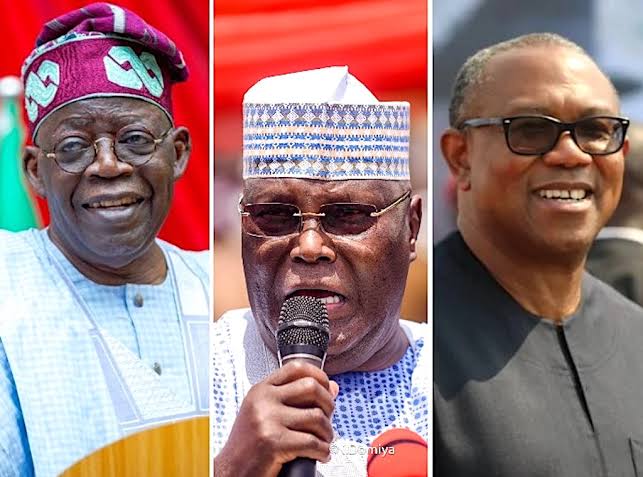
With more than 44.6 million registered voters between them, the North-West and South-West are emerging as crucial battlegrounds in the race for Nigeria’s presidency in 2027, with President Bola Tinubu and his potential challengers facing the task of converting regional support into a winning national coalition.
Figures from the Independent National Electoral Commission (INEC) show that the North-West has 25,083,411 registered voters, while the South-West has 19,614,274. Their combined 44,697,685 voters represent more than 43 per cent of Nigeria’s total registered electorate of 103,428,715.
The figures give the two regions enormous influence over the presidential contest. Yet their electoral strength does not automatically translate into votes for any candidate.
Tinubu, former Vice-President Atiku Abubakar, Peter Obi and other political contenders must compete for voters, build alliances and secure enough support across the federation to satisfy the constitutional conditions for victory.
For the incumbent President, the South-West offers an established political base. But his 2023 victory also depended on votes from northern states and the division of opposition support. His challengers must therefore find ways to weaken that combination while expanding their own appeal.
The regions with the numbers
The North-West leads Nigeria’s geopolitical zones with 25.08 million registered voters, followed by the South-West with 19.61 million and the North-Central with approximately 16.97 million.
Within these zones, Kano, Kaduna and Katsina are major electoral centres. Lagos, with 7,488,633 registered voters, has the largest state register in the country.
A strong showing in these states could significantly influence the national outcome. However, political allegiances in both regions are more complicated than their voter totals suggest.
The North-West has competing party networks and influential state-level political figures whose interests do not always align with those of national party leaders. Security challenges, economic hardship and the performance of elected officials can also influence voting decisions.
Kano illustrates how local political dynamics can overturn expectations and disrupt national campaign calculations.
Tinubu’s position in the South-West is similarly strong but not guaranteed. In the 2023 election, Peter Obi defeated him in Lagos by 9,848 votes, securing 582,454 against Tinubu’s 572,606.
The result showed that the President’s home region could still deliver surprises, particularly where urban voters, local grievances and opposition mobilisation influence the outcome.
There is also a critical distinction between registration and participation. INEC’s figures measure registered voters, not actual ballots cast. Turnout, accreditation, election-day logistics and the spread of votes among candidates will determine the real electoral value of the two regions.
What previous elections tell us
Nigeria’s presidential elections since 1999 show that regional dominance becomes most effective when supported by alliances across the country.
Olusegun Obasanjo won in 1999 and 2003 with support extending beyond the South-West. Umaru Musa Yar’Adua’s 2007 victory demonstrated the reach of the PDP’s national political machinery, while Goodluck Jonathan won in 2011 with substantial backing from the South and parts of the North.
The 2015 election demonstrated how an opposition coalition could defeat an incumbent. Buhari won after political forces that had previously competed against one another came together under the APC, combining a strong northern base with support from other regions.
His 2019 re-election reinforced the importance of maintaining that broader alliance, even as regional divisions remained evident.
Tinubu’s 2023 victory offered another lesson in coalition politics. He polled 8,794,726 votes nationally, ahead of Atiku’s 6,984,520 and Obi’s 6,101,533.
His success reflected a combination of South-West support, votes from northern states and the failure of opposition candidates to consolidate their support behind a single contender.
For the 2027 election, the lesson is clear: a candidate may dominate one or two regions and still fall short without sufficient support elsewhere.
The 2023 results reveal the real contest
Tinubu received 2,542,979 votes in the South-West and 2,652,235 in the North-West, according to the zonal figures cited in the report.
The numbers underline the importance of the North-West to his victory, showing that his northern performance was at least as significant as his support at home.
But the region was far from united behind him. Atiku won Kaduna with 554,360 votes against Tinubu’s 399,293, while Rabiu Kwankwaso carried Kano for the NNPP.
The divided outcome meant that no candidate secured complete control of the North-West.
In the South-West, Obi’s narrow win in Lagos demonstrated that opposition candidates could make significant gains even in Tinubu’s traditional political territory.
Obi’s strong performance in the South-East, meanwhile, was not enough to secure the presidency, while Atiku’s northern support failed to produce a winning national total.
The distribution of votes across the country ultimately favoured Tinubu, whose combined support proved sufficient to finish ahead of his two major rivals.
Veteran journalist and political analyst Simon Kolawole offered a concise assessment of the President’s regional performance.
“Tinubu did well in ‘two out of three’ – the South-West and the core North,” he surmised.
Kolawole also argued that a winning candidate could require substantial support from the North-Central or South-South, or both, in addition to strength in the South-West and core North.
That calculation could become particularly important in 2027, when opposition alliances, party defections and voter mobilisation may reshape the electoral map.
Constitutional requirements complicate the race
Winning the most votes nationally is not the only requirement for becoming president.
Section 134 of the Nigerian Constitution requires a presidential candidate to secure the highest number of votes cast and at least one-quarter of the votes in no fewer than two-thirds of the states and the Federal Capital Territory.
This means that even a candidate with strong support in the North-West and South-West must secure a geographically broad spread of votes.
The constitutional hurdle makes alliances with other regions, effective state-level campaign structures and carefully chosen running mates important parts of the presidential calculation.
Tinubu’s advantage faces a political test
As the incumbent, Tinubu enters the race with an established party organisation, federal visibility and a political network built over decades.
However, voters’ assessments of his administration’s performance on the economy, living costs, jobs and insecurity could determine whether those advantages translate into another victory.
In the North-West, the government’s handling of insecurity and economic hardship may shape voter sentiment. In the South-West, Tinubu must defend his political base against opposition efforts to attract dissatisfied voters, especially in urban centres.
Atiku must turn his northern appeal into a wider national coalition, while Obi faces the task of extending his support beyond the areas where he performed strongly in 2023.
Both opposition figures must also contend with fragmentation and competing political ambitions that could divide their votes.
Turnout will be another decisive factor. A candidate with a smaller but highly motivated electorate could outperform a rival whose larger registered support base fails to vote.
The North-West and South-West will remain central to the 2027 presidential calculations, but neither is guaranteed to deliver its votes to a particular candidate.
The election will ultimately depend on who can mobilise voters, win support beyond traditional strongholds and build the broadest viable coalition.
For Tinubu, the challenge is to preserve the alliance that secured his first term. For the opposition, it is to break that alliance while preventing their own support from being split.
Africans Angle News
















You must be logged in to post a comment Login