Africa
A Toast For Nigeria At 64, by Isaac Asabor

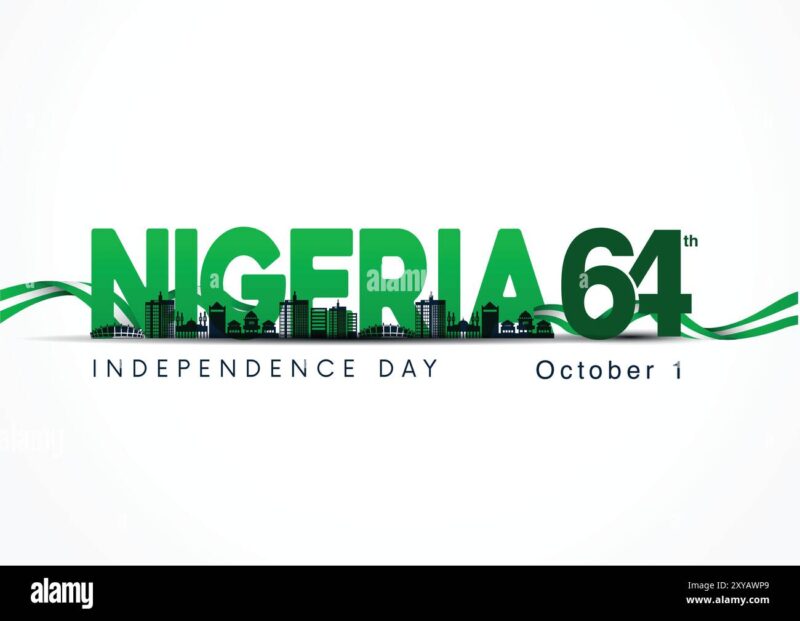
Ladies and gentlemen, fellow Nigerians, today we gather to raise our glasses in honor of our great nation, Nigeria, as she celebrates her 64th birthday. Birthdays are special moments of reflection and celebration, a time to acknowledge the journey, the triumphs, and the challenges that have shaped the life of the celebrant. And so, it is only fitting that today, we celebrate Nigeria, a nation rich in diversity, culture, and history, but also one that, like any 64-year-old, has faced trials and tribulations along the way.
As we toast to Nigeria today, we must acknowledge a reality that has come to define our nation: in this country, “who you know” often matters more than “what you know.” It is a bitter truth that casts a shadow over our progress. Nigeria is a land brimming with brilliant minds, skilled professionals, and hardworking citizens who, despite their talents, are often overlooked in favor of those with the right connections. In Nigeria, meritocracy struggles to find its footing, as mediocrity, connections, and financial clout frequently take precedence over excellence, competence, and hard work.
Our nation’s corridors of power, whether in politics, business, or even daily life, have too often become dominated by a culture that prioritizes influence and wealth above all else. The question asked in many circles is not, “What can you do?” but rather, “Who do you know?” or “How much do you have?” This unfortunate trend has led to a society where those who deserve recognition and success based on their talents and contributions are sidelined, while those with deep pockets or the right connections rise effortlessly through the ranks.
We cannot ignore the fact that, in Nigeria, wealth is king. Whether you are seeking business opportunities, political appointments, or social mobility, the size of your bank account often determines your fate. The quality of your ideas or the depth of your expertise frequently takes a back seat to financial clout. Even more troubling is that the means by which this wealth is acquired is rarely questioned. Despite the existence of institutions like the Economic and Financial Crimes Commission (EFCC), a culture of impunity persists. Wealth, regardless of its source, often shields individuals from scrutiny, and in a country where money talks, the loudest voices are often those of the wealthy, not the meritorious.
This reality has not only stifled the aspirations of many Nigerians, but it has also allowed corruption to thrive. Financial crimes, both in the public and private sectors, often go unchecked, with those involved continuing to enjoy high social and political standing. This culture of celebrating wealth over integrity has eroded trust in our systems and institutions, making it harder for our nation to achieve the progress it so desperately needs.
Yet, in the face of these challenges, we must also celebrate the remarkable resilience of Nigerians. In a country where the systems designed to support hard work and merit are weak, many have adopted a spirit of audacity and risk-taking. From the entrepreneurs navigating the unpredictable terrain of our economy to the political actors operating in a landscape filled with uncertainty, Nigerians have shown boldness and a “go for it” attitude that has driven innovation and entrepreneurship. This derring-do has led to remarkable successes, but it also reflects the deep flaws in our system, where survival often requires risk-taking rather than the steady pursuit of excellence.
As we raise our glasses today, let us also reflect on the need for change. Nigeria, at 64, has shown incredible resilience, but the road ahead requires a transformation in how we define and reward success. It is time for us to place merit at the center of our progress. It is time to build a country where the brightest minds are celebrated and given opportunities, where hard work and innovation are rewarded, and where the rule of law applies equally to all, regardless of wealth or connections.
As we toast to Nigeria, let us call for a future where financial crimes are taken seriously, where corruption is no longer tolerated, and where success is not determined by “who you know” but by “what you know” and what you have contributed to the development of our great nation. The future must belong to those who work hard, contribute meaningfully, and play by the rules, not just to those with the right connections or deep pockets.
So, here’s to Nigeria at 64, a nation of remarkable potential, a nation of resilient people, and a nation on the cusp of greatness. Let us commit to building a future where merit triumphs over mediocrity, where integrity is valued over influence, and where every Nigerian has the opportunity to succeed based on their talents and efforts.
Here’s to a brighter, more just, and more prosperous Nigeria. Happy 64th birthday, Nigeria!
Cheers!