Africa
A Tortoise-Style Peace? Rethinking The Wike–Fubara Reconciliation -By Isaac Asabor
If this reconciliation endures, it will mark a turning point in the political history of Rivers State. If it does not, it will become another chapter in a familiar narrative, one where peace is proclaimed loudly but practiced sparingly. The choice now rests not in declarations but in conduct. Rivers State has heard promises before. What it needs now is proof.


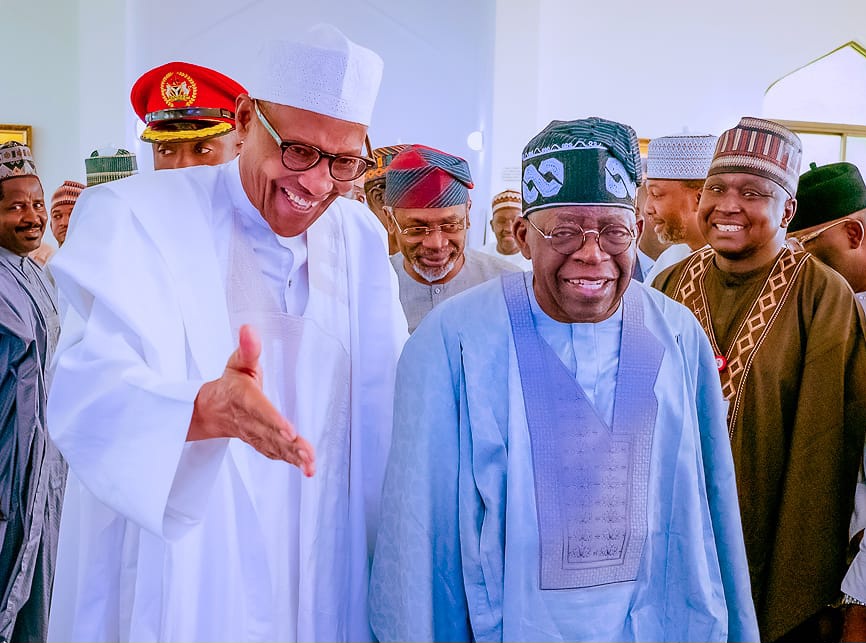
Peace in politics is often announced with ceremony, affirmed with warm handshakes, and applauded with hopeful headlines. But in Rivers State, the language of reconciliation has become so familiar that it now competes with skepticism for public attention. The latest peace understanding between Governor Siminalayi Fubara and his predecessor and political benefactor Nyesom Wike, reached under the mediation of President Bola Tinubu, has again been presented as a turning point. Riverians have every reason to hope it is. They also have every reason to question it.
The central concern is not whether peace has been declared. Peace has been declared before. The concern is whether this peace is built on durable commitment or tactical convenience. That distinction matters because governance suffers when reconciliation is performative rather than transformative.
To understand the caution that now accompanies celebrations of unity, one need not look far beyond the wisdom embedded in traditional storytelling. Nigerian folklore preserves a timeless warning through the character of the tortoise, clever, persuasive, and frequently opportunistic. In one widely told tale, Tortoise wrongs the birds through deceit. When confronted, he pleads for reconciliation, promises change, and secures forgiveness. But once safe, he quietly resumes the behavior that caused the conflict. His peace was not repentance; it was strategy.
The danger for Rivers State is that political peace, if not anchored in genuine change, can mirror the tortoise’s reconciliation, reassuring in appearance, unreliable in practice.
In fact, the relationship between Governor Fubara and Wike did not begin in rivalry. It began in mentorship, political alignment, and shared power. That history makes the subsequent conflict more consequential, not less. When political partnerships fracture, the resulting tension often spreads beyond individuals into institutions.
Over the past political cycle, Rivers State has witnessed multiple moments when peace was publicly affirmed. At different points, both camps indicated that disagreements had been resolved and that governance would proceed without friction. Each declaration carried the promise of stability. Each was followed by renewed tension that reopened uncertainty.
Governor Fubara himself has, on more than one occasion, emphasized reconciliation, cooperation, and unity with his predecessor. Those statements were not ambiguous. They projected closure. Yet the political environment that followed suggested unresolved tensions remained beneath the surface.
The latest reconciliation is therefore not being assessed in isolation. It is being evaluated against a backdrop of repeated assurances that did not translate into lasting harmony.
The governor’s recent public gesture, dedicating his “Man of the Year” recognition from New Telegraph to Wike and acknowledging his role in shaping his political journey, carries powerful symbolism. It communicates respect, gratitude, and an attempt to reset the tone of engagement. Symbolic gestures matter in politics. They soften rhetoric, reduce hostility, and create space for dialogue.
But symbolism alone does not secure stability. Rivers State does not merely require cordiality between leaders. It requires predictable governance, uninterrupted policy implementation, and institutional clarity. These outcomes depend not on gestures but on consistent cooperation over time.
Political reconciliation that exists primarily in public statements but falters under institutional pressure cannot sustain governance. When peace is episodic, development becomes episodic as well.
Without any iota of exaggeration, it is not out of place to opine that the implications of elite conflict extend far beyond political actors. For ordinary citizens of Rivers State, governance is not an abstract concept. It is the functioning of schools, hospitals, roads, and economic opportunities. When political leadership is preoccupied with rivalry, administrative focus shifts from service delivery to strategic positioning.
The state’s economic significance and political influence make stability not merely desirable but essential. Rivers cannot afford governance that oscillates between cooperation and confrontation. Development requires continuity. Investors require predictability. Citizens require confidence that leadership disputes will not derail public welfare. That is why this latest peace must be judged not by its announcement but by its endurance.
Without a doubt, River state and Riverians need peace that strengthens governance. There is a subtle but critical distinction between peace that preserves political balance and peace that advances public interest. The former stabilizes relationships among elites; the latter stabilizes institutions that serve the people.
True reconciliation must therefore produce visible governance outcomes. It must reduce institutional friction, align policy priorities, and eliminate public contradictions in leadership direction. Anything less risks transforming peace into a periodic ritual, rather than a structural achievement.
This is where the tortoise metaphor becomes instructive. The lesson is not that reconciliation is suspect by nature. It is that reconciliation without structural change invites relapse. When underlying tensions remain unresolved, peace becomes conditional, dependent on circumstances rather than commitment. Rivers State cannot be governed on conditional peace.
In fact, the political bond between Fubara and Wike carries emotional, historical, and strategic dimensions. But governance demands that personal history yield to institutional responsibility. Political mentorship may explain past alignment; it cannot justify present instability.
If reconciliation is to endure, it must be grounded in clearly defined roles, mutual respect for institutional boundaries, and shared commitment to public welfare. Leaders must resist the impulse to convert influence into control or loyalty into leverage. Stability emerges not from dominance but from balance.
Without a doubt, the enduring power of the tortoise story lies in its realism. It recognizes that words can conceal intent and that reconciliation can be instrumental rather than sincere. The story warns communities to look beyond declarations and examine behavior. Rivers State now faces precisely that test.
If this peace is genuine, it will be reflected in consistent cooperation even when political interests diverge. It will endure not only in moments of calm but also under pressure. It will prioritize governance outcomes over political narratives.
If, however, reconciliation serves merely as a temporary strategy, a means of defusing tension without resolving its roots, then the state risks reenacting the very pattern folklore cautions against.
This moment presents both opportunity and obligation. The opportunity is to demonstrate that political maturity can prevail over rivalry. The obligation is to ensure that reconciliation strengthens governance rather than merely stabilizes relationships.
Governor Fubara and Wike must recognize that their peace is not a private arrangement. It is a public trust. Nigerians and Riverians alike have endured cycles of confrontation and reconciliation. They deserve continuity, not repetition.
Allowing peace to collapse once more would deepen public cynicism and weaken confidence in political leadership. Sustaining peace, by contrast, would signal that Rivers politics has moved from reactive reconciliation to proactive stability.
Given the context of the forgoing view, it is not out of place to opinionate that peace that depends on convenience is fragile. Peace anchored in shared responsibility is durable. Rivers State now waits to see which of these will define the present moment.
The inadvisability of allowing the tortoise who declared peace but hid his claws to find expression in this reconciliation cannot be overstated. Political actors may declare unity, but only consistent cooperation can validate it.
Riverians do not require perfection from their leaders. They require reliability. They require governance that continues regardless of personal differences. They require peace that serves the collective good rather than strategic interest.
If this reconciliation endures, it will mark a turning point in the political history of Rivers State. If it does not, it will become another chapter in a familiar narrative, one where peace is proclaimed loudly but practiced sparingly. The choice now rests not in declarations but in conduct. Rivers State has heard promises before. What it needs now is proof.