Africa
Another State, Another Scam: The Politics of a Sixth Igbo State -By Vitus Ozoke, PhD
The Southeast doesn’t need a sixth state. It needs a second chance – a moral renaissance, a new generation that refuses to inherit the corruption of its fathers. A people who will not trade their future for another governor’s mansion or another round of Abuja politics. Because at the end of the day, when the speeches end and the budgets are spent, the question still remains: Who will live in this sixth state?

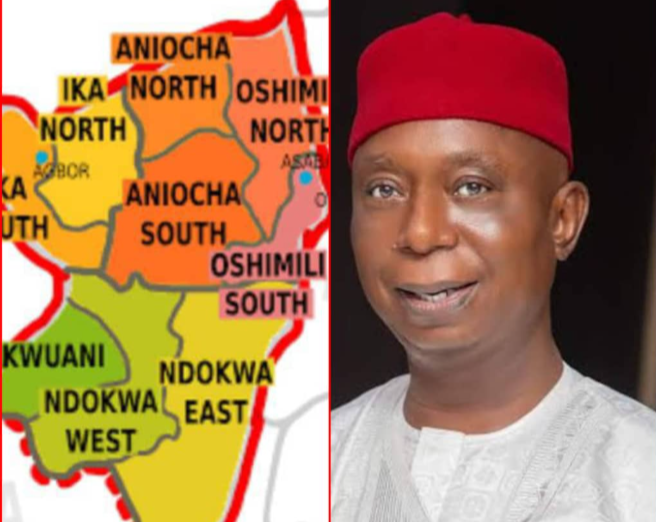
The drumbeat for a so-called sixth state in Igbo land has begun again – the same tired rhythm of deception dressed up as development, the same tired chorus of politicians pretending to fight for “marginalized” people when they are only fighting for themselves. We have seen this movie before. We know how it ends. Every time the cry for another state goes up, it is not the people who celebrate in the end – it is the politicians who pocket the dividends.
Let us speak plainly: the creation of another state in the southeast isn’t about justice, fairness, or inclusion. It’s about securing jobs for the boys – another governorship, another set of commissioners, another bloated legislature, and more money to be stolen. Nothing more. It’s a scam against a weary and wounded people, a cruel joke against a region already struggling under the weight of bad leadership.
The record is there for anyone who cares to look. When the southeast had only Anambra and Imo, the story was different. Under Jim Nwobodo in Anambra and Sam Mbakwe in Imo, there was purpose, planning, and pride. Roads were built and maintained. Water flowed from taps. Streetlights worked. Teachers taught. Schools opened on time. Factories produced. Crime was almost nonexistent. You could drive across Igbo land without fear of potholes. The people were poor, perhaps, but they were proud. They believed in something bigger than tribe or party – they believed in progress.
Then came the carving knife – and with it, the slicing of our land into fragments of power for the greedy and the small-minded. From two states, we became five: Enugu, Abia, Ebonyi, Anambra, and Imo. And what have we gained? More governors, yes. More convoys. More budgets. More excuses. But not more development. Not more jobs. Not more justice. We gained the spectacle of state governors acting like monarchs, flying abroad while their people drown in poverty. We gained party-hopping politicians who sell their loyalty to the highest bidder, trading principles for patronage. We gained five sets of corruption instead of two. We multiplied mediocrity and called it progress.
Look around today and tell me which of the five southeastern states can stand as a model of good governance. Which can boast of functioning infrastructure, reliable security, or credible local leadership? Which has stemmed the exodus of our young people or revitalized industry? None. All have succumbed to the same disease – greed at the top, despair at the bottom.
So, who will live in this new, “sixth” state they are proposing? Who will farm its fields, build its schools, or defend its villages? The same displaced Igbo people who no longer return home because home no longer feels safe? The same generation that is fleeing to Canada and the UK, not because they hate their homeland, but because their homeland has failed them? Our leaders want to create new states while our towns are being emptied. They dream of new capitals while old ones decay. They build new government houses while hospitals rot and schools die. It is political madness – and moral betrayal.
Let’s be clear: the problem isn’t the number of states, but the quality of leadership. You can carve the southeast into ten, twenty, or even fifty states – it will not make an ounce of difference if the same thieves are running them. Bad governance multiplied by six is still bad governance. Corruption replicated six times over is still corruption. The disease isn’t structural; it’s spiritual. It’s the decay of conscience, the death of service, and the idolatry of self.
And the irony is bitter. The same politicians who now shout “marginalization” to justify their agitation are the same ones who have marginalized their own people for decades. They cry about federal neglect while stealing their local allocations. They complain of exclusion while excluding their own citizens from the benefits of governance. They are the kidnappers of Igbo progress, yet they pose as its liberators.
Meanwhile, Nnamdi Kanu, the one man who – right or wrong – embodied a raw form of Igbo defiance, remains in illegal detention after state kidnapping. And what are our governors doing? Party-hopping in Abuja, sipping champagne with his captors and jailers. They claim to speak for the people, but they cannot even speak for the truth. They claim to fight for freedom, but they cannot free their own consciences. This is the tragedy of modern Igbo politics: moral paralysis disguised as pragmatism. We are ruled by men who steal in the name of survival and lie in the name of peace. And now they tell us that another state will fix everything – as if what we lack is geography, not governance.
Look, the truth is simple: creating a sixth Igbo state will not serve the collective interest of ndị Igbo. It will only benefit corrupt politicians who see statehood not as a vehicle of progress but as a prize to be shared. It will not bring jobs; it will bring appointments. It will not bring infrastructure; it will bring contracts. It will not bring dignity; it will just bring more convoys and more sirens blaring through poverty-stricken streets. If anything, a sixth state will further fragment the southeast, weakening its political voice even more. It will spawn new rivalries, new patronage networks, new betrayals – and continue the same old suffering. The Igbo nation doesn’t need another boundary; it needs a rebirth. It needs leaders who build, not steal; who protect, not persecute; who remember, not forget.
So let us stop lying to ourselves. The call for another state is not a call for inclusion; it’s a call for another feeding trough for corrupt and greedy politicians. Let us not be fooled again. Let us remember the days of Nwobodo and Mbakwe, when governance meant service, not spectacle. When the measure of leadership was not the size of the motorcade but the reach of a man’s vision. We can revive that spirit, but not through more states – through more integrity. Through accountability. Through the courage to say no to deceit.
The Southeast doesn’t need a sixth state. It needs a second chance – a moral renaissance, a new generation that refuses to inherit the corruption of its fathers. A people who will not trade their future for another governor’s mansion or another round of Abuja politics. Because at the end of the day, when the speeches end and the budgets are spent, the question still remains: Who will live in this sixth state? The ones who built the Southeast have already left—those who remain live in fear or poverty. And the ones who rule live in denial. Until that changes, another state will just be another scar on a wounded land – yet another sign of a people betrayed by their own.
Dr. Vitus Ozoke is a lawyer, human rights activist, and public commentator based in the United States.