Africa
Baba OBJ Still “Dey Kampe”, by Zayd Ibn Isah

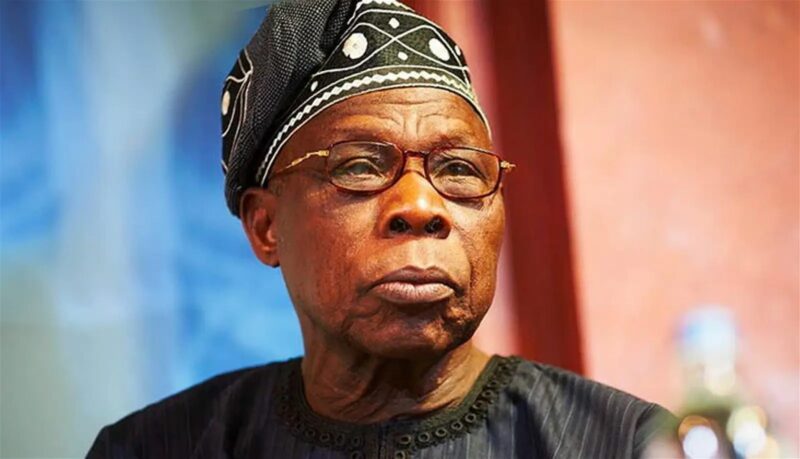
During his official state visit to Osun State to commemorate the two-year anniversary of Governor Jackson Adeleke, former President Olusegun Obasanjo addressed a disconcerting topic, doing so with his trademark forthrightness. The elder statesman took aim at those who had peddled baseless rumours of his death on various social media platforms.
“I heard the rumour that I was dead. I saw it on social media. I quickly told my children and my relatives that it was not true and that I was alive. Those who want me dead, that is their wish, but God still keeps me alive,” Obasanjo said, his words resonating with the vigour and defiance he has come to embody, traits which have also earned him staunch admirers.
The former President’s reaction was not just a personal rebuttal but also a broader commentary on the misuse of technology in today’s world. “This kind of rumour is not only disturbing but shows the extent to which some people misuse technology. It is unacceptable,” he stated, urging a more responsible use of digital platforms.
Obasanjo’s dismissal of the rumours came with a stark warning to those harbouring such ill will. “Why would anyone wish me dead? Those who harbour such thoughts will not escape tragedy themselves,” he declared.
Unfortunately, the phenomenon of “fake news” has become an intractable problem in our society despite efforts by relevant agencies to combat it. The proliferation of social media has further worsened the situation, as basically anyone with internet access can, from the comfort of his or her home or elsewhere, concoct a story and watch it spread like wildfire in the harmattan season.
This was not the first time fake news rumours rs about a former President or Head of State have made the rounds on social media. Last year, we woke up to the news of the supposed death of former Military Head of State, General Yakubu Gowon. The rumour gained so much traction that the elder statesman had to debunk it through one of his aides, affirming that he was very much alive and not in a hurry to leave.
Yours truly, unfortunately, fell for that fake news. In response, I wrote an article titled “Gowon and Purveyors of Fake News,” which was subsequently published in Daily Trust and The Nation newspapers.
The danger of fake news is not limited to individuals alone; this malaise has been known to have the potential to destroy entire nations. History is replete with examples where misinformation has incited violence, destabilized governments, and fueled divisions.
In Rwanda, for instance, the 1994 genocide was largely exacerbated by hate-filled propaganda and falsehoods spread across media outlets. Radio Télévision Libre des Mille Collines (RTLM), a private radio station, played a central role in inciting hatred against the Tutsi ethnic group. The station broadcast messages labeling the Tutsi as “cockroaches” and called on Hutus to exterminate them, further fueling the already deep-seated animosity between the two ethnic groups. The rest, as it is often said, is history.
Some victims and their families are yet to heal from the 1994 tragedy today, despite the ingenuity and efforts of President Paul Kagame to bring national healing.
Kagame’s administration introduced numerous initiatives to foster reconciliation and rebuild Rwanda. The Gacaca court system allowed communities to openly discuss and address the atrocities of the genocide, ensuring that justice was served while promoting forgiveness and understanding. The government also established the National Unity and Reconciliation Commission, which has spearheaded programs aimed at fostering dialogue and rebuilding trust among Rwandans. Annual commemorations of the genocide provide a platform for reflection and healing, while economic development initiatives have focused on reducing poverty, one of the root causes of division.
While Paul Kagame’s leadership efforts are commendable, one thing is clear: Rwanda’s dark phase could have been avoided if fake news had not been weaponized. As the popular adage goes, “A lie can travel halfway around the world while the truth is still putting on its shoes.”
Similarly, in Myanmar, fake news circulated on Facebook played a significant role in inciting violence against the Rohingya Muslim minority, leading to mass killings, displacements, and what many international observers have termed genocide in 2017. The list of nations and individuals greatly affected by fake news is endless.
The danger of fake news cannot be quantified. Just as I noted in my article of October 2023, “Fake news is a pernicious ailment that can spread faster than even the most virulent cancer on a wide scale.” Therefore, “We must persist in our efforts to fight this ugly scourge and those behind it. Besides ensuring that fake news merchants face the full wrath of the law, citizens should be educated about the importance of scrutinizing information before accepting it unquestionably.”
It is good to know that the former President is not just alive but hale and hearty, and it’s even better that Baba debunked the fake news personally. Baba OBJ has become the proverbial cat with nine lives. This is not the first time news of his death has been reported. In 2005, rumours of his illness and death circulated, gripping the country with apprehension. Responding to the “wicked rumour” during a federal executive council meeting, he said, “I dey kampe.” We are glad that Baba still dey kampe in 2024.
Obasanjo’s experience serves as a reminder of the broader need for society to combat the menace of fake news. Some social media platforms have put in measures to help counter the spread of misleading narratives by moderating and filtering out false information. After a marked surge of false news was identified firstly during the COVID-19 pandemic, and in the 2020 US Presidential Elections, platforms like Facebook, X (Twitter), Instagram and Reddit were forced to step up. These platforms recognized the power that misinformation has to not only influence elections, but critically affect public health and social stability. It also became clear that the most dangerous aspect of fake news is its ability to go viral. Additionally, it could be seen that fake news not only misleads the public but also undermines trust in legitimate channels of information.
Social media platforms are in the spotlight because they serve as primary news sources for millions of people worldwide. As such, it was necessary to establish strong countermeasures against the spread of harmful content and false data. User feedback is now seen as being crucial for identifying fake news that algorithms might miss, especially for localized or niche content. Platforms like X, Instagram and YouTube have integrated tools that enable their users to flag specific content for review, or add helpful notes for others to consider.
These platforms can also find ways to collaborate closely with governments, public health organizations, and reliable experts to strategically counter the hydra-headed monster of misinformation. Such partnerships can prove to be particularly valuable during key events and pivotal moments, such as during elections or a disease outbreak, because, as we all should know by now, the spread of accurate information becomes vital in such instances.
In the end, it is left for all of us, as a global community of internet users, to play different parts in promoting truth, fostering accountability, and using digital platforms responsibly.
Zayd Ibn Isah can be reached at lawcadet1@gmail.com