
Forgotten Dairies
₦5 Billion to Run for President? The Dangerous Misconception Nigerians Must Reject -By Daniel Nduka Okonkwo
A Nigerian who is not a billionaire can still contest for the presidency. The law allows it. Democracy demands it. With strong party structures, public support, transparent fundraising, and effective grassroots engagement, candidates without vast personal wealth can mount credible campaigns.

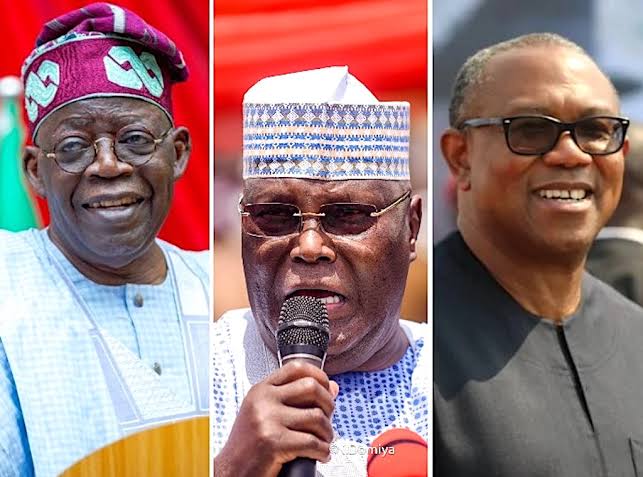
In today’s Nigeria, the presidency has increasingly become the preserve of the wealthy elite, fenced off by astronomical costs that few ordinary citizens can hope to overcome. The Electoral Act 2026, which supersedes the Electoral Act 2022 and was signed into law by President Bola Tinubu on 18 February 2026, sets campaign spending at a maximum of ₦10 billion for presidential candidates and raises individual donation limits to ₦500 million. However, the reality of party nomination fees and the financial machinery of political parties has turned the democratic process into a game largely dominated by billionaires. Ordinary Nigerians, already burdened by daily survival, are effectively excluded not by the ballot, but by financial constraints. This creates a democracy tilted toward the upper class, and the systematic exclusion of the masses from leadership poses a serious risk to the nation’s future.
A dangerous misconception has taken root in Nigeria’s political discourse: that anyone aspiring to the presidency must possess at least ₦5 billion. This claim, repeated often enough, risks discouraging capable Nigerians from participating in the democratic process. It is also fundamentally false.
The Electoral Act 2026 does not require any candidate to have ₦10 billion, or any fixed amount, as a condition to contest. What the law provides is a spending cap, not a financial entry requirement. In simple terms, it limits how much a candidate can spend, not whether they are qualified to run.
Under the Electoral Act 2026, presidential candidates are permitted to spend up to ₦10 billion on their campaigns, doubled from the ₦5 billion ceiling that applied under the repealed 2022 Act. For other offices, the revised limits are equally significant: governorship candidates may now spend up to ₦3 billion, up from ₦1 billion; Senate candidates up to ₦500 million, up from ₦100 million; and House of Representatives candidates up to ₦250 million, up from ₦70 million. Individual and organisational donation limits were also raised substantially, from ₦50 million to ₦500 million.
The purpose of these spending ceilings is to curb excessive expenditure, promote fairness, and reduce the influence of money in politics. Yet in practice, the significantly elevated limits raise serious concerns about whether the system truly levels the playing field or quietly reinforces the dominance of wealthy individuals.
It is equally important to distinguish campaign spending limits from nomination fees, which are determined by political parties, not by law. Major parties in Nigeria have consistently imposed high costs for nomination forms, creating an additional financial barrier that is often mistaken for a legal requirement.
Still, the reality cannot be ignored. Campaigning in Nigeria is expensive. From nationwide logistics and media visibility to security and grassroots mobilisation, the cost of running a viable campaign is high. This economic reality has, over time, narrowed the political space and made it increasingly difficult for ordinary Nigerians to compete.
A Nigerian who is not a billionaire can still contest for the presidency. The law allows it. Democracy demands it. With strong party structures, public support, transparent fundraising, and effective grassroots engagement, candidates without vast personal wealth can mount credible campaigns.
The real danger lies not in the law, but in the narrative. When citizens begin to believe that leadership is reserved only for the rich, democracy itself is weakened. Participation declines, hope diminishes, and the political class becomes more insulated from accountability.
Nigerians must therefore reject this misconception. The Electoral Act sets limits; it does not lock the door.
The challenge before the nation is not merely legal, but structural: how to create a political environment where competence, integrity, and vision, rather than financial power, determine leadership.
Until that balance is achieved, the conversation must continue, but it must be grounded in truth, not myth.
Daniel Nduka Okonkwo is a Nigerian investigative journalist, publisher of Profiles International, human rights advocate, and policy analyst whose work focuses on governance, institutional accountability, and political power. His reporting and analysis have appeared in Sahara Reporters, African Defence Forum, Daily Intel Newspapers, Opinion Nigeria, African Angle, and other international media platforms. He writes from Nigeria and can be reached at dan.okonkwo.73@gmail.com.
















You must be logged in to post a comment Login