National Issues
BAT Is Beginning To Look And Act Like PMB -By Rotimi Fasan
The Tinubu government made the announcement about the distribution of palliatives and billions of naira among the three tiers of government and thereafter went to sleep. Nigerians were only told of the trillions of naira that had been saved from the stoppage of petrol subsidy and how much of this went to the states by way of vastly improved monthly allocation without anybody being interested in what the states or their governors did with the money.

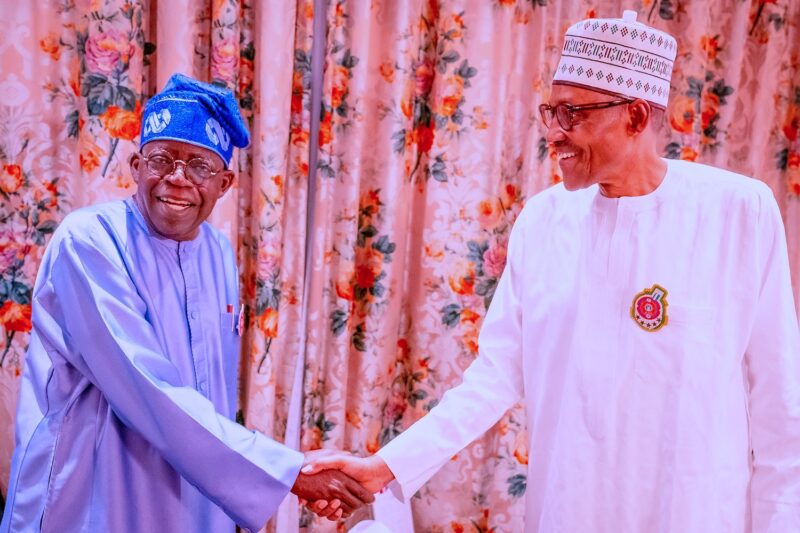
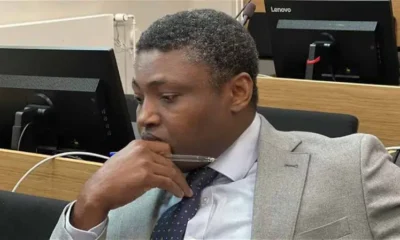
In his Independence Day broadcast, President Bola Ahmed Tinubu sounded hoarse and looked gaunt and exhausted. He returned to the country only two days before after a visit to New York to attend the United Nations General Assembly, UNGA, which ended about a week earlier. Even though there was no information about his activities abroad after UNGA, Nigerians would be told on his arrival back home that he had been making and signing deals on behalf of the country.
In other words, the president’s handlers would want us to believe President Tinubu had been very busy doing what he was elected to do. He left Nigeria for New York from Abuja but returned, it is believed, through Paris. Is that why he looked drawn and tired in his Independence Day broadcast even though there was a total news blackout of his activities abroad after the General Assembly ended? I don’t feel convinced but I would for now give Abuja a benefit of the doubt.
Yet for me, there are disturbing signs that President Bola Tinubu may be tracing the steps of President Muhammadu Buhari in both his official action and general attitude to governance. There’s no doubt that he came into office at the most inauspicious time, inheriting an economy that was all but dead and a polity that had been overtaken by insecurity perpetrated by non-state actors bent on challenging the authority of the Nigerian state. Even when it was clear that Tinubu knew what he was walking into when he signed up for the job of president and assured Nigerians not to pity him, the situation he met would still have been overwhelming for the most prepared candidate. This is the truth no amount of inspired talk or motivation would occlude.
Tinubu promised to hit the ground running and neither sought nor demanded anything more than the support of Nigerians. But any right-thinking Nigerian who knows how things stood before he became president must yet appreciate the enormity of the challenge before him and would be ready to cut him a slack. This, provided he is not only doing his part but also ensuring that others he has to steer the ship of state with are doing their bit too. It’s, however, in this regard that President Tinubu is failing and going the way of Buhari. He may have promised Buhari during the campaigns to follow in his footstep and toe the line of his administration.
That was at best a marketer’s spiel that was to be expected in those testy months he had to show his loyalty to a man that was for the most part not keen on his candidacy and obviously didn’t see him as his rightful successor. It was understandable in the circumstances. But it would be disastrous both for his administration and the well-being of Nigerians should he truly want to do as he promised either because he is overwhelmed with work and is losing steam or he just can’t find the right formula to steer Nigerians back to the course of responsible governance.
After the first two months in office President Tinubu has gradually but steadily become complacent and appears to be reconciling himself to the situation he met on assumption of office. There is a certain degree of lethargy that has crept into the activities of the government he leads which even the appointment of ministers doesn’t seem to have changed. His most consequential decision so far was the one he took within minutes of his inauguration: the removal of the subsidy on petrol. Although, he would follow this up with an equally important decision to unify the foreign exchange market but his readiness to put into effect Buhari’s decision not to provide funding for petrol subsidy has by far had the most far-reaching effect, instantly impoverishing Nigerians and leaving them virtually helpless.
To stem the tide of the criticisms that followed that decision and the stress it imposed on Nigerians by way of the sudden and astronomical increases in the cost of food, goods and services, the government decided to take a few ameliorative steps that included the release of billions of naira to state governments and the supply of free food, the so-called palliatives, to the poorest Nigerians Not only has the administration of this distribution of money and food been incompetently managed, the rationale for the entire programme and the premise on which the distribution of palliatives was based have come under severe criticisms for very good reasons. The entire process is as flawed as it was during the Buhari administration.
The Tinubu government made the announcement about the distribution of palliatives and billions of naira among the three tiers of government and thereafter went to sleep. Nigerians were only told of the trillions of naira that had been saved from the stoppage of petrol subsidy and how much of this went to the states by way of vastly improved monthly allocation without anybody being interested in what the states or their governors did with the money.
The conspiracy of silence around the sharing of the subsidy savings was such that neither the president, the Federal Government nor the organised labour asked any questions of the state governors about what they have been doing with the money given their states. No monitoring of any kind nor demands for accountability. Now we know that only Babagana Zulum and maybe one other governor has been using the palliatives in their care in the manner prescribed by law. But Tinubu has turned a blind eye to it all. Buhari at least published how much was allocated to each state.
Nobody seems to be asking the states any question even now that Abuja has chosen to give a wage award among other concessions it made to the Nigeria Labour Congress, NLC. Without the threat from Labour, Tinubu didn’t seem ready to do anything. And what should we expect from the states- the same silence that is making it clear there’s no serious centre of authority in Abuja now? Are we getting to the era of the “presidency” said this or that, when the likes of Abubakar Malami, Garba Shehu, Lai Muhammed and Femi Adesina spoke in the name of the president? Is Ajuri Ngelali all of these people rolled into one?
To make things worse, the government is getting uncommunicative. For one week after he left New York, nobody knew where the president was and nobody said a word. This was how Buhari would disappear from the venue of a foreign trip only to emerge in the United Kingdom. Tinubu appears to favour Paris in this regard. But can Nigerians afford the luxury of another laidback, uncommunicative leader, knowing what this cost them under Buhari?