Africa
Bemoaning Wike’s “As E Dey Pain Dem” And “Iye Ndieba, Ye Ndieba” Brand Of Democratic Politics -By Isaac Asabor
It is time to call this for what it is, toxic political entertainment masquerading as leadership. Nigerians are watching. The youth are listening. The country is waiting, for leaders who serve, not show off. Leaders who unite, not divide. Leaders who inspire, not insult.

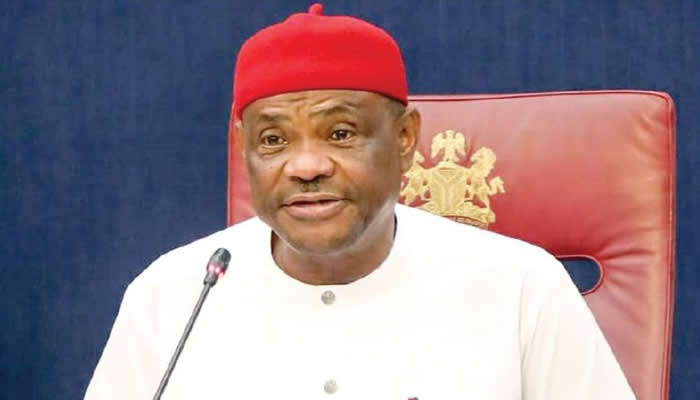
In today’s Nigeria, the political arena has steadily morphed into a theatre of ego-driven theatrics, where personal showmanship often takes precedence over the solemn responsibility of governance. At the forefront of this disturbing political trend is none other than Nyesom Wike, the current Minister of the Federal Capital Territory (FCT), whose penchant for flamboyance, confrontation, and political mockery has birthed some of the most nauseating and reckless political catchphrases in recent memory.
Two of Wike’s most infamous political jargons, “As e dey pain dem” and “Iye ndieba, ye ndieba”, have become staples in Nigeria’s political vocabulary, not because of their intellectual depth or policy relevance, but because of their brazen disregard for statesmanship. Wike, who seems to revel in these expressions, has come to personify a style of politics that is less about governance and more about gloating over perceived political victories, often at the expense of decency and democratic maturity.
Let us be clear: these phrases, though delivered with local color and streetwise swagger, reflect a mindset that delights in the humiliation of opponents. “As e dey pain dem” is not just a soundbite, it is a philosophy of taunting, a brand of political cruelty that views leadership as warfare and electoral success as an opportunity for mockery, not service. “Iye ndieba, ye ndieba,” similarly, smacks of tribal triumphalism, “chop-I-chop” and verbal chest-beating that deepens our already fractured national unity.
Wike’s repeated use of these jargons, often in public gatherings and televised interviews, has normalized a new low in political conduct. It has set a dangerous example for young Nigerians, especially those who are politically aware but disillusioned. What they are learning is that leadership is no longer about ideas or service delivery, but about who can boast louder, mock harder, and throw the most punches, verbally and otherwise.
This performative style of leadership, pioneered and now exported by Wike, is not only exhausting; it is damaging. It has created a toxic political atmosphere where loyalty is prized above competence, dissent is demonized, and ridicule is seen as a legitimate form of engagement. The result is a divided polity where the issues that matter, security, education, healthcare, jobs, infrastructure, are sidelined in favor of empty chants and ego-driven outbursts.
And what does Nigeria gain from this kind of politics? Absolutely nothing. Grandstanding does not fix bad roads. Mockery does not reduce food inflation. Street slogans do not improve public hospitals. The people are hungry, jobless, and insecure, yet their so-called leaders are busy cooking up new jabs to entertain party loyalists and social media sycophants.
Worse still, phrases like “iye ndieba, ye ndieba” reinforce “Chop-I-Chop” syndrome in politics. It is troubling that someone of Wike’s stature, a two-term governor, now a federal minister, would casually promote a slogan that, in certain interpretations, suggests ethnic triumphalism and transactional politics. In a country already battling ethnic mistrust and corrupt politics, this is no doubt irresponsible and dangerous.
Make no mistake: this brand of “Wikean politics”, flashy and crude as it may be, is a distraction from the real work of governance. Nigeria is in dire need of healing, unity, and visionary leadership, not divisive slogans and coded insults. The longer we tolerate these antics, the more we erode the democratic values that are supposed to define our republic.
What legacy does Wike hope to leave behind with this pattern of conduct? One of braggadocio? Of soundbites over substance? Are we now telling the younger generation that politics is about personal vendettas, tribal slogans, and political pettiness? If so, then we are sowing seeds of future chaos.
True leadership demands more. It requires empathy, composure, and a commitment to national development. It demands the humility to understand that power is temporary, and that public office is a sacred trust, not a stage for endless drama. Wike’s verbal showmanship may earn applause in partisan circles, but to the struggling Nigerian masses, it is a cruel joke.
Meanwhile, the challenges are multiplying. Power outages persist. The cost of living is unbearable. Schools are broken. Security remains elusive. And yet, we are treated to political comedians in agbada, turning governance into a circus.
It is time to call this for what it is, toxic political entertainment masquerading as leadership. Nigerians are watching. The youth are listening. The country is waiting, for leaders who serve, not show off. Leaders who unite, not divide. Leaders who inspire, not insult.
Wike may enjoy the sound of his own slogans, but Nigeria needs more than soundbites. It needs solutions. Until we reject the politics of mockery and embrace the politics of service, we will remain stuck in a loop of noise without progress.
The chants are getting old. The people are fed up. Nigeria deserves better.