Africa
Buhari: The Last March of a General -By Usman Abdullahi Koli
Now he is gone. But his footprints remain on the battlefield, in the ballot box, and in the hearts of those who watched, waited, and sometimes wept. His story is one of contradictions, courage, convictions, and consequences. But above all, it is a Nigerian story.

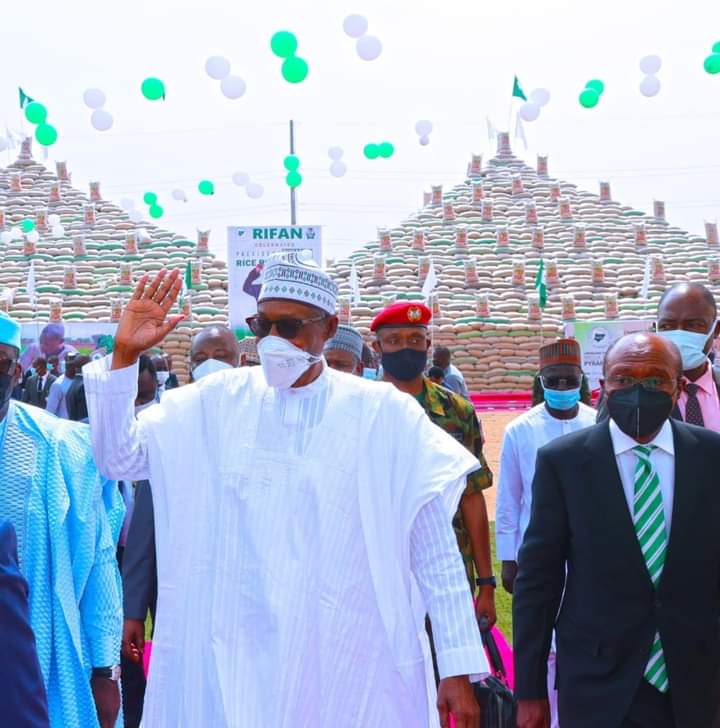
Muhammadu Buhari, former President of Nigeria, is no more. For a moment, I felt very shocked and touched. Not because I expected him to live forever, but because I had never truly imagined a Nigeria without him somewhere in the background watching, guiding, deciding, or simply being present. I asked myself why the end of some lives feels heavier than others. Perhaps it is because those lives were never ordinary. Buhari’s life was one of service, controversy, silence, and symbolism. Now that chapter is closed, and what remains is the long shadow of his presence, a legacy that will be remembered, questioned, and reflected upon for years to come.
Buhari was never a man you could ignore. You were either with him or against him. I, more often than not, stood in opposition. I challenged his approach to national security, criticized his handling of the education system, and voiced strong concerns about his oversight of Nigeria’s crude oil sector and economy. My criticisms were never out of malice but born out of conviction. I believed, and still do, that our country deserves better. I believed it was our duty to demand it.
Yet, amid my disagreements, I never lost sight of the man behind the decisions. In 2020, during the #EndSARS movement, when the nation was boiling with fear and fury, I felt the need to offer a different view. I wrote an article titled “Calming the Tide: Buhari’s Antidote.” In that piece, I tried to humanize him. I described him as a lanky man, often caught smiling with his teeth in full view, yet known for the signature frown that defined his public image. There was something striking about how he carried himself in his flowing babban-riga, standing tall and firm like the general he once was, even in the calm of civilian leadership.
Buhari’s story began long before he entered Aso Rock. As a young man, he embraced the uncertainties of military life. He rose through the ranks with grit, ultimately becoming a general in the Nigerian Army. He ruled Nigeria first as a military leader and returned, decades later, as a civilian president. His reemergence was not merely political; it was deeply personal. He saw his return as a duty to complete a mission he once began in uniform. Whether he succeeded or fell short, Buhari believed in his cause, and that belief fueled his resolve.
He was undeniably a man of sharp edges. His stubborn adherence to principle often came at a cost. He preferred silence when the nation needed clarity and stood firm when compromise was necessary. His integrity, once lauded, became the subject of scrutiny. Some wounds were self-inflicted; others were inherited from the complexities of leadership. Regardless, they shaped how history will remember him.
Despite it all, Buhari remained anchored in a modest way of life. He never sought extravagance. He governed in the way he understood best—that is, through order, discipline, and restraint. These traits, while admired by some, alienated others. Yet, behind that stoic exterior was a man deeply invested in the idea of service, even if the methods failed to reflect the expectations of many.
The end of a life always casts a different light on it. Legacies are never truly complete until the final chapter has been closed. Buhari’s legacy will be debated in homes, classrooms, and political circles for years to come. But today is not for judgment. Today is for remembrance. For the man, not just the president. For the soldier who once stood on the frontline, and for the leader who walked through the dust of Daura into the marble halls of national power.
At over eighty, he still had something to give. Not in speeches or policy, but in presence, in counsel, in memory. Nigeria needed his wisdom, perhaps now more than ever.
I mourn him, not because I always agreed with him, but because I respected the weight of the burden he carried. He did not lead perfectly. But he led. And in many ways, he led with sincerity.
Now he is gone. But his footprints remain on the battlefield, in the ballot box, and in the hearts of those who watched, waited, and sometimes wept. His story is one of contradictions, courage, convictions, and consequences. But above all, it is a Nigerian story.
Rest in peace, General Muhammadu Buhari. The march is over. The bugle has sounded. And history, in all its fullness, will remember you.
Usman Abdullahi Koli,
mernoukoli@gmail.com.