Africa
Can the Senate Truly Want Credible Elections in 2027? -By Abba Dukawa
If credible elections fail in 2027, responsibility will rest squarely with those who dismantled the safeguards—knowingly, brazenly, and without remorse. Nigeria deserves better than this calculated retreat into electoral darkness. The lawmakers must either enact an Electoral Act that genuinely serves the people or stop wasting public funds on legislation that systematically erodes democratic safeguards.

After the much-touted passage of the Electoral Act amendments ahead of 2027, general elections, Nigerians expected bold reforms that would finally protect their votes. Instead, the Senate has delivered a cynical betrayal—one that raises a troubling question: does the Nigerian Senate genuinely want credible elections, or is it deliberately laying the groundwork for a stolen mandate?
By rejecting mandatory real-time electronic transmission of results, the Senate has all but confirmed public fears. This is not reform. This is regression dressed up as legislation. Nigerians are no longer merely skeptical; they are alarmed. The Senate’s actions suggest a calculated effort to preserve the dark corners of the electoral process where manipulation thrives
The outrage that followed the Senate’s handling of the Electoral Act amendments is justified. Civil society groups, election observers, and opposition stakeholders have rightly condemned what can only be described as a deliberate weakening of the Electoral Act 2022. Blocking real-time electronic transmission of results is an open invitation to rigging, a direct assault on transparency, and a slap in the face of voters who endured flawed elections in the past.
Let us be clear: there is no credible argument against electronic transmission of results. Nigeria’s electoral disasters have never occurred at polling units; they occur during collation and transmission—where figures are altered, results rewritten, and mandates stolen. By retaining ambiguity around electronic transmission, the Senate has chosen to protect manipulation rather than democracy.
The Bone of Contention
Section 60(3) of the Electoral Bill 2026 clearly states that presiding officers shall electronically transmit polling unit results to INEC’s IREV portal in real time after signing Form EC8A. This provision was meant to close the door on result tampering. Yet, during plenary, the Senate effectively gutted it, opting instead to fall back on the weaker 2022 framework that allows—but does not compel—real-time transmission.
This decision was not accidental. It was strategic.Stakeholders have described this move for what it is: a deliberate attempt to legitimize manual collation and create space for post-election manipulation. The Senate’s posture signals a dangerous indifference to the survival of Nigeria’s democracy beyond 2027. Rigged elections do not merely produce bad leaders; they breed anger, instability, and democratic collapse.
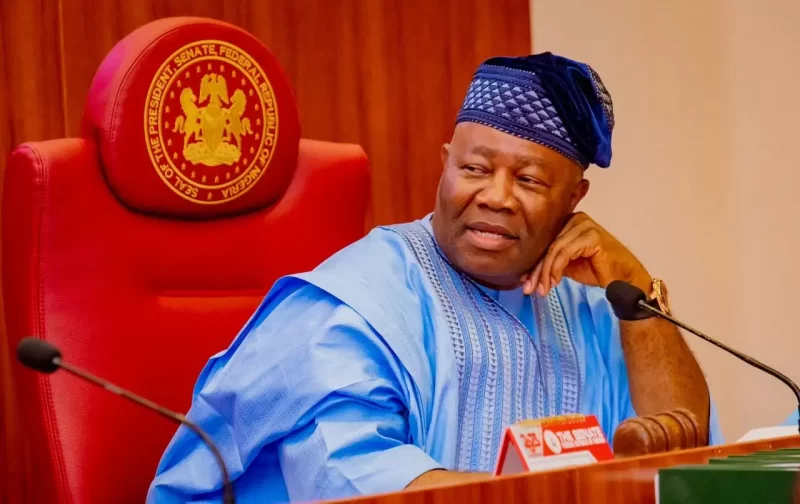
Senate President Godswill Akpabio’s declaration that Clause 60 was adopted “as amended and not as recommended” was widely interpreted—correctly—as the burial of mandatory real-time electronic transmission. That ruling alone extinguished what little hope many Nigerians still had for credible elections in 2027.
Even attempts by Senator Abdul Ningi to downplay the damage ring hollow. Whether by intent or incompetence, the outcome remains the same: a weakened law that empowers electoral abuse. Legislative semantics cannot erase the real-world consequences of this decision.
A Catalogue of Regressive Choices, As if undermining electronic transmission were not enough, the Senate also proposed scrapping the 10-year disqualification for vote buying. This is nothing short of absurd. In an electoral environment awash with money politics, reducing sanctions amounts to legalizing corruption. A ₦5 million fine—loose change to political godfathers—is not punishment; it is permission. Nevertheless the lowering the cost of electoral malpractice effectively normalises corruption. A penalty of this scale is not a deterrent; it is a fee.
Then comes the reckless proposal to slash the Notice of Election period from 360 days to 180 days. Nigerians have already lived through the chaos of compressed timelines: delayed materials, poor logistics, disenfranchised voters. To resurrect a failed model is not oversight—it is sabotage. These provisions do not strengthen democracy. They weaken it. Systematically. Intentionally.
The 2027 general elections are poised to become the most expensive in Nigeria’s history, with INEC receiving an unprecedented ₦1.013 trillion in the 2026 budget. This staggering allocation raises serious concerns about fiscal responsibility, priorities, and accountability, especially as it is nearly three times the commission’s 2023 funding. Despite this massive increase in spending, Nigeria’s elections continue to be plagued by logistical failures, disputed outcomes, and public mistrust.Spending over ₦1 trillion on elections while blocking reforms that ensure credibility is not democratic progress—it is institutionalized hypocrisy, forcing Nigerians to bankroll an expensive system deliberately kept opaque and flawed.
A Betrayal of Public Trust, The Senate had a historic opportunity to fix the structural failures exposed in recent elections. Instead, it chose political convenience over public interest, secrecy over transparency, and power over principle. This is not leadership; it is betrayal.
By prioritizing elite survival over electoral integrity, the Senate has sent a clear message: the will of the people is negotiable. That message will not be forgotten.
If credible elections fail in 2027, responsibility will rest squarely with those who dismantled the safeguards—knowingly, brazenly, and without remorse. Nigeria deserves better than this calculated retreat into electoral darkness. The lawmakers must either enact an Electoral Act that genuinely serves the people or stop wasting public funds on legislation that systematically erodes democratic safeguards.
Dukawa write in from Abuja can be reached at abbahydukawa@gmail.com