
Africa
Legislative Fraud Or Executive Overreach? Nigeria’s Democracy On Trial -By Isaac Asabor
Critics have described these alterations as nothing short of “legislative fraud” and a “mockery of democracy.” Their concern is not merely academic. The National Assembly exists to represent the people, to debate, amend, and approve laws on their behalf. Any unilateral changes imposed post-passage by the executive or its agents subvert this principle. They weaken the authority of lawmakers and erode public confidence in institutions that are already under strain.

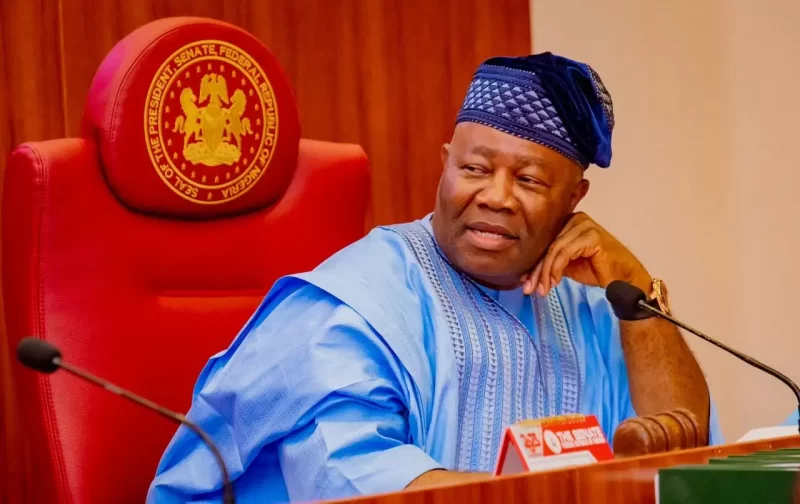
Recent allegations surrounding the alteration of Nigeria’s tax reform laws and electoral amendment bills have no doubt ignited a storm of controversy over the integrity of the legislative process and the separation of powers enshrined in the Constitution. At the heart of this dispute is a claim that versions of bills passed by the National Assembly were materially different from those eventually signed into law or published in the official gazette. If true, these actions represent a serious affront to democratic governance and a potential crisis of legitimacy for both the legislature and the executive.
The core of the controversy lies in two sets of legislation: the Nigeria Tax Administration Act of 2025 and the Electoral Act amendment of 2026. According to investigative reports, both laws were altered after passing through the National Assembly. In the case of the Tax Administration Act, a committee of the House of Representatives uncovered changes that significantly lowered individual tax compliance thresholds from N50 million to N25 million and altered corporate tax parameters, modifications that were reportedly never approved by lawmakers. On the electoral side, senators flagged discrepancies between the version of the Electoral Act amendment passed by the National Assembly and the version eventually signed, most notably the removal of the provision mandating real-time electronic transmission of results.
Critics have described these alterations as nothing short of “legislative fraud” and a “mockery of democracy.” Their concern is not merely academic. The National Assembly exists to represent the people, to debate, amend, and approve laws on their behalf. Any unilateral changes imposed post-passage by the executive or its agents subvert this principle. They weaken the authority of lawmakers and erode public confidence in institutions that are already under strain.
The executive branch’s defenders, however, insist that no wrongdoing occurred. Senate President Godswill Akpabio, for instance, denied allegations of “adulteration” in the tax laws, asserting that the copies published and signed are fully compliant with what was passed by both chambers. Akpabio further challenged lawmakers to pursue legal avenues if discrepancies exist. While such assurances may aim to reassure the public, they do little to resolve the underlying tension between constitutional theory and political practice.
The House of Representatives has not remained passive. A fact-finding committee was constituted to investigate the changes and has reportedly identified inconsistencies between the version passed in the chamber and the one gazetted. Civil society organizations have amplified the alarm. The Civil Society Legislative Advocacy Centre (CISLAC) condemned the alleged alterations, stating that they violate the principle of representation and threaten the rule of law. Meanwhile, the Socio-Economic Rights and Accountability Project (SERAP) has petitioned the Code of Conduct Bureau to investigate, signaling that legal action may follow if evidence supports claims of post-passage modifications.
The implications of this controversy extend beyond procedural concerns. At a time when public trust in government is fragile, allegations of post-legislative interference strike at the very foundation of democratic governance. Citizens expect that laws passed by their elected representatives reflect their interests and the deliberations of the legislative process. Any perception that laws are being altered behind closed doors by actors outside the legislative process undermines accountability, fuels cynicism, and strengthens narratives of executive impunity.
Furthermore, the alleged alterations highlight the longstanding tension between Nigeria’s executive and legislative branches. Constitutional theory envisions a system of checks and balances: the legislature drafts and passes laws, and the executive implements them. In practice, however, power dynamics often favor the presidency, particularly when party control of the legislature aligns with the executive. Yet constitutional compliance is not optional; it is the bedrock of legitimacy. When unilateral changes occur after legislative approval, they set a dangerous precedent, suggesting that the executive can effectively rewrite laws at will.
The stakes are particularly high for electoral legislation. The Electoral Act governs the conduct of elections, arguably the most sensitive component of democratic governance. Any alteration that undermines transparency, such as the removal of mandatory real-time electronic transmission of results, can have tangible consequences for electoral integrity. Even the perception that electoral laws can be modified after passing the legislature erodes trust in the process and invites skepticism about the fairness of upcoming elections.
Tax legislation, while less politically visible, is equally consequential. Altering compliance thresholds or corporate tax parameters post-passage raises questions about fairness, predictability, and the rule of law. Investors, businesses, and individuals rely on stable, predictable legislation to make financial and strategic decisions. Changes implemented without legislative consent could distort markets, create uncertainty, and invite accusations of favoritism or corruption.
The controversy also exposes a deeper problem: weak enforcement mechanisms and insufficient transparency in lawmaking. In many jurisdictions, processes exist to ensure that the version of a law passed by the legislature is identical to the one published and signed by the executive. Nigeria’s apparent vulnerability to post-passage alterations suggests that existing safeguards are inadequate. Strengthening these mechanisms is essential not only to restore public confidence but also to preserve the authority and independence of the National Assembly.
Some may argue that these allegations reflect mere bureaucratic inefficiency or clerical errors. But the scale and significance of the changes, particularly in threshold levels and electoral provisions, indicate more than simple oversight. The problem is structural: the system allows for post-passage modifications without meaningful checks, creating opportunities for executive overreach. Resolving this issue requires more than public statements or internal investigations; it demands clear legal and procedural reforms to prevent recurrence.
Public accountability is the ultimate safeguard. Civil society organizations, the media, and concerned citizens must continue to monitor legislative processes and hold both lawmakers and the executive accountable. Lawmakers themselves must assert their constitutional authority, not only to protect the integrity of legislation but to affirm that their mandate derives directly from the people. Without such vigilance, Nigeria risks a steady erosion of democratic norms, where laws become negotiable documents rather than the product of transparent deliberation.
Ultimately, this controversy is a test of Nigeria’s democratic resilience. It exposes the fragility of legislative authority, the potential for executive overreach, and the vulnerability of public trust. If ignored or mishandled, it could further entrench cynicism, weaken institutional legitimacy, and reinforce the perception that laws serve the interests of a few rather than the nation at large. Conversely, a robust, transparent, and accountable resolution could strengthen democratic norms, reaffirm the separation of powers, and signal that Nigeria’s institutions are capable of policing themselves.
In conclusion, allegations of post-passage alterations to the Tax Administration Act and the Electoral Act amendment are not trivial administrative missteps. They strike at the heart of Nigeria’s constitutional order, the principle of representation, and the public’s confidence in governance. The executive must respect the legislature’s authority, lawmakers must vigorously defend the integrity of the legislative process, and civil society must continue to demand accountability. Democracy is not upheld by rhetoric or ceremonial gestures; it is protected through the consistent application of rules, transparency, and respect for institutional boundaries. How Nigeria navigates this controversy will signal whether its democracy is capable of withstanding executive encroachment or whether the rule of law will remain perpetually vulnerable to manipulation.


























You must be logged in to post a comment Login