
Africa
Rethinking New Dynamics in Russia–Africa Entrepreneurial Partnerships, by Kestér Kenn Klomegâh
Is this a second “reawakening”? We believe it is, with an important qualification. The first awakening, in the 1950s and 60s, was political: independence and the right to self-rule. The second, now underway, is economic and institutional: the right to shape the rules of trade, finance, technology and resources. But an awakening becomes a renaissance only through execution: ratifications turned into functioning customs posts, mineral policies turned into factories, and debt relief turned into schools and clinics.

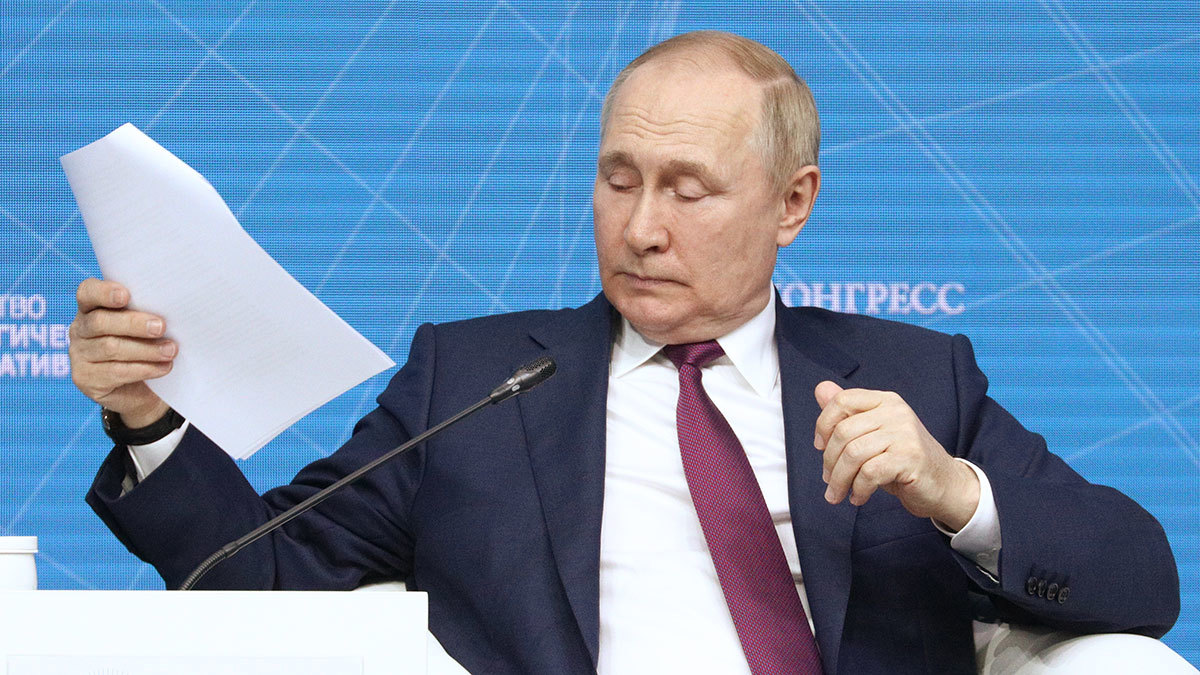
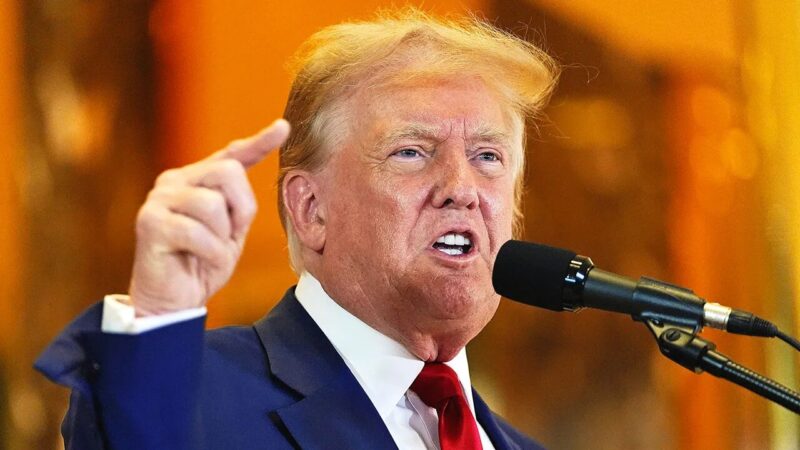
Valdai Discussion Club, a policy think tank, has distinctively discussed Africa in Arusha, Tanzania and in Pretoria, South Africa during the past few years. Africa has taken another small position at Valdai platform. President Vladimir Putin, taking part in a plenary session of the 23rd annual meeting of the Valdai Discussion Club, titled “Responsibility for the Future: Limits of the Possible, or Limitless Possibilities?” noted that Russia attaches special importance to relations with all African countries.
The world is becoming a multipolar, somewhat fragmented architecture, not a new consolidated system. Russia would worl with Africa to develop together, rather than “make a profit or steal” like colonizers, Putin emphasized at the Valdai discussion forum. Putin’s remarks on multipolarity resonate deeply across Africa, as that transition from the current geopolitical situation to a more multipolar world is not simply a redistribution of influence, power, and the scramble for Africa’s resources. The idea of building trust is “a complex and fragile process; it is very difficult to establish and very easy to destroy.”
But humanity, although it is experiencing major changes, has not yet truly fully grasped the magnitude of the challenge it is facing. That however, agreeing on the principles for shaping a new world order capable of ensuring the progress and development of humanity in the coming decades, Putin suggested that countries have to dialogue and negotiate for a fairer terms to avoid the most catastrophic scenarios for humanity.
Russia will hold the third summit late October that provides an opportunity to discuss the entire range of initiatives and comprehensive development of relations with African countries as a whole. Russia is committed to promoting political dialogue, and qualitatively strengthening trade-economic interaction with African countries.
Africa addicted to Russian Grains
More worryingly, Russia’s support for ensuring Africa’s food security has taken a new turn, consistently increasing grains, wheat and fertilizer exports to Africa. On the other hand, lack of access to the Russian market remains a major challenge for African enterprises. Trade imbalance has become a new topic at conferences and summits. The key question is whether Moscow is ready and willing to make concessions on market access as part of the broader normalisation. For instance, in May 2026, as part of Africa Day, China announced zero-tariffs for Africa. Accordingly, Africa appreciated China walks its talk and honor bilateral promises. Without geopolitical rhetoric, it has strong economic presence in Africa.
Russia is ready to supply everything needed to ensure food security in Africa, including animal vaccines and fertilizers, Russian Energy Minister Sergey Tsivilev told RT following his visit to several African countries. Ensuring food security is, of course, very important for all African countries. Most importantly, promoting new agricultural technologies in Africa. According to Tsivilev, Russia takes a similar approach to mineral extraction, as mining in these countries was often carried out in a “predatory” manner, with almost everything being exported and little left for the state.
“Our task is to transfer technologies and teach people how to work in a way that, first, takes into account natural conditions and meets all environmental requirements and, of course, ultimately ensures that products with the highest possible added value are exported. We are ready to provide our technologies for this purpose and train specialists who will work with them,” he said. Tsivilev also expressed confidence that Africa could become an exporter of agricultural products in many areas if the work is properly organized.
Markets in Asia, Africa, the Middle East, and Latin America are promising destinations for Russian biotechnology exports, Russian Industry and Trade Minister, Anton Alikhanov, noted on the sidelines of the Bioprom forum in early October 2026. For biotechnology, markets where food production, livestock farming, aquaculture, and pharmaceuticals are growing but domestic technology chains are not yet sufficiently developed are particularly promising. These include Asia, the Middle East, Africa, and Latin America.
According to estimates, more than 40 Russian enterprises expressed readiness to export agricultural products. Russian Economic Development Minister, Maxim Reshetnikov, underscores the fact that Russia is interested in entering African markets, currently the most promising and fastest-growing, and it is is crucial to have a presence in this market. Russia’s revenue to agricultural products exports in growing. Russia’s trade in agricultural products with African countries grew by 18% to almost $10 billion in 2024, Russian Agriculture Minister, Oksana Lut, said by video conference on ensuring African nations’ food sovereignty held in Addis Ababa, Ethiopia. Reports indicated more than 20 African countries importing grains and wheat from Russia.
Foreign partners to develop Africa’s economy
Russia is, consistently, strengthening the capacity of investing across Africa, signed several bilateral agreements. From the first summit 2019 in Sochi, Russia has 92 agreements and from St. petersburg July 2023, records indicate 240 bilateral agreements with African countries. Russia’s financial mechanism is still unknown for Africa, as its financial institutions and banks are under Western sanctions. In the emerging multipolar architecture, Africa has other external alternatives, whose foreign investors are ready with adequate funds for investments. As sovereign nations, it necessary to identify practical measures, strengthen preparedness for collaborating with foreign partners to develop Africa’s economy.
Pradeep S. Mehta, Secretary General, CUTS International and Professor of Practice (Public Policy), JCERC University, Jaipur, told this article author in an interview that economic sovereignty in this environment means choosing where to build capability. From CUTS International’s perspective, drawing on long engagement in Africa, five priorities stand out.
(i) Mineral value-addition. Africa holds about 30 per cent of global reserves of critical energy-transition minerals and produces more than 77 per cent of the world’s cobalt and 65 per cent of its manganese, yet most of this leaves the continent unprocessed. Beneficiation, regional battery and component value chains, and transparent, competitive licensing regimes should be the top industrial priority.
(ii) Agro-processing and food systems. Food import dependence was exposed again by this year’s shocks to fuel, fertiliser and shipping. Agriculture employs the most Africans, and processing is the fastest route to jobs and food security.
(iii) Energy and industrial infrastructure. Reliable, affordable power, especially renewables where Africa has vast potential, is the precondition for any manufacturing strategy.
(iv) Digital public infrastructure and services. Interoperable payments, digital identity and digital trade under the AfCFTA protocol can lower transaction costs faster than physical infrastructure alone. India’s DPI experience offers a practical South-South model.
(v) Financial and regulatory sovereignty. This means a fair restructuring framework and support for borrowers’ coordination on debt; African institutions such as PAPSS and the proposed African credit rating agency; and, often overlooked, strong competition, consumer protection and trade-facilitation regimes. Sovereignty is lost as easily to domestic monopolies and non-tariff barriers as to foreign creditors.
Is this a second “reawakening”? We believe it is, with an important qualification. The first awakening, in the 1950s and 60s, was political: independence and the right to self-rule. The second, now underway, is economic and institutional: the right to shape the rules of trade, finance, technology and resources. But an awakening becomes a renaissance only through execution: ratifications turned into functioning customs posts, mineral policies turned into factories, and debt relief turned into schools and clinics. African leaders themselves acknowledged that demanding a fairer global order and institutional reforms also means putting their own houses in order. If that internal discipline matches the external ambition, the 21st century can indeed be Africa’s.#
—














You must be logged in to post a comment Login