Africa
Cease The Unchecked Looting -By Abba Dukawa
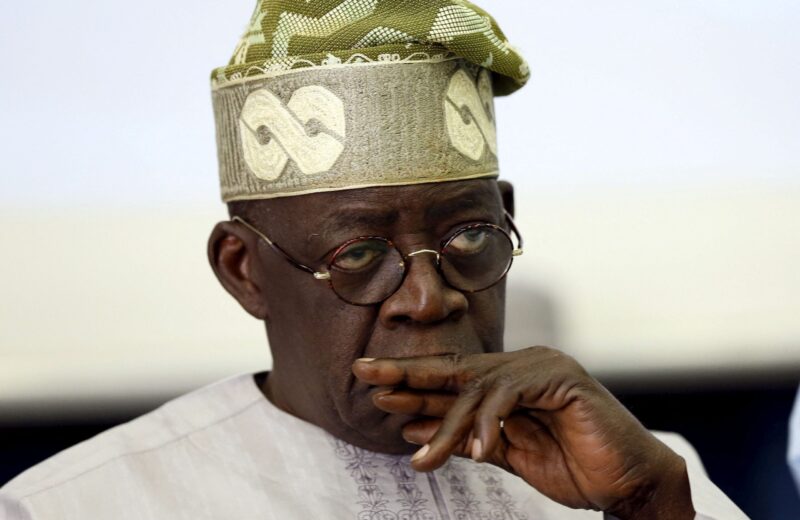
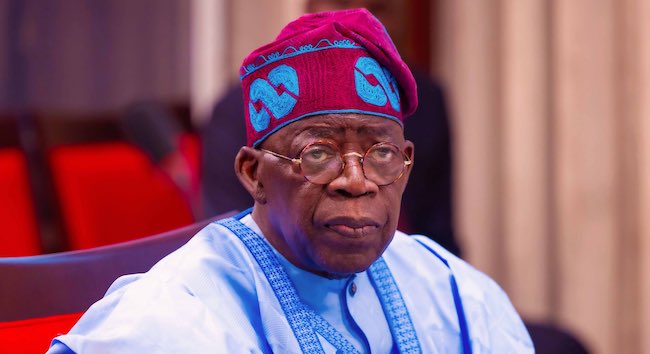
I wish to draw attention to a lingering gap between President Bola Tinubu’s directive for the immediate withdrawal of all police officers from VIP‑protection duties and their redeployment to core policing functions. What has been observed in many states is that some officers have been removed from certain VIP assignments, but many remain stationed at high‑brow shopping malls, and some, now in mufti, continue to provide protection to expatriates—including Lebanese and Chinese nationals—even at their residences.. I recommend that Police Headquarters deploy enforcement teams to VIP shopping malls across the country and to other locations frequented by VIPs, in order to apprehend any officers who continue to provide unauthorized VIP protection. Any officer found performing such duties without proper authorization should be posted to the most volatile Sambisa forest, villages and local government area in the country for policing duties.


Last Monday, International Anti‑Corruption Day was observed. It has been marked annually on 9, December since the United Nations Convention Against Corruption was adopted on 31 October 2003 to raise public awareness of anti‑corruption. The day was observed in Nigeria.
Although the fight against corruption in Nigeria is as old as the nation itself, corruption still poses critical challenges to the country’s economic and social development. It diverts resources from legitimate causes that benefit society, denies millions their fundamental freedoms and human rights, and perpetuates poverty while hindering economic opportunity.
In its own dark way, corruption appears to be a unifying factor. When corruption occurs, those who loot the public treasury do not discriminate on tribal, ethnic, religious, or political lines. They cooperate and speak the same language when they meet the country’s treasury. It is only when they are called to justice that they begin to play the ethnic and religious cards.
For decades, Nigerians have watched those in authority—both at federal and state levels—plunder national resources with reckless confidence. Public‑fund misappropriation is no longer a shameful act; it has become a familiar story.
Across the corridors of power, public servants at every level have perfected the art of looting the treasury. The irony is painful: these so‑called leaders often face no real consequences. In fact, it sometimes seems as though looting public funds is not only tolerated but quietly encouraged. It has become so normalized that reports of stolen resources barely raise an eyebrow. A pattern has emerged: get elected or appointed into public office, then steal as much as possible before leaving. It is disgusting.
Billions mysteriously vanish; the methods differ, but the outcome is always the same—the masses suffer while a privileged few grow obscenely wealthy. Corrupt Nigerian officials do not merely skim off the top; they go for the entire pot. Public funds are treated like personal piggy banks, smashed open whenever they please. Even worse, many escape unpunished.
How many public servants truly face consequences for looting the treasury? How many actually see the inside of a jail cell? Even when caught, they slip through the cracks of a compromised justice system—receiving a slap on the wrist here, a token fine there—and before long they return to the office, sometimes even re‑elected by the very people they robbed.
Because of weak anti‑corruption institutions, society now views corruption not as a crime but as an opportunity for self‑enrichment, creating a vicious cycle of impunity and an untouchable elite. Traditional institutions across the country, which ought to uphold decency, instead honor corrupt individuals with undeserved titles, while honest public servants receive no fanfare simply because they have nothing to offer.
It is disheartening to watch billions disappear, leaving behind abandoned projects and broken promises. Is it too much to ask why those in authority siphon funds from critical sectors, leaving barely enough to build even one functional hospital? If public funds were treated as a shared resource—take what you need, but don’t hoard everything—the country would be far better off.
Yet Nigerian politicians approach the national budget like private equity, devouring everything and leaving empty plates for the masses, with not a trace of restraint. Meanwhile, ordinary Nigerians face collapsing infrastructure, dysfunctional schools, and a healthcare system gasping for breath. Hoping that corrupt politicians will suddenly become honest is like expecting them to cease the unchecked looting or snow to fall in Barno. While Nigerians struggle daily just to survive, political elites live in mansions, fly private jets, and mingle with global power brokers.
In a nation where more than 133 million people live in multidimensional poverty, it is heartbreaking to see public officials treat the National Purse like a personal ATM. Since the looting is unlikely to end anytime soon, the least our political leaders could do is show some moderation by ceasing the unchecked looting, leaving some change for the people. Perhaps then we might see a tiny glimmer of progress.
To Nigeria’s political and civil servants class: we are not asking for miracles. We know you have acquired a taste for luxury, and we understand that old habits die hard. But if you insist on continuing your looting ways, at least have the decency to leave something behind. You don’t need to take it all.
There is enough to go around if you display even a shred of self‑control. If corrupt officials approached public funds the way people approach a buffet take what you need, but don’t hog everything Nigeria would be in a far better place.
Despite this unchecked looting taking place across the board, the institutions meant to combat corruption have become tools in the hands of the powerful, deployed selectively against perceived opponents or anyone who falls out of favor.
To address this, the Independent Corrupt Practices and Other Related Offences Commission (ICPC) and the Economic and Financial Crimes Commission (EFCC) must demonstrate genuine political will by treating all corrupt individuals equally, regardless of status or affiliation. Anti‑graft agencies must operate with accountability and transparency to build public trust and avoid being used as instruments for political witch‑hunts.
Integrating technology into public‑service delivery and government processes can reduce human interaction and limit opportunities for corruption. By combining these strategies, the fight against corruption can be significantly strengthened, paving the way for a more transparent, accountable, and prosperous society. Let those in authority work to stop the unchecked looting of public funds and resources, and be more accountable and transparent in their governance. Nigerians must demand more from their leaders and hold them accountable for their actions.
Let us not forget: I wish to draw attention to a lingering gap between President Bola Tinubu’s directive for the immediate withdrawal of all police officers from VIP‑protection duties and their redeployment to core policing functions. What has been observed in many states is that some officers have been removed from certain VIP assignments, but many remain stationed at high‑brow shopping malls, and some, now in mufti, continue to provide protection to expatriates—including Lebanese and Chinese nationals—even at their residences.. I recommend that Police Headquarters deploy enforcement teams to VIP shopping malls across the country and to other locations frequented by VIPs, in order to apprehend any officers who continue to provide unauthorized VIP protection. Any officer found performing such duties without proper authorization should be posted to the most volatile Sambisa forest, villages and local government area in the country for policing duties.
Dukawa is a public-affairs analyst and political commentator whose work focuses on corruption, governance, and wider political issues. He can be reached via email at abbahydukawa@gmail.com