
Africa
Igbo Presidency: Lessons from Tinubu’s Ascendancy -By Patrick Iwelunmor
The road to national leadership is long and often lonely. Tinubu walked it deliberately, resisting the temptation to rush the process. For Igbo political leadership, the lesson is neither imitation nor idolisation, but introspection. Power is negotiated, cultivated and defended through discipline, alliances and long-term calculation. Until these realities are fully confronted, the distance between aspiration and influence will remain wide.

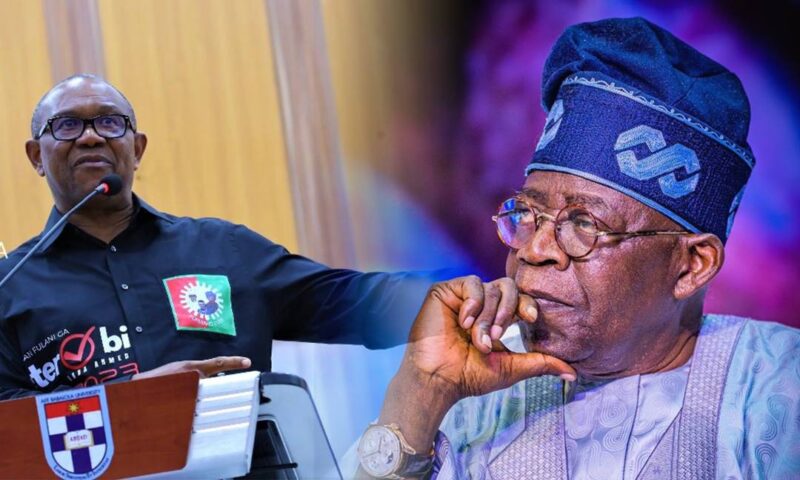
Nigeria’s political arena rewards strategy, patience and coalition building far more than popularity, charisma or momentary enthusiasm. Bola Ahmed Tinubu’s rise to the presidency illustrates this reality with striking clarity. His journey is not merely a personal triumph. It is a case study in disciplined political calculation sustained over decades. For Igbo political leadership, often weakened by fragmentation and short-term thinking, Tinubu’s trajectory offers uncomfortable but necessary lessons, provided there is a willingness to reflect beyond sentiment.
Tinubu did not stumble into power, nor did he pursue it with reckless urgency. At several points in his political life, he deferred personal ambition, supporting others even when he possessed the resources and influence to advance himself. He played decisive roles in the emergence of leaders such as Muhammadu Buhari and famously declined the vice presidency, choosing instead to consolidate influence from behind the scenes. What appeared to many as hesitation later revealed itself as strategic restraint. He understood a fundamental truth of Nigerian politics. Timing is decisive, and impatience is costly.
Equally significant was his investment in political structures. Through mentorship, patronage and careful positioning, Tinubu helped propel figures such as Dele Alake, Sunday Dare, Yemi Cardoso and Wale Edun into national relevance. This was not benevolence but long-term investment. Political power is rarely seized dramatically. It is accumulated patiently, often outside public view. Tinubu absorbed legal battles, public criticism and political isolation while steadily building institutional footholds. By the time he declared his presidential ambition, he was not announcing a possibility but activating a system already in motion.
His victory demonstrated that a carefully constructed coalition, extending beyond narrow ethnic boundaries, could counter entrenched power blocs. Preparation, endurance and alliance building proved more decisive than raw popularity. Yet it would be intellectually dishonest to ignore the risks embedded in such tightly controlled political architecture. Centralisation can weaken internal democracy, stifle dissent and personalise power over time. Patronage networks may blur the line between mentorship and dominance, between loyalty and silence. Tinubu’s model delivers results, but it also raises enduring questions about accountability, succession and institutional resilience.
The contrast with patterns in Igbo elite politics remains stark, even without external comparison. While Igbo voters have repeatedly demonstrated enthusiasm, sacrifice and faith in national inclusion, political leadership has often struggled to convert popular energy into durable influence. Rivalry, suspicion and personal ambition frequently override collective calculation. Success is too often interpreted as a zero-sum outcome, where one individual’s rise is perceived as a threat rather than a shared gain. In such an environment, negotiation gives way to sabotage, and ambition becomes isolated and fragile.
This weakness is striking because the typical Igbo spirit invites pride rather than doubt. Across the world, Igbos are recognised for intelligence, industry and resilience. In commerce, they have built reputations that transcend borders, to the extent that the Igbo apprenticeship system has attracted scholarly attention, including from institutions such as Harvard, as a model of indigenous capitalism and social mobility. These strengths thrive in competitive, decentralised environments where initiative and merit are rewarded. The political shortfall, therefore, is not a failure of capacity but of coordination.
Yet this same energy has struggled to translate into sustained political power. Whether the disconnect stems from an egalitarian instinct that resists hierarchical discipline or from lingering post war ambivalence toward the One Nigeria project remains open to debate. What is clear is that political success demands internal restraint, patience and coordination that talent alone cannot provide.
The collapse of Alex Ekwueme’s presidential ambition at the PDP convention in Jos in 1999 remains a defining moment. Ekwueme was qualified and nationally respected, yet he was undermined and ultimately betrayed by his own Igbo brothers. That episode symbolised a recurring failure to subordinate personal interest to collective progress. Since then, similar patterns have repeated, producing promise without protection and ambition without shelter.
The experience surrounding Peter Obi’s presidential bid followed a familiar trajectory. While many Igbo citizens rallied behind him out of genuine conviction and hope for a different political culture, elite unity remained elusive. Resistance emerged not only from rival parties but also from within. Instead of coordinated mobilisation, internal ambivalence and competing calculations weakened bargaining power and diluted what could have been a historic consolidation of influence. The issue was not ideology alone, but structure.
Despite these setbacks, an Igbo presidency is not a political fantasy. It is entirely possible within Nigeria’s democratic framework. Achieving it, however, depends less on sympathy narratives or emotional mobilisation and more on the conduct of the Igbo political elite. Strong coalitions must be built deliberately. Sentiment must give way to strategy. Above all, moments of opportunity must cease to be treated as transactional or personal windfalls. Rallying around one’s own, protecting collective investments and sustaining alliances over time are indispensable to national ambition.
Chimamanda Ngozi Adichie’s warning about the danger of a single story is instructive here. Tinubu is often reduced to a caricature, a godfather, a manipulator, a shadowy power broker, while Igbo politics is flattened into a narrative of perpetual marginalisation. These stories are not entirely false, but they are incomplete. What they obscure are the deeper patterns of patience, coordination and institutional investment that shape political outcomes.
The road to national leadership is long and often lonely. Tinubu walked it deliberately, resisting the temptation to rush the process. For Igbo political leadership, the lesson is neither imitation nor idolisation, but introspection. Power is negotiated, cultivated and defended through discipline, alliances and long-term calculation. Until these realities are fully confronted, the distance between aspiration and influence will remain wide.



















You must be logged in to post a comment Login