
Africa
Dangote Group Moves to Expand $1.6bn Refinery IPO Across African Stock Markets
African stock exchanges are exploring ways to accommodate Dangote Refinery’s $1.6bn IPO beyond Nigeria, with Global Depositary Receipts among the options considered.

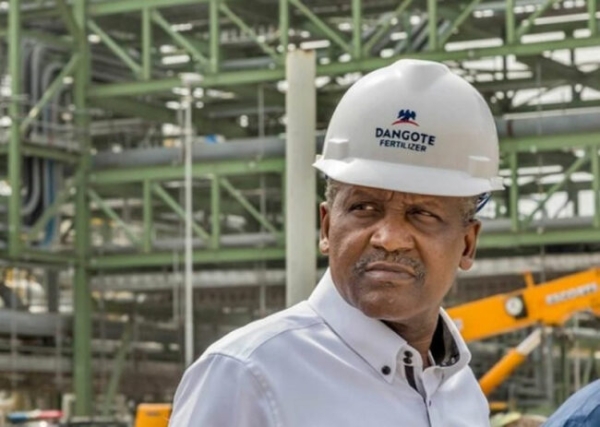
Dangote Group is exploring opportunities to make its $1.6 billion refinery initial public offering (IPO) accessible to investors across multiple African markets through engagements with stock exchanges on the continent.
However, differences in regulatory frameworks and listing requirements among African countries have made the proposed cross-border arrangement difficult to coordinate.
The Chief Executive Officer of the Bourse Régionale des Valeurs Mobilières (BRVM), Edoh Kossi Amenounve, revealed this during an interview with Reuters on the sidelines of the Africa Financial Summit in Luanda.
According to Amenounve, discussions started in April after Dangote Group invited African stock exchanges to consider ways of facilitating broader participation in the refinery’s IPO.
He explained that reaching an agreement on how the offering could be structured across different markets had proved challenging.
“It was not easy to have a kind of consensus on how the IPO can be conducted in all these different markets,” Amenounve said.
One of the proposals under consideration, he disclosed, is the introduction of Global Depositary Receipts (GDRs), which would allow securities representing shares in the refinery to be traded on other African exchanges.
He pointed to existing arrangements in Kenya and Botswana as examples of how such a structure could work.
The development comes after the Dangote refinery’s IPO closed on October 28, attracting subscription demand of about N6.4 trillion ($4.77 billion) from Nigerian retail and institutional investors.
People familiar with the transaction told Reuters that the subscriptions were approximately three times the value of the shares offered.
The refinery’s shares are expected to be listed on the Nigerian Exchange (NGX) later in November.
Amenounve explained that the major obstacle to expanding listings across African markets was the requirement for companies to secure separate regulatory approvals in every jurisdiction.
He argued that harmonising regulations and introducing mutual recognition arrangements could make cross-border listings easier for businesses.
“If you want to ease this kind of process, maybe it is time to think about harmonisation and mutual recognition,” he stated.
Although the African Exchanges Linkage Project (AELP) has already provided the technological infrastructure for cross-border securities trading, Amenounve said regulatory restrictions remained a major challenge to its effective implementation.
In another development, the BRVM chief disclosed that the launch of West Africa’s first derivatives market had been shifted to 2027 because some regulatory and technological requirements were yet to be completed.
He said the market would initially offer forward contracts based on market indices and selected stocks.
Speaking about Africa’s economic prospects, Amenounve identified key sectors with significant potential, saying: “The future of the continent is also in mining, agriculture, industrialisation, energy.”
Africans Angle News





















You must be logged in to post a comment Login