Africa
Ekiti, Oct 27: Date With Destiny! -By Abiodun KOMOLAFE
All things considered, if Oyebanji lives up to expectations, he will join the ranks of Lateef Jakande and Sam Mbakwe, who were decisively re-elected based on their proven, positive impact on Lagos and Imo States. The duo had only three months of their second term when the military struck recklessly and avoidably on December 31, 1983. Nevertheless, four decades later, the memory of their rare and uncommon achievements continues to resonate, guard, guide and inspire. History beckons BAO to seize the opportunity!


The allegations of contrived mayhem in the State of Ekiti are an acknowledgement that desperation has taken root in the quest to gain entrance into Oke Ayoba.
This is ominous, but it also reveals the infantile elements in Nigeria’s political paradox, where one addresses a daunting reality, not with a countervailing strategy, but with stones and missiles. Indeed, without relying on scientific opinion polls, it is absolutely clear that unseating the incumbent government will be quite a task.
For a start, those snapping at his heels within his own party and the opposition have run out of tricks. But they’re still hell-bent on facing him in the general election, absurdly, without a clear alternative position. So far, it has been largely a cacophony of sound-and-fury, all motion and no movement, all grunt and no bacon, all hat and no cattle, ultimately yielding no clear direction. Given its past illustrious history, Ekiti deserves much better than unedifying storylines.
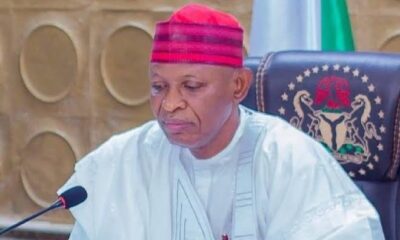
No strings attached, the incumbent governor, from the perspective of the discerning and the neutral, has a lot going for him. The first Made-in-Ekiti governor, he has a calm disposition which has proved infectious, and it’s affecting the mood of the state in a positive way. Ekiti, at the moment, is at peace with itself. This is a rare feat, especially during this period of economic transition.
Even for that singular purpose, it is hoped that those wishing to unseat him would take heed, revisit their strategies and present a coherent blueprint outlining why they would outperform a governor who has maintained peace and stability. This is free consultancy, which mere men with narrow loyalty should be grateful to be seeing.
That said, the harsh truth is that most politicians fail to resonate with the electorate. Instead, they appear solely focused on grabbing power without a clear programme or strategic thinking. They lack even a tentative budget to demonstrate their readiness to hit the ground running, if elected. Of course, the late Obafemi Awolowo excelled in this area, as he was consistently presenting a clear alternative vision, even if his detractors disagreed.
Governance beyond party lines! Respectful outreach and mentorship! Voluntary, not coerced performance! Deliberate statesmanship! Again, the point is that the man, Biodun Abayomi Oyebanji, aka BAO, has proved to be a diligent administrator who has kept his nose clean, implemented quite good programmes, and has drawn no demur. Not surprisingly, the response of the Ekitis appears to be ‘if it’s not broken, why fix it?’ Yes, the people know that there’s still a lot to be done, and neutrals believe it’s imprudent to change a winning team mid-course. This is typical of informed voters who value continuity and progress.
Undoubtedly, the support for the incumbent governor is not merely political rhetoric but is infused with deeply personal and historical context. For example, former Governor Niyi Adebayo speaks of Oyebanji’s unwavering loyalty, while Senate Leader Opeyemi Bamidele describes BAO as a man after the hearts of the people, whose leadership style has made the party an attractive brand. These sentiments, echoed by Isaac Kekemeke’s startling declaration: “We have seen you and we have heard you”, strike a chord. They accentuate the call for a unified voice in the ballot, affirming the governor’s connection with the people.
The Ekiti State Chapter of the Supreme Council for Islamic Affairs also appreciates Oyebanji for “actively embodying the true spirit of Nigeria’s independence”, a move that has brought about a dramatic shift, lifting a long-neglected community from the shadows. Tajudeen Olutope Ahmed’s statement on behalf of the Muslim Ummah confirmed “significant progress” towards resolving marginalization, noting the governor’s “sincerity, fairness, and transparency”. Thanks to BAO, Ekiti Muslims now enjoy a “renewed sense of belonging, dignity, and citizenship”, which represents the true essence of independence.
Given these considerations, the unfolding scenario in Ekiti, as the state heads towards its date with destiny, is that the incumbent governor is on an unassailable position to secure the All Progressives Congress (APC) ticket on Monday, October 27, 2025, and head towards a convincing victory in the governorship election, slated for Saturday, June 20, 2026.
A key observation here is that, for Nigeria’s politics to be of benefit to the people, it must become more issue-based and aspirants must learn a lesson or two, especially from India, where incumbency is actually a curse and not an advantage. This accountability has been a key factor in its rise to become the world’s fifth-largest economy, with projections suggesting it will be the world’s largest economy by 2050.
In India, they talk about the power of incumbency. In Nigeria, we talk about the curse of incumbency. This contrast is telling, as evidenced by the fact that Prime Minister Narenda Modi’s government was the first to be reelected into office for the first time in 32 years.
The political wannabes struggling to unseat incumbents would do Nigeria a favour by emulating India’s approach, which has driven significant economic growth and sustainable development. If achieved, this would lead to better governance and more even development, as incumbents would be keenly aware that, despite their performance, the odds against them remain high.
Kaushik Basu, a renowned Indian economist, has indeed spoken about the democratic aspect of India’s progress. He’s quoted as saying that India is in a better shape today than anybody had envisaged fifty to sixty years ago because the electorate would always throw out the incumbent. This speaks to his faith in India’s democratic institutions and the accountability of politicians to the people.
Basu argued that this democratic accountability had driven economic growth and helped India thrive despite its heterogeneity and low per capita income. He also believed that India’s focus on enhancing trade and implementing economic reforms could further realize its great power potential.
As Ekiti State charts its course, Oyebanji certainly has a date with destiny. In times like this, Jawaharlal Nehru’s iconic ‘Tryst with Destiny’ speech, delivered on August 14, 1947, comes to mind, as it bespeaks the solemn responsibility that accompanies national freedom. Drawing inspiration from this essential moment in history, BAO’s leadership could be the catalyst for Ekiti’s transformation.
As Nehru aptly observed, “We should not think about the next elections alone. We should think about the next generation.” This timeless wisdom raises a crucial question: how can Ekiti prepare its next generation to thrive in today’s globalized world and the rapidly evolving Fourth Industrial Revolution?
Generally speaking, governors are expected to think about long-term investments in their states or communities, for they are not just helping today; they’re building a stronger tomorrow. Oyebanji, a colourful character, exemplifies this expectation. He has demonstrated his commitment to thoughtful and impactful leadership. He has restored trust and financial prudence, transforming Ekiti into a model of prosperity and stability. Salaries and pensions are being paid on time, gratuity arrears have been cleared, and local salaries have been aligned with federal levels – all without large-scale borrowing.
Lots done! Lots more to be done!
All things considered, if Oyebanji lives up to expectations, he will join the ranks of Lateef Jakande and Sam Mbakwe, who were decisively re-elected based on their proven, positive impact on Lagos and Imo States. The duo had only three months of their second term when the military struck recklessly and avoidably on December 31, 1983. Nevertheless, four decades later, the memory of their rare and uncommon achievements continues to resonate, guard, guide and inspire. History beckons BAO to seize the opportunity!
May the Lamb of God, who takes away the sin of the world, grant us peace in Nigeria!
*KOMOLAFE wrote from Ijebu-Jesa, Osun State, Nigeria (ijebujesa@yahoo.co.uk; 08033614419 – SMS only)