Africa
Election Should Never Be A Do Or Die Affair, by Isaac Asabor

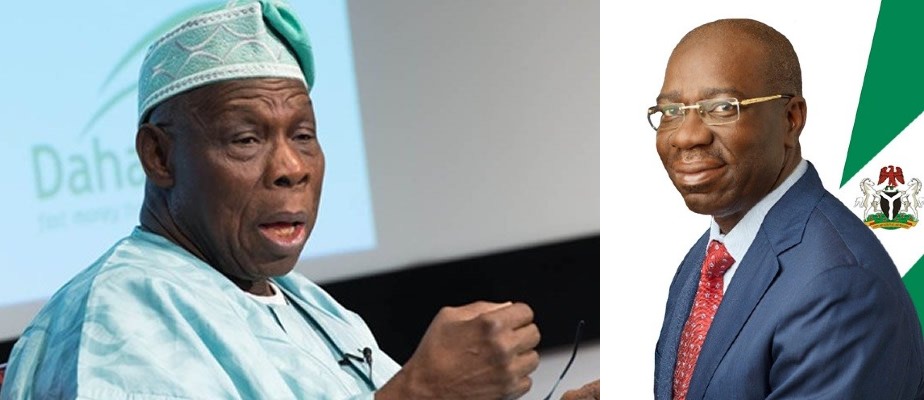
In the annals of Nigeria’s democratic journey, the statement made by former President Olusegun Obasanjo on February 10, 2007, reverberates ominously. Declaring that the then-upcoming general election would be a “do or die” affair for his party, the Peoples Democratic Party (PDP),cast a shadow over the electoral process, suggesting that the stakes were so high that violence or undemocratic measures were acceptable.
Despite the violent and undemocratic nature of the declaration, it is surprising that more than 17 years down the line that Mr. Godwin Obaseki, Edo State Governor, made a similar pronouncement ahead of the gubernatorial elections scheduled to hold on September 21, 2024 in his state. It is shocking and deeply concerning that despite the lessons, Nigeria should have learned about the dangers of making democracy look violent and intimidating, particularly as such incendiary language still finds its way into our political discourse. In defense of his statement, Obaseki explained that the upcoming election is critical for safeguarding the progress made under his administration and preventing elements opposed to Edo’s development from taking power. Yet, this reasoning is flawed and dangerous.
Elections, by nature, are the cornerstone of democracy. They are meant to provide the people with the opportunity to exercise their sovereignty through the ballot box, in an atmosphere of peace, fairness, and transparency. When a candidate or a sitting governor declares an election a “do or die” affair, it sends a dangerous message, that the rule of law, civility, and the will of the people are secondary to political victory at any cost. This rhetoric feeds into a narrative that normalizes electoral violence, coercion, and intimidation.
Without a doubt, the essence of democracy lies in choice, not compulsion. An election should represent the power of the people to decide who will govern them. It is not a battlefield where political gladiators fight to the death for control. Elections in Nigeria, and indeed anywhere in the world, should be about ideas, policies, and visions for the future, not a winner-takes-all contest that justifies using all means, even violent ones, to achieve victory. It is unarguably against the foregoing backdrop that for Nigeria’s president, Goodluck Jonathan, once expressed a commitment to maintaining peace and order in Nigeria, stating that he would not resort to violence or shed blood for his political ambitions. His commitment to peace, no doubt, reflects his dedication to stability and governance.
In fact, Governor Obaseki’s defense that the stakes in the Edo election are high does not justify treating it as a “do or die” affair. Yes, elections are often pivotal moments in a state’s development, and the outcomes can have significant consequences for governance and public welfare. However, democracy must always allow room for peaceful transitions, compromises, and most importantly, the expression of the people’s will. When a leader frames an election as existential, it creates unnecessary tension and opens the door to undemocratic practices.
Without sounding exaggerative in this context, Nigeria’s electoral history is littered with instances where elections turned violent, leading to loss of lives, destruction of property, and long-lasting political instability. The 2007 election, which Obasanjo described as “do or die,” was marred by widespread irregularities and violence. International observers condemned the election as deeply flawed, and the aftermath was a testament to the dangers of inflammatory rhetoric.
Election violence creates an environment of fear, where citizens are deterred from participating in the democratic process. It also emboldens undemocratic forces, from political thugs to corrupt officials, who believe that power can be seized through brute force rather than legitimate means. Worse still, the normalization of violence in elections leads to a cycle where political office becomes a prize to be won at all costs, and governance is reduced to patronage and self-interest rather than service to the people.
As political leaders, it is essential to recognize the weight of words. In a country with Nigeria’s diverse and complex socio-political landscape, leaders must be careful not to inflame passions that can spiral into violence. Instead, they should promote a culture of peace, tolerance, and respect for the democratic process. The language of “do or die” should have no place in the political lexicon of a country that has endured so much bloodshed in the name of democracy.
Governor Obaseki and other political leaders must recognize that their words have the power to shape public attitudes and behaviors. In the spirit of true democracy, they must focus on building trust in the electoral process by ensuring free, fair, and transparent elections. They must also accept that losing an election is not the end of the road, but part of the democratic process. A true leader is not defined by their ability to cling to power, but by their willingness to serve the will of the people, even when that will is expressed in opposition to their interests.
Governor Obaseki’s justification for his “do or die” rhetoric, that it is necessary to protect the gains made under his administration, fundamentally misunderstands the nature of democratic governance. Elections are not about safeguarding personal or political legacies but about allowing the electorate to freely choose who they believe will best serve their interests. While Obaseki may believe his administration has been beneficial for Edo State, the decision ultimately lies with the voters, not political incumbents.
Moreover, framing the election as a “do or die” moment creates the impression that losing would be catastrophic for the state. This inflates the stakes to an unhealthy level, where political actors may feel justified in resorting to violence or subverting the process. If the election is truly about the people, then they must be allowed to make their choice without intimidation, fear, or coercion.
Without a doubt, Nigeria’s democracy is still evolving, and each election presents an opportunity to strengthen its foundations. However, if elections are continually treated as a zero-sum game where the loser is banished from relevance and the winner takes all, the nation risks stagnation and regression.
Political leaders must commit to electoral reform that eliminates the incentives for violence and malpractice. This includes ensuring that the institutions are tasked with overseeing elections, such as the Independent National Electoral Commission (INEC), are independent, well-funded, and equipped to conduct free and fair elections. There must also be stringent penalties for those who incite violence or attempt to manipulate the electoral process.
Furthermore, civil society, religious leaders, and the media have a critical role to play in promoting a culture of non-violence and democratic integrity. By holding politicians accountable for their words and actions, they can help shift the narrative away from “do or die” politics to one of peaceful, constructive competition.
Elections are not wars. They are the lifeblood of democracy and should be conducted with dignity, respect, and a commitment to the greater good. When political leaders, like Governor Obaseki, echo the dangerous rhetoric of past elections, they not only jeopardize the immediate contest but also the long-term health of Nigeria’s democracy.
While Obaseki may believe that his defense of “do or die” rhetoric is warranted, democracy thrives on dialogue, consensus, and peaceful contestation, not on threats of existential destruction. It is time for Nigeria to turn the page on “do or die” politics and embrace a new chapter where elections are a celebration of democracy, not a cause for violence. The future of Nigeria depends on it.