Africa
Enlightening The People On How To Recall Errant Lawmakers, by Isaac Asabor

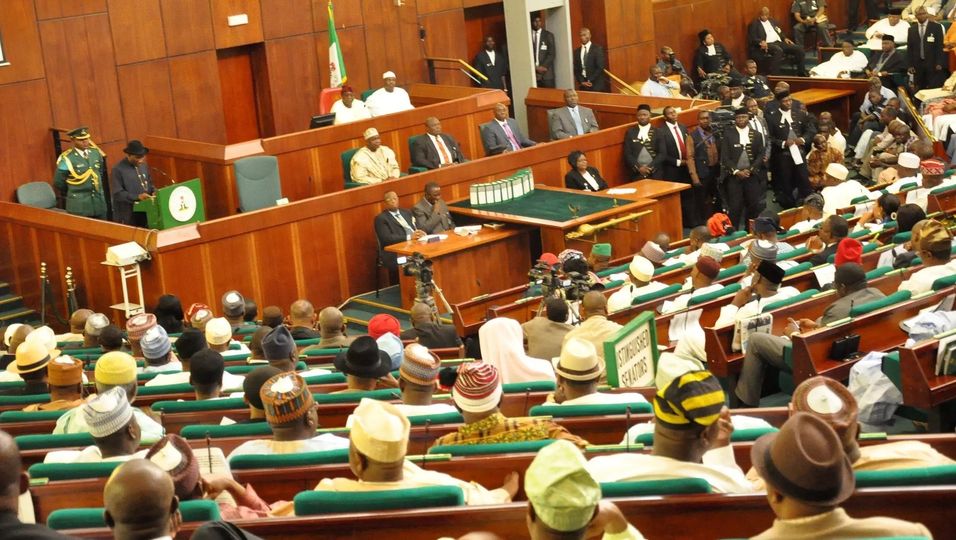
Public office is a position of trust, requiring the highest standards of conduct and accountability. In Nigeria, however, the concept of public shame, once a deterrent for erring leaders, seems to have diminished within the political class. Over the years, Nigerian lawmakers have occasionally found themselves in the public spotlight for all the wrong reasons, engaging in behaviors that have provoked outrage, disappointment, and public dismay. These instances reveal a disconnect between the expected standards of those in office and their actual conduct, underscoring an urgent need for citizens to know how to hold these officials accountable, not only through voting but also through the recall process.
Instances of questionable conduct among Nigerian lawmakers are unfortunately numerous. Since Nigeria transited to democratic governance in 1999, some prominent instances where lawmakers got themselves enmeshed in the quagmire of show of shame have stayed in the public consciousness, highlighting the need for greater accountability.
For instance, in April 2018, Nigeria witnessed one of the most dramatic incidents of legislative misconduct when hoodlums stormed the Senate chamber and snatched the mace, a symbol of legislative authority, right from under the noses of the senators. Senator Ovie Omo-Agege, who had been suspended earlier, was implicated in orchestrating the act, which led to widespread condemnation and embarrassment for Nigeria’s legislative body. This blatant violation of decorum underscored a disregard for the sanctity of parliamentary process and law.
In a case that gripped Nigeria’s attention, Farouk Lawan, a prominent lawmaker in the House of Representatives, was involved in a scandal that cast a long shadow over the integrity of the legislature. Lawan, who chaired a committee investigating oil subsidy fraud, was accused of accepting a $620,000 bribe from businessman Femi Otedola in exchange for removing Otedola’s company from the list of implicated firms. Despite initially denying the charges, video evidence emerged showing Lawan accepting the cash. The incident not only embarrassed the National Assembly but also reinforced public suspicions about corruption within Nigeria’s political system.
In fact, several lawmakers have faced accusations of physical and verbal abuse, further tarnishing the reputation of the legislative body. For example, in 2019, Senator Elisha Abbo was caught on camera physically assaulting a woman in a sex-toy shop in Abuja. Despite the public outcry and subsequent legal action, Abbo initially defended his actions, only later issuing an apology. The incident went viral on social media, sparking conversations on the impunity that often accompanies political office in Nigeria.
Recently, Hon. Alex Ikwechegh, who represents Aba North in Abia State, made headlines, and still making headlines, not for legislative achievements but for behaviors that many found unbecoming of a public official. Prior to the incident that happened on Sunday, October 29, 2024, the name Hon. Alex Ikwechegh, does not ring a bell, and despite being a member of the house of representative, only a few Nigerians could have heard about him. Despite being a distinctive figure for being extremely fairly skin, just as the saying goes, an albino does not need an introduction in the marketplace, he remains relatively unknown in the Green Chamber. Though he stands out for his extremely fair skin, just as the saying goes, an albino needs no introduction in the marketplace, he remains largely unknown in the Green Chamber.
The reason why he is seemingly unpopular cannot be farfetched, particularly when seen from the fact that since becoming a lawmaker, he has yet to sponsor or co-sponsor a single bill. Be that as it may, the seemingly unknown lawmaker who literarily ask anyone who dare disrespect him, “Do you know who I am?” has suddenly become a celebrity overnight when he assaulted an e-hailing (Bolt) driver, Stephen Abuwatseya, who went to deliver a package to him.
The distressed driver in a viral video filmed what transpired between them in Ikwechegh’s residence in Maitama, Abuja. The video depicted the visibly angry lawmaker putting on a dishonourable act by repeatedly slapping and insulting the driver for telling him to come out and get the snail the driver was meant to deliver to him.

In the footage, Ikwechegh insisted that the request was disrespectful given his social status while threatening to make the driver “disappear” without facing any consequences.
The National Assembly has also seen physical altercations that go beyond verbal exchanges. A notable example occurred in 2015, during a leadership tussle within the House of Representatives. The fight broke out between lawmakers over the choice of leadership within the chamber, causing a session meant for lawmaking to descend into chaos. The images of lawmakers throwing punches and hurling furniture around the House were broadcast nationwide, embarrassing Nigerians and raising questions about the ethical standards of those meant to represent the people.
Allegations of financial misconduct have frequently plagued Nigerian lawmakers. In 2021, allegations of misappropriation of funds, double salaries, and misuse of constituency project allocations came to light. Many lawmakers have faced accusations of diverting constituency funds meant for community development projects to personal use, leaving their constituents in even greater need. Such actions have spurred public anger, yet the response mechanism for citizens has remained limited.
These incidents, among many others, reveal a pattern of behavior that undermines public trust and tarnishes the image of Nigeria’s legislative body. Lawmakers are elected to represent the people, but when their actions reflect misconduct or a lack of accountability, it becomes necessary for citizens to act. Unfortunately, most Nigerians remain unaware of how to initiate a recall process when their representatives fail them.

Voting may put lawmakers in office, but citizens also have the power to recall them if they fall short of the public’s expectations. The recall process is enshrined in Nigeria’s constitution under Section 69 of the 1999 Constitution (as amended), allowing constituents to withdraw their mandate if their representative no longer serves their interests. Despite this provision, the process remains underutilized, often due to a lack of public knowledge on how to proceed.
For the sake of clarity, the recall process begins with a petition signed by at least 50% of registered voters in the constituency of the erring lawmaker. The petition must clearly state the reasons for the recall, whether misconduct, non-performance, or other justifiable grounds.
Once the petition is filed with the Independent National Electoral Commission (INEC), the commission is responsible for verifying the signatures. If the signatures are valid and meet the required threshold, INEC then organizes a referendum.
Thirdly, INEC will conduct a referendum within 90 days of receiving the verified petition. For the lawmaker to be officially recalled, a simple majority of registered voters in the constituency must vote in favor of the recall. If the referendum succeeds, the lawmaker is removed from office, allowing for a by-election to replace them.
Although the recall process is straightforward in theory, several obstacles prevent its smooth implementation. From legal challenges and political interference to logistical challenges and voter apathy, the recall process can be both lengthy and costly. Furthermore, many citizens lack awareness about this constitutional right, leaving errant lawmakers in office without repercussion.
Given the recurring instances of misconduct among lawmakers, it is high time Nigerians are better informed about their right to recall. Civic education campaigns can empower citizens, making them aware that voting is not the only way to shape their leadership.
Some ways Nigeria can improve civic awareness regarding recalls cut across community outreach and information campaign. Civil society organizations, political groups, and advocacy bodies could spearhead awareness campaigns, using town halls, market outreaches, and local gatherings to educate citizens about the recall process. These campaigns should emphasize that the power to recall is a democratic right enshrined in the constitution.
In a similar vein, media outlets, especially radio and television stations that reach rural areas, should broadcast information about the recall process. Short programs, documentaries, and interviews with legal experts can demystify the steps involved in recalling a non-performing or errant lawmaker. This could be complemented by campaigns on social media to reach younger, urban demographics.
Thirdly, integrating civic education in school curricula at the secondary level can have a lasting impact. By teaching young Nigerians about their rights and the mechanisms for accountability, future generations can be better equipped to hold their representatives responsible.
Also in a similar vein, the recall process, though outlined in the constitution, can be burdensome for average citizens. Simplifying the procedural requirements and providing legal assistance to constituents interested in initiating a recall can make the process more accessible. The role of INEC in this regard is crucial, as it must act transparently and without bias to facilitate the will of the people.
In fact, Nigerians have long called for a leadership culture rooted in accountability, integrity, and respect for the public mandate. The power to recall lawmakers is an essential part of this framework, ensuring that elected officials cannot abuse their positions without consequence. While the recall process has not been widely used in Nigeria, raising public awareness can make it an effective tool for upholding standards within the legislative body.
Without a doubt, misconduct among lawmakers is not merely an embarrassment to the legislative institution but a failure of representation that affects all citizens. It is time for Nigerians to realize that they possess the power to enforce accountability beyond elections. By knowing how to vote and how to recall, citizens can take proactive steps to create the leadership they deserve.