National Issues
FG, Independent Marketers and Politics of Petrol At N1000 Per Litre, by Reuben Omotayo Hopo

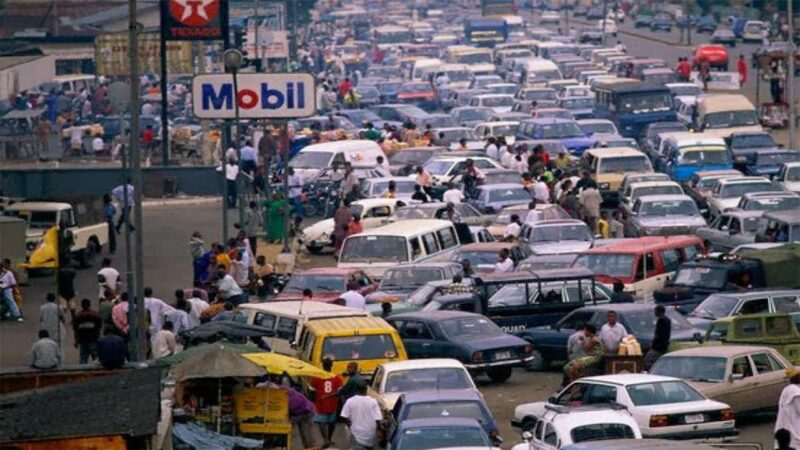
It has become a national phenomenon in Nigeria that any Government that attempts to fight corruption by putting the right measures in place, will also face the wrath of corruption fighting back, summarizes the present cost of buying petrol, an alpha product in the nation’s economy at a whopping sum of N1000 per Litre amid fuel scarcity nationwide. The situation changes for worse about three weeks ago.
Petrol, diesel and kerosene including gas have become a tales of woes nationwide since the Federal Government removed the hegemony of paying for subsidy to independent marketers of petroleum products. The corresponding effects have led to a rigorous struggle for survival by both the poor and the rich. However, can anyone justify the current price of petrol including its scarcity on the subsidy removal by the Federal Government? Personally, I don’t think so. Rather, we must blame the exorbitant cost and hoarding of petrol in the filling stations on individual natural dispositions to always having the tendencies to milk the Country to the marrow.
Nigeria is a great Country with potentials to become Africa’s super power that would always attract respect across the globe if not for the penchants to be always willing to sabotage the economy from been thriving and agile into comatose. Recently, former President Olusegun Obasanjo, GCFR was heard in a video clip on social media sharing his past experience on why the four refineries owned by the Country cannot work profitably when he narrated what the experts told him. Since the Federal Government together with petroleum marketers before this era had plunged the Country at the expense of paying subsidies to import fuels into a Country experiencing a growing population at all times. Why the Federal Government before now failed to apply international best practices for maintaining oil refineries and to augment it till date remained debatable.
Now that the straw had broken the camel’s back, the Federal Government must be speedy in its decision-making to stem the tide of untold hardships that some vested interest might visited on the entire population of this Country. That the cost of petrol which initially was been sold between N600 and N700 due to the subsidy removal ought to have had a stable price control between N400, N450 and N500 to enable the poor households feed with a little ease. That motorists and other consumers are now buying the product as much as N1000 is aggravating the endemic poverty already known to the international communities, and this trend needed to be reversed urgently, to save the image of the Country at home and abroad.
Let us come to think of it, if Federal Government are destroying illegal refineries built in the Niger-Delta subregion, then, the Country so blessed with different human resources and capacity should form think-tanks to assist the Federal Government to provide alternative decisions for a medium and long-term solutions to making petroleum products available, affordable and as means of earning more foreign exchange. Except the Federal Government is able to solve this single, most hydra-headed problem, it is not likely that any of its actions meant to yield positive results for the populace would turn out to achieve the desired common good.
Till date, the Federal Government has achieved a mileage in its efforts to turning around a virile economy for all Nigerians to achieve the “Renewed Hope Agenda” However, the Federal Government must change the gear to target reduction in the price of petrol and its availability to save millions of people from going down into the abyss of poverty at this most pressing moment for most Nigerians. The distribution of palliatives have only soothened a few people momentarily, as the distribution cannot go round all vulnerable Nigerians, hence it should be considered a secondary.
The issue with Dangote refinery that is making it impossible to boost domestic supply of petroleum resources after a year target have been witnessed in the recent Dangote-NNPC saga as another sad reminder of how people at the helm of affairs have wasted the nation’s huge resources without any iota of sense of remorse. So, Nigerians are eagerly waiting for a speedy resolution of the differences publicly between Dangote and NNPC, using a roundtable approach to resolve the hues and cries. By now, this private refinery should be stable to meet certain percentage of demands at home on a daily basis to save Nigerians from more agonies.
Apart from this, petroleum resources are primary products that dictate to all other products in the Country. Therefore, consideration for domestic supply should not be monopolized for a single entity, given its overridden importance to the survival of the nation’s economy. Therefore, the Federal Government should come up with plans to fully deregulate the petroleum sector to achieve the revolution of per second billing introduced by Glo, an African investment in the telecommunication industry that fred all Nigerians from economic exploitation of the foreign merchants till date. The truth is that Nigerians may not likely enjoy a reduced and stable price in the sales of petrol and other similar products if the Country’s crude oil is allowed to continue to be subservient at the mercy of petroleum marketers and other external interest.
On these premises, the Federal Government should halt the politics that has led to the ongoing sales of petrol at N1000 per Litre. The only thing that the common people know is how the value of the Naira impacts on their living, would be the true catalogues of the Federal Government’s achievements when they form their opinions and views. The higher cost presently call on the Federal Government to declare a state of emergency in the petroleum sector to achieve a stable price, economic growth and prosperity in the land. The removal of subsidy from day one by President Bola Ahmed Tinubu, GCFR has been the first step in the right direction to renew our collective hope back into prosperity, as a major economy in Africa.
Nevertheless, the Federal Government must rise up to the challenges to prevent having more casualties at the expense of its unique economic reforms. In a couple of days, it is good to have the ongoing rampages and long queues at the various filling stations reduce drastically.
Reuben Omotayo Hopo, a Public Affairs Commentator and Brand Strategist writes from Badagry, Lagos.