Opinion
French West African States Yet To Learn From Mozambique -By Kestér Kenn Klomegâh
Mali also terminated its military contract with France. Mali together with its deep-seated impoverished neighbouring countries, under the governance of fragile military juntas, are potentially breeding grounds for extremist activities. Niger shares distinctive borders with Burkina Faso and Mali, as well as Chad and Algeria in Sahel region. These countries have pledged their support to Niger.

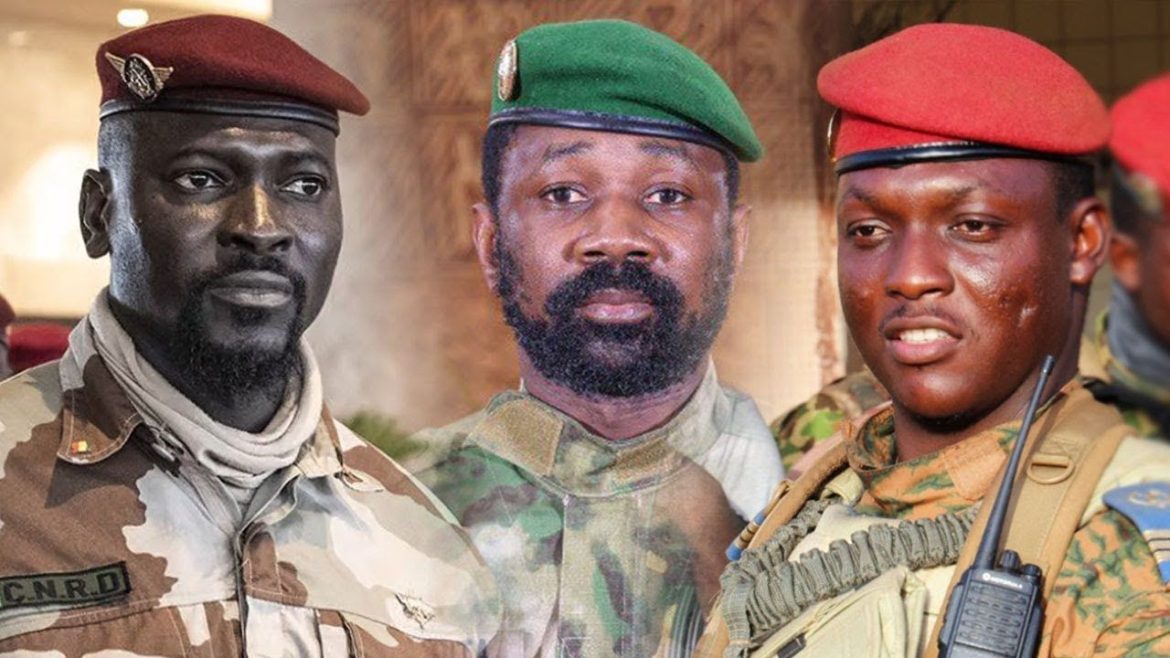
Russia has now started calling for combined strategic partnership and international efforts to drastically address the complexities of rising insecurity and adopting a multilateral military force for countering terrorism in Africa, particularly in Burkina Faso, Mali and Niger. An official statement from the Russian Foreign Ministry called for finding common solutions and that sustainable peace can only be achieved through international efforts in the Sahara Sahel region.
Burkina Faso has had several military coup d’états, the latest in January 2022. Mali (May 24, 2021) and Niger (July 26, 2023) witnessed similar political trends are both now under military administrations and share startling critical accusations of corruption and malfunctioning of state governance against previous governments.
Russia strongly considers Burkina Faso, Chad, Mali and Niger as conduits to penetrate into the Sahel region, an elongated landlocked territory located between north Africa (Maghreb) and West Africa region, and also stretches from the Atlantic Ocean to the Red Sea.
Searching for long-term solutions to pertinent issues in a multi-polar world requires extensive mutual cooperation with regional African associations and the international community. After disparaging, using derogatory language for foreign military forces for their failure in ensuring security in the West African Saharan region, and encouraging a number of French-speaking West African countries to abruptly abrogate military relations with United States and France, Russia has now started calling for international efforts to help Burkina Faso, Mali and Niger.
Russian Deputy Foreign Minister Sergey Vershinin draws the attention of Special Representative and Head of the UN Office for West Africa and the Sahel (UNOWAS) Leonardo Santos Simao to the fact that achieving peace in the Sahel Region hinges on international efforts to help Burkina Faso, Mali and Niger, according to the Russian Foreign Ministry’s statement made available at the official website.
In the latest emerging developments mid-March 2024, Col. Maj. Amadou Abdramane, spokesperson for Niger’s ruling junta, officially announced the expulsion of the United States – ending the long-standing counterterrorism partnership between the two countries.
“The government of Niger, taking into account the aspirations and interests of its people, revokes, with immediate effect, the agreement concerning the status of United States military personnel and civilian Defense Department employees,” he said, declaring that the security pact, in effect since 2012, violated Niger’s constitution.
The United States has roughly 1,000 military personnel and civilian contractors deployed to Niger, most of them clustered near the town of Agadez, on the southern fringe of the Sahara Desert, at Air Base 201. Known locally as “Base Americaine” – the outpost serves as the linchpin of the military’s archipelago of bases in North and West Africa and a key part of America’s wide-ranging surveillance and security efforts in the region. Since the 2010s, the United States has sunk roughly a quarter billion dollars into the outpost. It has trained several military personnel for Niger.
Mali also terminated its military contract with France. Mali together with its deep-seated impoverished neighbouring countries, under the governance of fragile military juntas, are potentially breeding grounds for extremist activities. Niger shares distinctive borders with Burkina Faso and Mali, as well as Chad and Algeria in Sahel region. These countries have pledged their support to Niger.
ECOWAS has declared fierce opposition to the infiltration of military into politics. It shares the same position with the African Union. Critics, however, say that Russia has noticeably declared its support for the military in the political scene, and further weighed in absolutely on their delay to set deadlines for transition to constitutional government in Burkina Faso, Mali and Niger.
Burkina Faso, Mali and Niger have exited the regional bloc, ECOWAS and are also dismembered from the African Union for unconstitutional changes of government and contravening the ‘Silencing the Guns’ quest in Africa. African leaders have expressed grave concern over the resurgence of military takeovers and urge adoption of serious measures to intensify efforts at addressing the root causes of coup d’etats.
In pursuit of geopolitical clout, Russia is expanding its military tentacles aggressively beyond its horizons, penetrating into Sahel Sahara where mostly are the Francophone. Paradoxically, Russia has never come under military rule since Soviet’s collapse. Russia, boastful of its post-Soviet democracy, has never skipped or delayed elections and this at least has far-reaching positive implications. On March 15-17, Russia held the presidential election as stipulated by the constitution.
On the contrary, Russia has encouraged West African military rulers, who are now shuttling between their capitals and Moscow, to hold onto power. Malian Foreign Affairs Minister, Abdoulaye Diop, has visited Russia over five times. Burkina Faso, Chad, Guinea and Niger have followed suit and taken political advice from Moscow.
There have been several debates, academic discussions and propositions for adopting a multilateral force to deal with the complexities of rising terrorism and ethnic conflicts across Africa. The South African Institute of International Affairs (SAIIA) has a detailed report with excellent suggestions. Southern African Development Community (SADC) has also offered an excellent example how to deal swiftly with terrorism.
The SAIIA report titled – Russia’s Private Military Diplomacy in Africa: High Risk, Low Reward, Limited Impact – says that Russia’s renewed interest in Africa is driven by its quest for global power status. Few expect Russia’s security engagement to bring peace and development to countries with which it has security partnerships. That report was based on more than 80 media publications dealing with Russia’s military-technical cooperation in Africa. The SAIIA’s researchers interrogated whether fragile African states advance their security, diplomatic and economic interests through a relationship with Russia.
The research report indicated that “Russia’s growing assertiveness in Africa is a driver of instability and encourages pernicious practices, such as kleptocracy and autocracy in Africa.” It further says Moscow’s strategic incompetence and opaque relations are adversely affecting sustainable development in Africa. Russia, it appears, is a neo-colonial power dressed in anti-colonial clothes.
While Moscow’s opportunistic use of private military diplomacy has allowed it to gain a strategic foothold in partner countries successfully, the lack of transparency in interactions, the limited scope of impact and the high financial and diplomatic costs exposes the limitations of the partnership in addressing the peace and development challenges of African host countries, the report says.
The report explained the dimensions of Russian power projection in Africa, new frontiers of Russian influence and provided a roadmap towards understanding how Russia is perceived in Africa. It highlighted narratives about anti-colonialism and described how these sources of solidarity are transmitted by Russian elites to their African public. For seeking long-term influence, Russian elites have oftentimes used elements of anti-colonialism as part of the current policy to control the perceptions of Africans and primarily as new tactics for power projection in Africa.
Prime Minister Abiy Ahmed of the Federal Democratic Republic of Ethiopia, addressing the 36th Ordinary Session of the African Union (AU) held in Addis Ababa, holds that collective efforts should be mobilized to resolve all existing conflicts and disputes on the continent. The efforts must be confined to this continent and quarantined from the contamination of non-African interference.
In addition to West Africa, Southern African countries, particularly Mozambique, have had cases of armed insurgencies. Mozambique suffered armed attack in March 2017. The insurgency left thousands of people dead and led to the suspension of a €20 billion liquefied natural gas (LNG) project by the French TotalEnergies SA.
Mozambique however enjoys relative peace due to the deployment of SADC regional force, a well-constituted regional military force for enforcing peace and security. The 16-member Southern African Development Community (SADC) joint military force ensures peace and stability in the Cabo Delgado province, northern Mozambique. It involves troops from Rwanda and the SADC Military Mission (SAMIM). Rwanda offered 1,000 in July 2021. South Africa has the largest contingent of around 1,500 troops. The force falls within the framework of peace and security requirements of SADC and the African Union.
António Guterres, the United Nations Secretary-General and African Union Commission Chairperson Moussa Mahamat condemn the resurgence of unconstitutional changes of government in Africa and stress the need for a timely and peaceful return to constitutional order in Burkina Faso, Gabon, Guinea, Mali, Niger and Sudan. Against this backdrop, Burkina Faso, Mali and Niger have to seriously consider adopting multilateral security cooperation. Ultimately, West Africans have to emulate the Mozambican case and apply it in the Sahel. But Burkina Faso, Mali and Niger have utterly displayed defiance to the sanctions and crafting a number of approaches and making their own efforts toward addressing security and development-oriented issues.
Russia has to stand in for multilateral force to speedily address the contradictions and complexities of security issues in that region. Constituting a regional force is a basic ideal in multipolar relations in which affected states, coordinating with foreign partners, pool resources for a common goal.The Economic Community of West African States (ECOWAS), the African Union, the United Nations, and bilateral and multilateral partners have to act together to endorse and to support drastic measures in addressing security questions and, most importantly, to ensure a peaceful return to constitutional and democratic government in the Republics of Burkina Faso, Chad, Mali and Niger in West Africa.