Africa
From Dane Gun To AK-47: How Hunting Lost Its Honour In Edo And Delta -By Isaac Asabor
Edo and Delta States, once united as Bendel, must rekindle the spirit of regional cooperation. The same way hunters cooperated in the past, the governments of both states must jointly address this creeping menace that threatens not just physical safety but cultural identity.


There was a time, not too long ago, when the lush forests and fertile farmlands of Edo and Delta States (then known as Midwestern State, and later Bendel State) bore witness to a rare kind of inter-communal brotherhood. It was the kind forged not in political corridors or government offices, but in the quiet understanding between communities, through culture, tradition, and trust.
Back in the 1970s, long before the creation of Edo and Delta as separate states, there existed a seasonal tradition among hunters across these two regions. Omolua, a peaceful village in Igbanke, now in Orhionmwon Local Government Area of Edo State, used to play host to traditional hunters from nearby Agbor-Obi, Agbor-Alisimie, Umunede in present-day Delta State, and Esan villages in what is now Edo Central.
Despite state boundaries that would later divide them, the people were bonded by customs rooted in mutual respect and historical ties from their days under the Bendel State structure. Hunting was not just a trade; it was a communal event, a ceremony of sorts. And like every ceremony in our traditional societies, it followed a time-honoured protocol.
Before any hunting expedition could take place, emissaries from the guest communities were sent to Omolua. Their task was to inform the local leadership, particularly the Enogie, the traditional ruler of the village, of the proposed visit. The date, route, and members of the visiting hunters’ party were made known ahead of time. In return, the Enogie would alert the local hunters, giving them the opportunity to join in or at least be aware of the expedition.
On the appointed day, the guest hunters would arrive, often in a Peugeot 404 pick-up, the “official” bush vehicle of that era. They came not with stealth but with pomp: their Dane guns slung over their shoulders, calabashes filled with native potents hanging from their necks, and their loyal dogs bounding around them, ready for action. The village square would come alive with activity. Children, including myself as a young boy at the time, would swarm around them, wide-eyed in admiration.
There was no fear, no suspicion. We understood their mission. They were not strangers; they were brethren, fellow Bendelites who respected tradition and authority.
Together with the local hunters, they would venture into the farmlands and forests. And by evening, we would hear them returning, their signature whistles cutting through the dusk air. Dogs wagging tails, they would bring with them antelopes, bush pigs, grass cutters, and other game. And before returning to their own communities, they would first pay homage, gifting portions of their catch to the Enogie and leading indigenous hunters as a mark of gratitude.
It was a well-oiled system that ran on mutual understanding. It was not just about hunting; it was about respect for the land, its owners, and their laws.
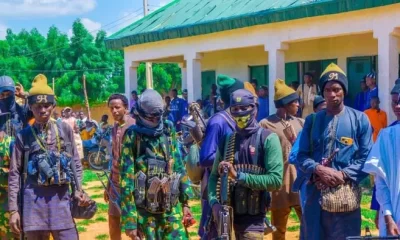
Today, that system is all but dead. What we see now is the exact opposite. Armed men, often of northern extraction, now invade forests in Edo and Delta States under the pretense of hunting, but without the courtesies of the past. They do not send emissaries. They do not announce their arrival. They do not seek permission. And worst of all, they do not carry Dane guns; they bear AK-47s.
Rather than being a celebrated event, their presence now causes fear. Farmers abandon their lands. Villagers whisper in worry. Entire communities remain on edge. These new “hunters” have been accused of everything from illegal logging to farm destruction, from kidnapping to murder.
The forests that once echoed with laughter, whistles, and the camaraderie of hunters have become dens of dread.
What went wrong? To answer the foregoing question, it is germane to attribute it the source of the nagging challenge to the erosion of traditional values. The collapse of communal trust. The unchecked movement of armed men into rural communities. These are not just consequences of insecurity, they are symptoms of cultural breakdown.
It is important to remember that the former Bendel State was not just a geopolitical construct. It was a cultural bridge. The people of today’s Edo and Delta States share more than just a boundary; they share bloodlines, customs, and histories. The inter-village hunting expeditions of the 70s and 80s were just one example of how deep this bond ran.
In today’s world of suspicion and violence, that brotherhood has been replaced by fear. And what should alarm us more is the way these armed “hunters” operate with impunity. In the absence of traditional consultation, the villagers are caught off guard. The once peaceful groves of Igbanke, Umunede, Agbor, and their surroundings are now silently crying out for the return of order.
While this is not a call to romanticize the past but a plea to learn from it, the question must also be asked: If hunters from Agbor and Esan could send emissaries before crossing into Igbanke’s farmlands with Dane guns, why can’t today’s so-called hunters, armed with automatic rifles, do the same?
Security agencies need to wake up to this evolving threat. The unchecked access of armed men into southern forests, under any guise, should be treated as a security breach. It is not just about protecting lives, but about safeguarding the cultural fabric that once held these regions together.
Traditional rulers, too, must be empowered. They were the custodians of protocol and peacemakers in their day. Today, they have been relegated. But if we must restore sanity to our forests and farmlands, they must be brought back into the conversation. Their voices, grounded in wisdom and tradition, are needed now more than ever.
Edo and Delta States, once united as Bendel, must rekindle the spirit of regional cooperation. The same way hunters cooperated in the past, the governments of both states must jointly address this creeping menace that threatens not just physical safety but cultural identity.
As a boy, I watched with joy as guest hunters danced into Omolua, dogs in tow, game on their backs. Today, children in that same village may never witness that kind of peaceful ritual. What they see instead are reports of violence, fear, and loss.
In fact, this must not become our new normal. Let us return to the days when hunting was done in the open, not in secrecy. When Dane guns were all it took, not AK-47s. When being a guest meant showing respect, not instilling terror.
If peace once walked freely between Edo and Delta forests, it can again, if only we remember how we once welcomed one another with open arms and not loaded weapons.
Without any scintilla of hyperbole, we are now in the era where hunting with Dane gun has now become outdated, while hunting with AK-47 has become the norm, particularly to hunters from Northern part of Nigeria thereby making, hunting Loose its honour in Edo and Delta.