Africa
From Zaria to the Grave: When Will Plateau Stop Killing Travellers? -By Usman Muhammad Salihu
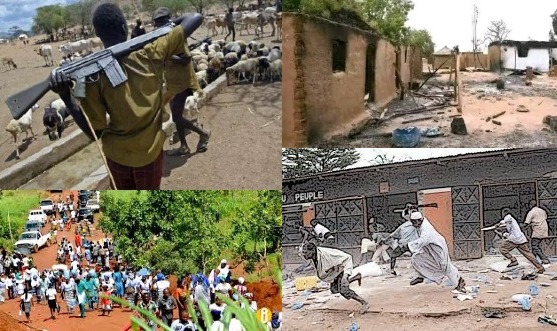
The 2011 Jos crisis, one of the most devastating in Plateau’s history, was triggered in similar fashion, by the killing of commuters from the Ali Kazaure Ward of Jos North, who were on their way to attend a wedding in same Mangu local government. They were stopped, attacked, and killed. That tragedy set off a chain of reprisals and bloodshed that left scores dead and further fractured communal relations.

Once again, Plateau State bleeds, and we are told to move on.
But how do we move on when the blood of innocent travellers continues to stain the soil of a state that proudly calls itself the Home of Peace and Tourism?
Recently, a bus carrying 31 people from Zaria, including children, was ambushed on its way to Kwa in Quan Pan Local Government Area for a wedding. The attackers brutally killed eight of them. Among them, a 10-year-old child and set their corpses ablaze. That bus reportedly belonged to Ahmadu Bello University, Zaria.
Eighteen others now lie in pain, battling for their lives at a hospital in Mangu. Four are still missing.
Their crime?
Is it because they were Muslims? Or because they were Hausa?
Or just because they dared to travel through Plateau State?
We beg for answers.
This wasn’t an isolated event. It is part of a disturbing pattern that has haunted Plateau for nearly two decades.
During the Dariye’s administration, innocent travellers from Ningi, Bauchi State, met the same fate, waylaid, murdered, and burned with their vehicle. The killing of General Idris Alkali, an Army general passing through, is still being dragged in court.
Also, during the Lalong years as a governor, Muslims from Ondo State returning from Sheikh Dahiru Bauchi’s home in Bauchi, were similarly attacked.
The 2011 Jos crisis, one of the most devastating in Plateau’s history, was triggered in similar fashion, by the killing of commuters from the Ali Kazaure Ward of Jos North, who were on their way to attend a wedding in same Mangu local government. They were stopped, attacked, and killed. That tragedy set off a chain of reprisals and bloodshed that left scores dead and further fractured communal relations.
These are not coincidences. These are patterns.
These are not just “clashes.” These are hate-driven executions.
And each time it happens, we pretend it’s new. It’s not.
The Plateau State Government must, as a matter of urgency, identify and bring to justice the perpetrators of the Mangu killings that occurred yesterday. These were ordinary people, families, students, and children whose only “offense” was traveling in a state that has allegedly repeatedly failed to protect those who don’t “belong.”
These are just the few cases that gained attention. Many others have gone unreported and disappeared without justice, without names, without trace.
Let us not mince words. These are targeted killings. Hate crimes. Acts of terror. Yet, each time they happen, the nation reacts with silence or worse, with shallow justifications wrapped in ethnic or religious bias.
What kind of society normalises the killing of people simply for being who they are?
What future does Plateau State have when its roads become corridors of fear, and its communities silent accomplices to ethnic profiling and murder?
I am a Nigerian. But first, I am human. And every time we excuse such barbarity, we chip away at our humanity.
No state, no government, no tribe, no religion is above scrutiny. If Plateau State truly values peace and tourism, it must begin by confronting its bloodied, past and present. Leaders must speak out, not in whispers or rehearsed condolence messages, but with righteous anger and decisive action.
Security operatives must treat this latest incident not as a statistic but as a national disgrace. The killers must be found. The victims must be honoured with justice. And above all, the state must come clean about the dark politics that often fuels these tragedies.
The message from this latest attack is loud and clear: we have failed to learn from the past. And when a people fail to learn, they are doomed to repeat the horror again and again.
To the victims: may your souls find peace.
To the living: how many more must die before we confront this evil?
Usman Muhammad Salihu is a fellow of PRNigeria and wrote from Jos Nigeria.
muhammadu5363@gmail.com