Opinion
Gambaryan Therapy: A Gentle but Firm Prescription for Nigeria’s Leadership -By John Egbeazien Oshodi
Nigeria’s leadership often gets away with intimidation. But not this time. Tigran Gambaryan is not an ordinary businessman. He is a crime expert, an investigator, a man trained in identifying fraud, deception, and financial crimes. He was not intimidated by the staged cameras. He was not fooled by the false interrogations. He understood exactly what was happening, and now, he is telling the world. Nigeria can silence its own people. It can suppress dissent. It can arrest journalists. It can weaponize defamation and cybercrime laws to frighten critics. But it cannot intimidate a trained fraud investigator who knows how corruption works. And now, his testimony is exposing more than anyone in power expected.

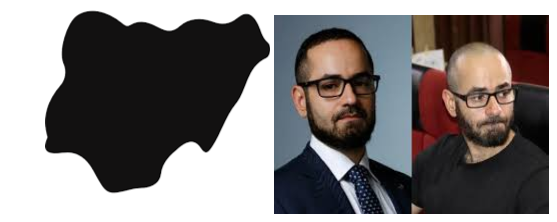
There is always one child in the family—the one who refuses to listen, who breaks the rules but insists he has done nothing wrong. The one who, even when caught red-handed, folds his arms and declares, “No! No! I didn’t do it!” This child does not believe in consequences. He believes that if he cries loud enough, the truth will disappear. If he blames others, he will escape accountability. If he screams and throws a tantrum, the world will grow tired and stop questioning him. But the world is not afraid. The world is watching. And the world has had enough of the games. And so, Gambaryan Therapy continues. This nationwide therapy, conceptualized by Professor John Egbeazien Oshodi, a psychologist, is not about one scandal, one administration, or one moment of failure. It is a diagnosis for a nation trapped in a relentless cycle of denial, corruption, and impunity. This therapy is not a mere critique; it is a long-overdue intervention for a leadership that refuses to mature, a ruling class that has perfected the art of deception, and a system that punishes truth while rewarding criminality. No one claims that everything Tigran Gambaryan has said is the absolute truth. No one is saying this therapy is the perfect cure. But when a nation is rotting, diseased, and sinking in its own filth, the first step is to stop pretending that the problem doesn’t exist. Nigeria is a country where corruption is so deeply ingrained that when someone pulls back the curtain and points at the rot, the response is almost always the same— “No! No! That is not true!”—like a small child caught stealing who immediately shakes his head and insists, “It wasn’t me!”
The Patient Who Refuses Treatment
Nigeria is not an ordinary patient. It is a deliberately resistant one—one that dismisses every clear symptom of its own deterioration. Even when presented with undeniable evidence, it scoffs and cries out, “Lies! Propaganda! An attack against me!”It is a patient that, when prescribed a proven treatment for recovery, smirks, tosses it aside, and insists with misplaced confidence, “I am fine. There is nothing wrong with me.” Yet, when the fever worsens, when the pain spreads, when the body starts to fail, this very same patient clutches its chest in shock, wailing, “Why me? Why now? “As though the disease had not been ignored for decades, as though the warnings had not been loud and persistent, as though it had not actively refused to take its medicine. But illness does not vanish simply because a patient refuses to acknowledge it. Reality does not shift to accommodate delusion. And Nigeria’s fever is only getting worse.
See What Just Happened
Canada denied visas to Nigeria’s Chief of Defence Staff and other top military officials. This was not an accident. It was not a clerical mistake. It was not a misunderstanding. It was a statement. A statement that says, “We see what you are doing. We know who you are. And we do not trust you. “In a serious country, this would have triggered reflection, self-examination, and diplomatic engagement. A serious government would pause and ask, “Why have we lost credibility? “A serious leader would say, “How do we repair this? “But Nigeria is not a serious country. Instead of reflecting, it lashes out. Instead of engaging, it retaliates. Instead of reforming, it denies everything. And so, the tantrum begins.
The NSA and the Politics of Denial
The National Security Adviser (NSA), Nuhu Ribadu, a man entrusted with a role that demands wisdom, diplomacy, and strategic foresight, reacts with the impulsiveness of someone unaccustomed to being challenged. His response to a situation requiring careful diplomatic handling? A blunt and dismissive “They can go to hell. ”This is the same Ribadu who, according to Binance’s Tigran Gambaryan, was allegedly linked to billion-dollar payout demands—a claim that, whether fully substantiated or not, raises serious questions about how national security became entangled in financial negotiations. His mishandling of the Binance case led to visa restrictions on Nigerian officials, an unintended diplomatic snub from the U.S., and the quiet shelving of a proposed meeting between President Tinubu and President Biden. Instead of stepping back and assessing the damage, Ribadu chooses defiance, doubling down rather than recognizing that Nigeria’s international standing is at stake. But isolation is not strength.
Fake Cameras, Real Corruption
The Department of State Services (DSS), an agency tasked with national intelligence and counterterrorism, allegedly took part in a staged interrogation—complete with fake cameras. Rather than focusing on real security threats, it is accused of setting up an illusion of investigation, a performance designed to intimidate rather than uncover the truth.If this is how an international company was treated, what happens to local businesses and everyday Nigerians? What does it say about a country where intelligence resources are allegedly diverted for staged coercion rather than real security threats? And then, there’s the House of Representatives, whose members, according to Gambaryan’s claims, allegedly demanded a $150 million cryptocurrency bribe—an accusation that, whether entirely accurate or not, reflects a troubling pattern.
A Crime Expert Who Saw It All
Nigeria’s leadership often gets away with intimidation. But not this time. Tigran Gambaryan is not an ordinary businessman. He is a crime expert, an investigator, a man trained in identifying fraud, deception, and financial crimes. He was not intimidated by the staged cameras. He was not fooled by the false interrogations. He understood exactly what was happening, and now, he is telling the world. Nigeria can silence its own people. It can suppress dissent. It can arrest journalists. It can weaponize defamation and cybercrime laws to frighten critics. But it cannot intimidate a trained fraud investigator who knows how corruption works. And now, his testimony is exposing more than anyone in power expected.
There Is Possibly Will Be More Bans, More Revelations—Start the Therapy Now
This is just the beginning. The visa denials will continue. The diplomatic snubs will increase. Foreign governments will keep their distance. International investors will find safer markets.
And yet, Nigeria’s leadership still behaves as though it can intimidate its way out of accountability. But here’s the reality:
You can intimidate citizens, but you cannot intimidate the world.
You can deny the truth, but that does not change the facts.
You can arrest journalists, but that will not stop the exposure.
This is why Gambaryan Therapy is necessary. No one said this therapy would be easy. No one said it would be pleasant. But when a system has become so deeply entangled in deception, the cure cannot be gentle. Start the therapy now, before the world forces you to. Because make no mistake—the disease is winning.
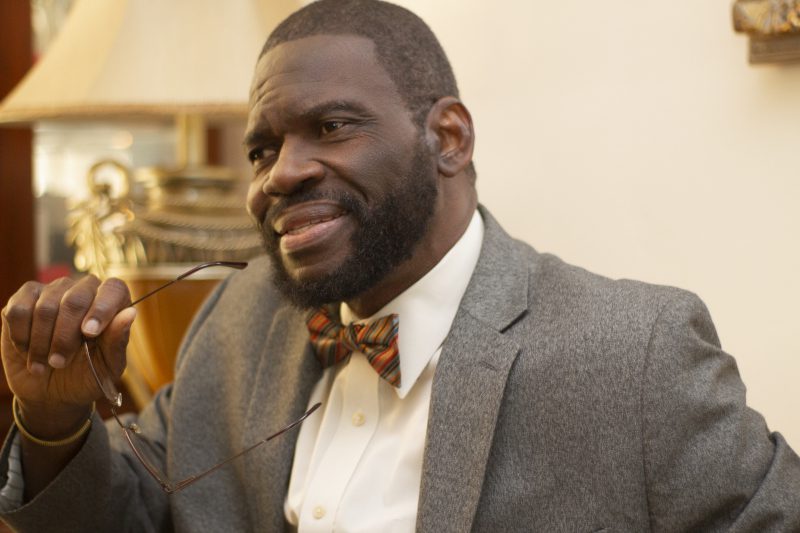
John Egbeazien Oshodi
Oshodi Open Door, also known as Oshodi Open Door Public Training (OOPDT, pronounced opidt), is a public awareness initiative promoting transparency, accountability, and integrity in Africa through educational articles and resources at jos5930458@aol.com, and offers specialized Timely Response Solutions (TRS) training at minimal or no cost.
John Egbeazien Oshodi is an American psychologist, educator, and author. Born in Uromi, Edo State, Nigeria, he is the son of a 37-year veteran of the Nigeria Police Force. Professor Oshodi is an expert in cross-cultural psychology, forensic/clinical psychology, police and prison science, and social justice.
He has made significant contributions to forensic psychology, introducing it to Nigeria in 2011 through the National Universities Commission (NUC) and Nasarawa State University. Professor Oshodi has taught at several institutions, including Florida Memorial University, Florida International University, and Nova Southeastern University.
Currently, he serves as a government consultant for forensic-clinical psychological services in the USA and practices as a clinical and forensic psychologist. He also holds virtual faculty roles at Walden University and other institutions. Professor Oshodi has authored numerous publications and founded the Psychoafricalysis theory in psychology.