Forgotten Dairies
Head to Head: Why President Tinubu Must Face Mehdi Hasan in the Global Village Square -By Professor John Egbeazien Oshodi
Nigeria’s citizens would witness something even more important: a demonstration that power does not fear truth, and that leadership can stand firmly even when the questions are uncomfortable.

When Nigeria’s Political Memory Entered the Global Arena
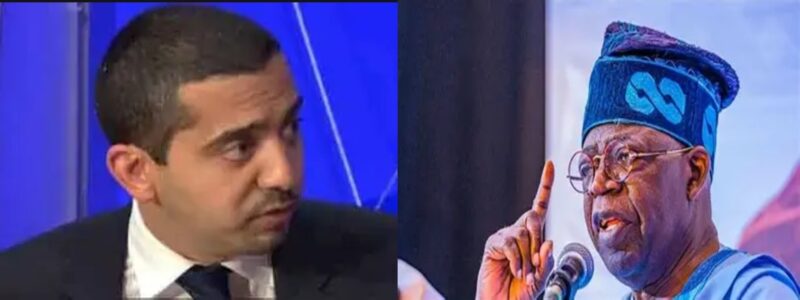
There are moments in the life of a nation when events that once seemed confined within domestic political debate suddenly move beyond national borders and enter the global arena. Nigeria recently experienced such a moment when President Bola Ahmed Tinubu, his presidential spokesperson Daniel Bwala, and Al Jazeera journalist Mehdi Hasan became central figures in a widely viewed international exchange that placed Nigeria’s political memory under intense global scrutiny.
What initially appeared to be a routine interview evolved into something deeper, heavier, and far more symbolic. It became a psychological mirror in which Nigeria’s leadership, its historical controversies, and its unresolved national anxieties were reflected before the watching world.
For Nigerians at home and across the diaspora, the moment felt deeply uncomfortable. It was painful not because questions were asked. Democracies survive questions. Rather, it was painful because those questions reopened memories that many believed had been politically buried, legally managed, or quietly forgotten.
But history has a stubborn personality.
When the past returns under the bright lights of the global stage, it rarely does so politely.
The London Encounter That Reopened Nigeria’s Archive
During the Al Jazeera program, Mehdi Hasan confronted Daniel Bwala with earlier public statements that Bwala himself had made years before joining the current administration. Those earlier statements contained sharp criticisms and warnings about political developments surrounding the leadership he now represents.
For viewers watching the exchange, the tension was unmistakable.
In a single moment, two versions of Daniel Bwala appeared before the world.
One version was the outspoken critic who had once raised alarm about troubling political dynamics. The other version was the presidential defender now tasked with protecting the reputation of the administration he serves.
The psychological collision between those two identities was visible to millions.
Yet the deeper truth beneath the tension was unmistakable.
The questions were never truly about Bwala alone.
They were about the man whose political history formed the center of the debate: President Bola Ahmed Tinubu.
The Burden Placed on the Middle Person
The London exchange revealed a painful political reality that systems of power often try to conceal.
A middle person cannot indefinitely carry the weight of another man’s history.
In psychological terms, what unfolded resembled a classic displacement of responsibility. The spokesperson became the visible defender, yet the deeper questions concerned the principal whose past actions and controversies shaped the narrative.
This situation places enormous emotional strain on the defender.
He must reconcile loyalty to the present with the memory of his own earlier criticisms. The public sees the tension. The audience senses the internal struggle.
What viewers witnessed was not merely a political debate.
They witnessed a man attempting to reconcile two versions of himself before the eyes of the world.
This is why the moment felt agonizing for many Nigerians.
Daniel Bwala was not simply debating a journalist.
He was carrying the emotional and historical weight of a political archive that did not belong solely to him.
No spokesperson, no matter how loyal or articulate, can permanently defend the unresolved past of another man.
Eventually, the questions return to the original source.
The Archive of Shadows Haunting the Nigerian Psyche
To move forward, the real person must address the archive of unresolved controversies that continue to haunt the Nigerian psyche.
Nations behave psychologically in ways very similar to individuals. When painful questions remain unanswered, they do not disappear. They are buried temporarily, but they remain active beneath the surface of collective consciousness.
Nigeria today carries several such shadows.
These shadows are not merely legal or political. They are emotional. They shape how citizens interpret leadership, power, and credibility.
The Drug Related Forfeiture and the Global Symbol of Credibility
The Chicago court matter involving a four hundred and sixty thousand dollar drug related forfeiture continues to occupy a central place in global discussions about the Nigerian presidency.
Supporters argue that the matter has already been addressed legally. Yet within the global conversation about leadership credibility, the issue refuses to disappear.
Why?
Because in the minds of many observers the issue has become symbolic.
It raises a psychological question that legal rulings alone cannot silence.
Do the moral expectations applied to ordinary citizens also apply to those who occupy the highest office in the land?
When such questions linger without direct personal explanation, they slowly weaken public trust.
The people do not merely want procedural answers.
They want emotional clarity.
They want to hear the story from the man whose history became part of national memory.
The Bullion Van Mystery and the Symbolism of Hidden Power
Another powerful symbol within Nigeria’s political memory is the episode involving bullion vans reportedly arriving at a private residence during an election period.
Regardless of competing explanations, the image itself has entered the subconscious of the nation.
Political symbols, once internalized by the public, rarely lose their psychological power.
For many Nigerians struggling under economic hardship, the image of armored vehicles associated with immense wealth became shorthand for a larger suspicion: that political influence in Nigeria may be driven not only by democratic persuasion but also by vast financial machinery operating behind the curtain of transparency.
When such symbols remain unexplained, they deepen distrust.
Citizens begin to feel that democracy is being performed before them rather than practiced with them.
Allegations of Militant Influence and the Crisis of Legitimacy
Allegations about militant actors or non state forces influencing democratic outcomes strike at the very heart of state legitimacy.
Even when such allegations remain disputed, their persistence creates psychological damage.
Once citizens suspect that elections can be influenced by shadow forces operating beyond institutional authority, their emotional connection to democratic processes begins to weaken.
They may still vote.
They may still watch campaigns.
But deep within, some begin to doubt whether civic participation alone determines political outcomes.
That doubt is dangerous.
It slowly erodes the emotional foundation of democracy.
The National Trauma of Insecurity
Perhaps the most painful reality facing Nigeria today is the ongoing crisis of insecurity.
Across many parts of the country, citizens live under the constant threat of violence. Armed groups attack villages. Farmers fear cultivating their land. Travelers worry about kidnapping. Entire communities feel abandoned by institutions meant to protect them.
This is more than a security crisis.
It is a psychological injury inflicted upon the nation.
When citizens no longer feel protected by the state, they begin to experience emotional detachment from the nation itself.
They remain Nigerians on paper.
But they no longer feel safe as Nigerians in daily life.
A leader must therefore answer a painful question:
Why does the state’s monopoly on force appear fractured?
The Fragility of Democratic Culture
One of the most psychologically damaging spectacles in public life occurs when yesterday’s fierce critic suddenly becomes today’s defender after receiving political appointment.
When such transformations occur without visible moral reflection, democracy begins to resemble a revolving door of personal advantage.
Citizens observe these changes carefully.
They begin to suspect that political convictions are temporary.
That loyalty can be negotiated.
That truth may bend in exchange for proximity to power.
Once that belief spreads among the public, democracy loses its ethical center.
Young citizens watching these patterns may conclude that integrity is not rewarded in political life.
The Psychological Leverage: Defending the Future
As President Tinubu considers the future and the possibility of another electoral mandate, he faces a profound psychological choice.
He cannot build a stable future upon a foundation of unaddressed shadows.
Leadership requires more than strategic alliances and electoral calculations.
It requires emotional courage.
If the President truly seeks another term, he must demonstrate the psychological stamina to defend three dimensions of leadership.
Defending the Past
Defending the past means addressing personal controversies directly rather than delegating explanations to subordinates.
Issues such as the Chicago records or the bullion van episode cannot be neutralized indefinitely through statements issued by spokespersons.
Only the individual at the center of the narrative can dissolve their symbolic power.
Defending the Present
Defending the present requires speaking honestly about Nigeria’s current challenges.
Insecurity, economic hardship, and national frustration cannot be addressed through carefully crafted press releases alone.
Citizens respect leaders who acknowledge their suffering openly.
A leader who speaks directly to the pain of the people earns emotional credibility.
Defending the Future
Defending the future requires courage.
Vision cannot inspire confidence if it hides from scrutiny.
If President Tinubu were to engage Mehdi Hasan directly in a genuine head to head conversation, he would demonstrate to Nigerians and the world that he possesses the confidence required to lead the country into its next chapter.
Releasing the Defender
The London exchange has already turned into a public spectacle.
Images of a spokesperson struggling to reconcile past statements with present loyalty circulate across social media.
Yet the deeper injustice remains clear.
No aide should be asked to defend a history that is not his own.
By stepping forward personally, the President could release his defenders from that impossible burden.
Courage in the Global Village Square
Nigeria is too important a nation to appear hesitant before global scrutiny.
As Africa’s most populous country, its leadership must demonstrate confidence before the world.
If President Tinubu were to face Mehdi Hasan directly, the narrative would change immediately.
Silence breeds suspicion.
Direct engagement earns respect.
When the Architect Explains His Blueprint
Across African villages there exists a simple proverb.
The man who builds the house must be willing to explain its design.
Nigeria now stands in the global village square.
Its citizens are watching.
The world is watching.
If the architect of power is confident in his blueprint, he should not need a middle person to stand between him and difficult questions.
True power does not hide behind defenders.
True power steps forward and speaks for itself.
And in the global village where Nigeria now stands, the moment has arrived for that voice to be heard.
The Moment for Direct Engagement
At some point, the circle must close.
The London exchange made one reality unmistakably clear: the questions surrounding Nigeria’s leadership will not disappear simply because they are redirected toward a spokesperson. The world has now heard the questions, and the Nigerian public has seen the strain placed upon those asked to answer them on behalf of someone else.
In such moments, leadership faces a defining choice.
President Bola Ahmed Tinubu can allow the conversation to continue through intermediaries, where defenders struggle under the weight of explanations that do not fully belong to them. Or he can step forward personally and address the questions directly, transforming a narrative of avoidance into one of confidence.
This is not about humiliation or confrontation. It is about the psychology of leadership. When a leader engages openly with critics, especially in a global forum, the act itself becomes a demonstration of strength. It signals that authority is not afraid of scrutiny and that leadership is secure enough to stand before the most difficult questions.
The setting itself is secondary. Whether such a conversation takes place in the Presidential Villa in Abuja or again on an international platform such as London, the essential point remains the same: the real voice must speak for itself.
When the architect explains his own blueprint, suspicion fades.
When others attempt to explain the design on his behalf, the blueprint itself becomes the subject of doubt.
Nigeria now stands in what might be called the global village square. Citizens at home and observers abroad are listening carefully. In such a moment, silence can easily be interpreted as distance, while engagement can restore a sense of dignity and leadership confidence.
History shows that leaders who face their toughest critics directly often gain a level of respect that silence cannot buy. The courage to answer difficult questions does not weaken authority. It often strengthens it.
If President Tinubu truly believes in the legitimacy of his record and the vision he offers for Nigeria’s future, then stepping into that conversation—whether in Abuja or London—would represent not vulnerability but leadership.
True power does not hide from questions.
True power meets them in the open square.
The Final Mirror
In every society there comes a moment when leadership is no longer measured only by power, elections, or political alliances. It is measured by the willingness to stand before history and answer for one’s journey.
Nigeria may be approaching such a moment.
The questions raised in London will not simply disappear. They have entered the archive of global memory, where they will continue to circulate among journalists, scholars, diplomats, and ordinary citizens who care about the future of Africa’s most populous nation.
But within every difficult moment lies an opportunity.
If President Bola Ahmed Tinubu steps forward and engages these questions directly—whether within the halls of the Presidential Villa or again before the global audience that first heard them—he would transform a moment of controversy into a moment of leadership.
The world would not merely see a president defending himself.
It would see a leader willing to face the mirror of history.
Nigeria’s citizens would witness something even more important: a demonstration that power does not fear truth, and that leadership can stand firmly even when the questions are uncomfortable.
For a nation struggling with insecurity, uncertainty, and wounded trust, such courage could begin restoring something that cannot be legislated or purchased.
It could begin restoring belief.
Because in every African village there is an old understanding: the man who builds the house must be ready to explain its design when the community gathers.
Nigeria has now gathered in the global village square.
Its people are listening.
The world is watching.
The only remaining question is simple.
Will the architect step forward and speak?
This commentary offers a psychological perspective on leadership, accountability, and public memory in contemporary Nigerian politics.
About the Author
Prof. John Egbeazien Oshodi is an American psychologist, an expert in policing and corrections, and an educator with expertise in forensic, legal, clinical, and cross-cultural psychology, including public ethical policy. A native of Uromi, Edo State, Nigeria, and son of a 37-year veteran of the Nigeria Police Force, he has long worked at the intersection of psychology, justice, and governance. In 2011, he helped introduce advanced forensic psychology to Nigeria through the National Universities Commission and Nasarawa State University, where he served as Associate Professor of Psychology.
He teaches in the Doctorate in Clinical and School Psychology at Nova Southeastern University; the Doctorate Clinical Psychology, BS Psychology, and BS Tempo Criminal Justice programs at Walden University; serves as a visiting virtual professor in the Department of Psychology at Nasarawa State University; and lectures virtually in Management and Leadership Studies at Weldios University and ISCOM University. He is also the President and Chief Psychologist at the Oshodi Foundation, Center for Psychological and Forensic Services, United States.
Prof. Oshodi is a Black Republican in the United States but belongs to no political party in Nigeria—his work is guided solely by justice, good governance, democracy, and Africa’s development. He is the founder of Psychoafricalysis (Psychoafricalytic Psychology), a culturally grounded framework that integrates African sociocultural realities, historical awareness, and future-oriented identity. He has authored more than 700 articles, multiple books, and numerous peer-reviewed works on Africentric psychology, higher education reform, forensic and correctional psychology, African democracy, and decolonized models of clinical and community engagement.